Detailing at Home: Pro Results Without Paying $300
A professional detail costs $300 and your car looks great for about a week. A proper home detail takes a weekend, costs $150 in products, and gets done every 6 months.
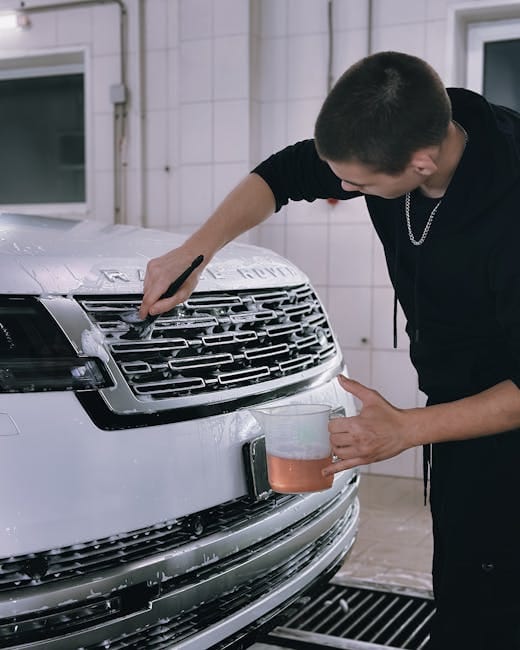
A friend of mine paid $380 for a "full detail" at a local shop last year. The car came back looking shiny and smelling like tire dressing. Two weeks later he pointed out that the swirl marks in his clear coat, the water spots on the windshield, and the grit in his door jambs were all still there. The shop had washed the car, applied some wax, and used armor-all on the plastic. What he actually wanted was a proper paint correction and a protective ceramic coating, which is not what he got and not what the shop was selling for $380. The shop had done exactly what it advertised, which was a "full detail," and that turns out to mean very little.
A real detail is a process, not a product. It involves decontaminating the paint, correcting surface defects, protecting the finished surface, and doing similar work on the interior. The good news is that all of this is achievable at home with $150 in tools and products and a weekend of focused work. The result is dramatically better than any $300 shop detail I have ever seen, and it lasts for six months to a year before the process needs repeating.
The Wash That Does Not Scratch Your Car
Most car washes actually damage the paint. The brushes at automatic car washes grind grit from your previous drives into the clear coat, creating the swirl marks that drive detailers crazy. Hand car washes at home can also cause damage if done wrong, particularly with a single bucket of soapy water where you rinse the sponge back into the same water that now contains grit.
The proper home wash uses the two-bucket method. One bucket has clean rinse water. The other has a pH-balanced car shampoo mixed at the recommended ratio. Each time you pull the wash mitt off the car, you rinse it in the clean water bucket first, which releases the grit. Then you load it with soap from the soap bucket and apply to the car. Your soap bucket stays relatively clean because the grit went into the rinse bucket.
A grit guard is a plastic insert that fits in the bottom of each bucket and traps grit below its grate. A two-bucket system with grit guards is $30 from any auto parts store. The wash mitt should be a microfiber or merino wool mitt, not a sponge. A good mitt is $15 to $25 and lasts for many washes.
Start with a thorough rinse using a garden hose or a pressure washer at moderate pressure. Never start with soap on a dry car. Let the water sheet off to carry away loose grit, then work top to bottom with the mitt, rinsing the mitt between every panel. The goal is to have the mitt touch the paint as little as possible while still carrying grit off the surface in the soap suds.
Dry with a high-quality microfiber towel by blotting, not wiping. Wiping a dirty surface drags grit across the clear coat and creates micro-scratches. Two good microfiber drying towels cost $30 and should last for years.
Paint Decontamination and Why It Matters
After washing, a clean-looking paint surface still has embedded contaminants that you cannot see but you can feel. Iron particles from brake dust, tree sap, road tar, and industrial fallout all bond to the clear coat and make the surface feel rough to the touch rather than glass-smooth. A clay bar removes these contaminants.
The clay bar process involves spraying a lubricant spray on the washed car (a dedicated clay lubricant or a detailing spray) and then gliding a clay bar across the surface. The clay picks up contaminants that do not come off with washing alone. You should feel the clay catch on contamination and then glide smooth as the surface becomes clean. Work in 2x2 foot sections and fold the clay every minute or so to expose a clean surface.
A clay bar kit with lubricant is $20 to $35. For $40 you can get a dedicated iron decontamination spray (CarPro Iron X is the standard) that chemically dissolves iron particles before you clay. This combination approach is what professional detailers use and takes paint preparation to a level most home washers never reach.
After clay and iron decontamination, the paint surface is genuinely clean and ready for correction or sealant. You can feel the difference by running your hand across the clean surface compared to where you have not treated yet. It is a noticeable improvement.
Paint Correction for Swirls and Scratches
Paint correction removes swirl marks and minor scratches by carefully polishing a small amount of clear coat off the surface to even out the depth of the defects. This is where most DIY detailers stop because they are worried about damaging the paint. With the right tools and technique, paint correction is genuinely achievable at home.
A dual-action polisher is the key tool. The Griot's Garage 6-inch random orbital polisher is $130 and is specifically designed to be hard to damage paint with. The random orbital motion means even if you hold it in one spot, the pad will not burn through clear coat the way a rotary polisher can. A beginner mechanic can use this polisher safely within the first 30 minutes of practice.
A beginner polish combination is a medium-cut polish like Menzerna 2500 or Sonax Perfect Finish on a polishing pad. This removes minor swirls and haze without removing enough clear coat to worry about. For deeper scratches or heavily swirled paint, a more aggressive cutting compound and pad may be needed, but start with the lighter combination and escalate only if required.
The technique involves working in 2x2 foot sections, applying a line of polish the size of a pencil to the pad, spreading it across the section at low speed, then working it with moderate pressure at speed 4 or 5 for about 60 to 90 seconds. Wipe residue with a clean microfiber towel and inspect under different lighting angles to see the improvement.
A full paint correction on a mid-size car takes 4 to 6 hours for a first attempt. Your second correction will take 3 to 4 hours as you get faster with practice. The result on a 10-year-old car is genuinely transformative, as the hazy, washed-out paint becomes clear and deep again.
Protection That Lasts Longer Than Wax
After correction, the paint surface needs protection. Carnauba wax is the traditional option but only lasts 6 to 8 weeks. Synthetic sealants last 3 to 6 months. Modern ceramic coatings last 1 to 3 years with proper application.
For DIY application, I recommend either a high-quality synthetic sealant like Collinite 845 ($20) or a consumer-grade ceramic coating like CarPro CQuartz UK 3.0 ($80 for a 50 ml bottle that covers 3 to 4 cars). The ceramic coating is more work to apply correctly but the protection duration and depth are dramatically better.
Proper ceramic coating application requires a clean, decontaminated, polished surface, a climate-controlled garage at 65 to 80 degrees, and about 2 hours of focused work. You apply the coating in 2x2 foot sections, let it flash for 60 to 90 seconds, then carefully buff off the excess with a microfiber towel. Any unbuffed residue becomes permanent high spots that have to be polished out.
I have a 2018 BMW M3 that I ceramic coated myself in 2022. Four years later the coating still beads water and the paint looks freshly detailed after every wash. For $80 in product and 2 hours of work, the result beats a $600 professional ceramic coating that a friend paid for on a similar car.
The Interior Work That Shop Details Skip
Most shop details spend 10 minutes on the interior with a generic armor-all spray and a vacuum. The actual interior detailing process takes much longer and produces dramatically better results.
Start with a thorough vacuum using a shop vac or a powerful household vacuum with crevice and brush attachments. Move seats all the way forward and back to get underneath. Clean the carpet with a carpet extractor or with a foaming carpet cleaner scrubbed in with a detailing brush and vacuumed out.
Leather seats need proper cleaning with a pH-balanced leather cleaner (not a soap-based product), followed by a leather conditioner applied with a foam applicator. The conditioner restores moisture to the leather and prevents cracking. Apply every 6 to 12 months depending on climate and use.
Plastic trim pieces need a dedicated interior dressing, not armor-all. Products like 303 Aerospace Protectant give a natural, non-greasy finish and also provide UV protection. Apply with a foam applicator and buff out any excess to avoid streaking.
Glass interior surfaces need proper auto glass cleaner applied with a dedicated glass microfiber towel. Streaking on glass is usually caused by contamination or residue from previous cleaning products. A two-step glass cleaning process (first with dedicated glass cleaner, then with a waterless wash or clay bar on the exterior side) solves most visibility problems.
What Your Total Investment Looks Like
A complete home detailing kit that produces professional results costs approximately $150 in consumables and $350 in tools you only buy once. Product costs: car shampoo ($12), clay bar kit ($25), iron decontamination spray ($40), polish ($35), ceramic coating or sealant ($80), interior cleaner ($15), leather cleaner and conditioner ($35), interior dressing ($15), glass cleaner ($10). Total product investment is around $267 including everything.
Tool investment includes a pair of buckets with grit guards ($30), microfiber wash mitt ($20), two drying towels ($30), a dual-action polisher ($130), polishing pads ($40), and 20 microfiber towels for correction and interior ($60). Total tool investment is $310 for a complete kit.
The first full detail with all-new products and tools costs around $577. The second and subsequent details use a fraction of the consumables and no additional tools, so ongoing detail costs are roughly $80 per detail for consumables only. Over 5 years of 6-month details, that is $1,377 total spent compared to $3,000 for shop details over the same period.
Beyond the cost savings, the quality difference is substantial. A home detailer who cares about their car and takes the time to do the job properly produces better results than a shop detailer working on quota. The car stays protected longer, looks better under close inspection, and has the small details (door jambs, wheel wells, inside of fuel door) actually clean. These are the touches that differentiate a genuine detail from a wash-and-wax that costs $300.