DIY vs the Shop in 2026: Which Car Repairs Are Worth Doing Yourself and Which Ones End on a Flatbed
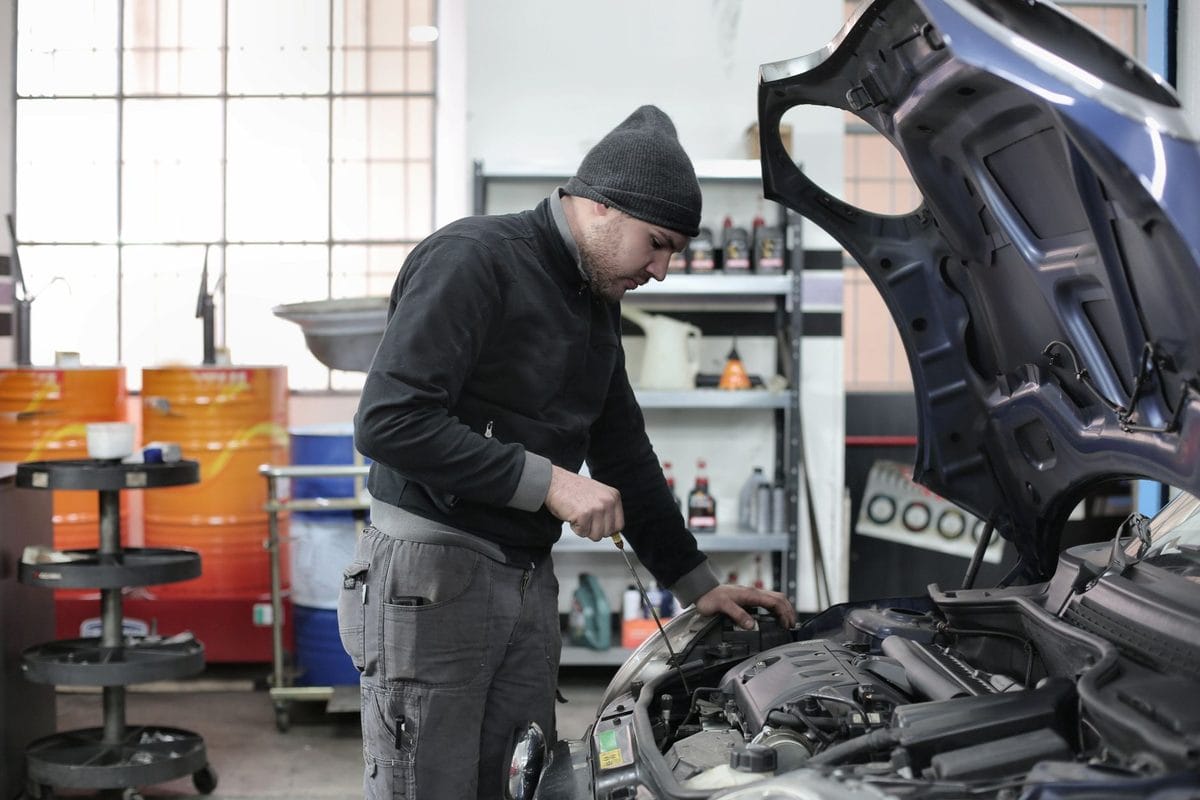
The line between a satisfying Saturday in the garage and a $400 mistake that ends with your car on a flatbed has moved over the last decade, and most men's instincts about where it sits are out of date. Cars got more computerized, parts got cheaper to buy and more annoying to access, and YouTube turned half of the maintenance manual into a free video. In 2026 the real question isn't whether you're handy — it's which specific jobs reward the effort and which ones are quietly engineered to punish the amateur. Get that calculus right and you'll save real money. Get it wrong and you'll pay a shop to undo your work before they even start their own.
The jobs absolutely worth doing yourself
Some maintenance is so simple and so marked-up at the shop that doing it yourself is almost free money. An oil change is the obvious one — fifteen dollars in oil and a filter against sixty or eighty at a quick-lube place, plus you actually know it got done right and with the oil you chose rather than the cheapest bulk stuff. Cabin and engine air filters are even more lopsided; the part is ten bucks, the job is two clips and a minute, and shops routinely charge fifty to do it while showing you the dirty one like it's evidence.
Brake pads belong on this list for most men, with one honest caveat. Pads on a typical car are genuinely a one-hour driveway job with hand tools — jack it up, pull the caliper, swap the pads, compress the piston, reassemble. The savings run well over a hundred dollars per axle. The caveat is that the moment you need to touch the rotors, or you've got electronic parking brakes that require a scan tool to retract the caliper, the difficulty jumps and the job stops being beginner-friendly. Know which version of the job your car has before you start, not after the caliper's already off.
Battery, wipers, and the embarrassingly easy stuff
Replacing a battery, swapping wiper blades, changing bulbs, topping off fluids — this is the tier where paying someone is just lighting money on fire. The one wrinkle in 2026 is that many newer cars require the battery to be "registered" to the car's computer after replacement so the charging system treats it as new. That's a five-minute job with a $30 tool or a free reset at some parts stores, but skip it and a brand-new battery can get undercharged into an early grave. Cheap to do, expensive to ignore.
The jobs that look doable and aren't
This is where men lose money, because the internet makes everything look like a two-hour project filmed by a calm guy with a clean garage. Timing belts and water pumps are the classic trap — the part is affordable, the video makes it look methodical, and one mistake in the timing meets the valves and turns a $600 repair into a new engine. Unless you've done one before with someone who knew what they were doing, this is a shop job, full stop.
Anything involving the air-conditioning refrigerant is off-limits too, and not just because it's hard — handling refrigerant without certification is illegal, and the systems are under enough pressure to genuinely hurt you. Same goes for anything on a hybrid or EV high-voltage system, where the orange cables carry enough current to stop your heart and "I watched a video" is not a qualification that keeps you alive. Transmission work, suspension geometry that needs an alignment afterward, and modern electronics that throw cascading fault codes when you unplug the wrong thing all sit in this bucket. The shop labor on these isn't a ripoff. It's the price of someone who's done it a hundred times not making the mistake you're about to.
The tools that change the math
One purchase shifts a lot of jobs from the "can't" column to the "can" column: a $25 OBD-II scanner that talks to your phone. Half of what makes modern car trouble feel like a black box is the check-engine light refusing to say what's wrong, and a cheap scanner reads the code, tells you whether it's a $12 sensor or a $1,200 catalytic converter, and lets you decide whether this is a driveway job or a tow. Even if you fix nothing yourself, knowing the actual problem before you walk into a shop is the single best defense against being upsold a repair you don't need.
The honest self-assessment
Here's the question to actually ask before any job: if this goes wrong halfway through, can I still get the car to a shop, and how much worse will I have made it? An oil change gone wrong is a mess and a redo. A timing belt gone wrong is a destroyed engine and a car that won't move. The downside, not the difficulty, is what should decide it. Plenty of capable men ruin a perfectly good weekend and a perfectly good car by picking a job whose failure mode they never thought through. Match the job to your skill, sure — but match it to the cost of being wrong first. The garage is one of the last good places left to spend a Saturday. Just pick the project that ends with the car running, not the one that ends with the flatbed.