Dual-Clutch Versus Torque Converter for the Daily Driver
Dual-clutch transmissions excel at performance but daily-driving math often favors torque converters. Here's the trade-off, in detail.
The first dual-clutch transmission I drove daily was a 2014 VW GTI with the DSG. It was magnificent for the first six months, sharp and immediate in a way no torque converter automatic could match. By month eight, I was filing complaints about the low-speed shudder, the parking-lot stutter, and the seven-thousand-dollar repair quote when the mechatronic unit failed at 86,000 miles. The car taught me a lesson the marketing brochures don't put in bold: a dual-clutch is fantastic until it isn't, and what you're actually choosing in 2026 is a different ownership experience, not just a different shift speed.
The market has split cleanly. Performance cars, especially European ones, have committed to dual-clutch and aren't looking back. Mainstream daily drivers from American, Korean, and Japanese makers have largely stuck with conventional torque converter automatics, often with eight, nine, or ten speeds and shift logic that makes the dual-clutch advantage smaller than it was a decade ago. The two transmissions have different strengths, different weaknesses, and meaningfully different long-term costs. Anyone shopping for a vehicle that will be driven 12,000 to 18,000 miles a year for the next decade should understand the trade-offs.
What Each One Actually Is
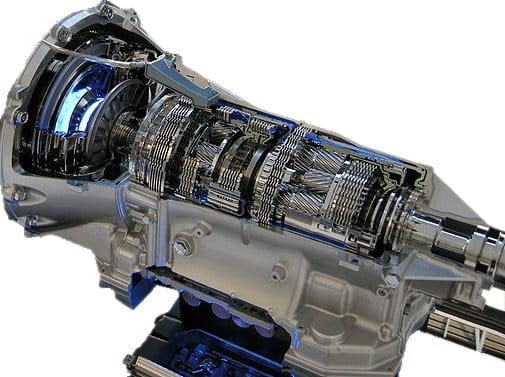
A torque converter automatic uses a fluid coupling between the engine and the transmission, with a planetary gear set inside the case. The fluid coupling absorbs vibration, multiplies torque at low speeds, and lets the engine idle smoothly at a stop. Modern torque converters lock up mechanically once the car is moving, eliminating the slip that plagued earlier designs. The ZF 8HP, found in most BMWs, many Jeeps, and several luxury sedans, is the benchmark.
A dual-clutch transmission has two clutch packs, one for odd gears and one for even, allowing the next gear to pre-engage before the current one disengages. Shift times are typically under 100 milliseconds in performance applications, faster than even an excellent torque converter. The transmission has no torque converter at all, which is why most dual-clutch cars have a noticeable launch behavior at standstill, similar to a manual being slipped from a stop.
Where Dual-Clutch Wins
The advantages are real for the right driver. Shift speed is genuinely faster, and the rev-matched downshifts on cars like the Porsche PDK or BMW M-DCT feel more connected to the engine than any torque converter automatic. Fuel economy is typically 1 to 3 percent better than an equivalent torque converter, due to the lack of fluid slip, though modern eight- and ten-speed torque converters have closed most of that gap.
For drivers who actually use launch control, drag-strip the car, or do regular track days, dual-clutch is unambiguously the better tool. The Hyundai N DCT in the Kona N and Elantra N is one of the better mass-market examples, with shift speeds and aggression unusual at the price point. The Porsche PDK across the 911 lineup is the gold standard.
Where Torque Converter Wins
Around town, in traffic, on cold mornings, and in any scenario involving low-speed creeping, a torque converter is smoother. The fluid coupling absorbs the lurches that dual-clutch transmissions struggle to mask. Parking-lot maneuvers feel more natural. Trailer towing, hill starts, and stop-and-go driving all favor torque converter automatics by a clear margin.
Long-term durability also tends to favor torque converters in normal-use vehicles. Modern eight-speed automatics from ZF, Aisin, and GM routinely exceed 200,000 miles with regular fluid changes. Dual-clutch transmissions in the same mileage range often need a clutch pack replacement, costing $3,500 to $7,500 depending on the vehicle, with mechatronic unit replacements adding another tier on top of that.
The Repair Cost Reality
This is where the daily-driver decision often turns. A torque converter automatic that fails after 150,000 miles can be rebuilt for $2,500 to $5,000 in most mainstream applications, with parts widely available. Specialist shops exist in every metro area. The transmission can be removed, rebuilt, and reinstalled by independent shops without dealer involvement.
A dual-clutch transmission failure tends to require dealer or specialist intervention, with software calibration, mechatronic unit programming, and clutch pack alignment that most independent shops won't touch. Costs run $5,000 to $12,000 for a full rebuild. Used dual-clutch units carry uncertain history. The depreciation curve on cars with high-failure-rate dual-clutches at high mileage reflects this: a 2017 Ford Focus with the troubled PowerShift dual-clutch trades at a substantial discount to comparable Civic or Corolla mileage.
Cold Weather and Heat Cycles
Dual-clutch transmissions vary widely in cold-weather behavior. Wet-clutch designs, like Porsche PDK and most VW DSG units after 2015, handle cold temperatures well. Dry-clutch designs, like the Hyundai EcoShift in older Kia and Hyundai vehicles or the Ford PowerShift, struggle with cold-start engagement and can develop premature wear in stop-and-go traffic during winter months.
Heat is the other consideration. Dual-clutch fluid temperatures climb fast in heavy traffic, and the transmissions are sensitive to overheating. Several manufacturers, including BMW and Audi, have published warnings against extended low-speed creeping in heavy traffic in their dual-clutch vehicles. A torque converter automatic in the same conditions runs cooler and shows no comparable sensitivity.
What to Buy in 2026
If your driving is genuinely performance-oriented, with track days, autocross events, or regular spirited canyon runs, the modern dual-clutch options are excellent. The Porsche PDK in the 911, the BMW DCT in M3 and M4 models, the Audi S-tronic across the RS lineup, and the Mercedes-AMG DCT all deliver shift quality that no torque converter can match. The Hyundai N-DCT is the best mass-market option.
If your driving is daily commuting, occasional road trips, and the kind of driving that makes up 95 percent of mileage for most car owners, the modern eight- to ten-speed torque converter is the right tool. The ZF 8HP-equipped BMWs, Genesis sedans, and Jeep Grand Cherokees are excellent. The Toyota and Lexus eight-speeds are reliable. The GM ten-speed shared with Ford has had bumps but is generally solid in current iterations.
One Counter-Point
The dual-clutch reliability concerns are partially out of date. The current generation of Porsche PDK, BMW DCT (in MT-DCT form), and the latest VW DSG units have track records that approach torque converter durability when serviced properly. The horror stories that defined dual-clutch reputation came largely from first-generation dry-clutch units in low-cost applications, particularly the Ford PowerShift and early Hyundai EcoShift. Buying a 2025 or newer dual-clutch from a reputable manufacturer with proper fluid service intervals carries far less risk than buying a 2014 model did.
The Recommendation
For a daily driver bought new and intended to be kept past the warranty period, default to a torque converter automatic unless the car genuinely needs the dual-clutch character to be the car you want. The Porsche 911, BMW M3, and Audi RS5 are not the same cars with a different transmission. The Toyota Camry, Honda Accord, and Hyundai Sonata are essentially the same cars regardless of transmission, and the torque converter version is the smarter long-term play. Service the transmission fluid every 60,000 miles regardless of which type you own. The single biggest predictor of transmission longevity is fluid maintenance, not transmission architecture.