The Pre-Road-Trip Car Check for Summer 2026: The Ten-Minute Inspection That Prevents the £600 Roadside Tow
The summer breakdown that strands a family at the side of a motorway is almost always preventable, and the prevention takes ten minutes in your own driveway.
The most expensive breakdown is the one that happens 200 miles from home with the kids in the back and the holiday cottage booked. Every summer the breakdown services see the same surge — overheated engines, shredded tyres, dead batteries — and the frustrating truth is that the overwhelming majority of these were visible in the driveway a week earlier. A proper pre-trip check isn't the all-day ritual the YouTube mechanics make it look like. It's ten focused minutes on the things that actually strand cars, and it's the cheapest insurance you'll buy all year.
Tyres: the thing that fails most and matters most
Start with the tyres, because tyre failure is both the most common cause of a motorway breakdown and the most dangerous. Three things to check, none of which need a garage. Pressure first — a fully loaded car on a long trip needs the higher "laden" pressure printed on the door sill or fuel flap, not the everyday figure, and an underinflated tyre at 70mph in 30-degree heat is how blowouts happen. Then tread: the legal minimum is 1.6mm across the central three-quarters, but for wet-weather braking you want more than 3mm, and the 20p test (insert a 20p coin; if you can see the outer band, you're too low) takes five seconds per tyre.
Last, look at the sidewalls. A bulge, a crack, or a cut into the sidewall means that tyre is a time bomb regardless of tread depth — replace it before the trip, not after it lets go in the outside lane. And don't forget the spare, or check that your tyre-inflation kit's sealant hasn't passed its expiry date, because a surprising number of cars sold since 2018 don't carry a spare at all.
Fluids and the cooling system
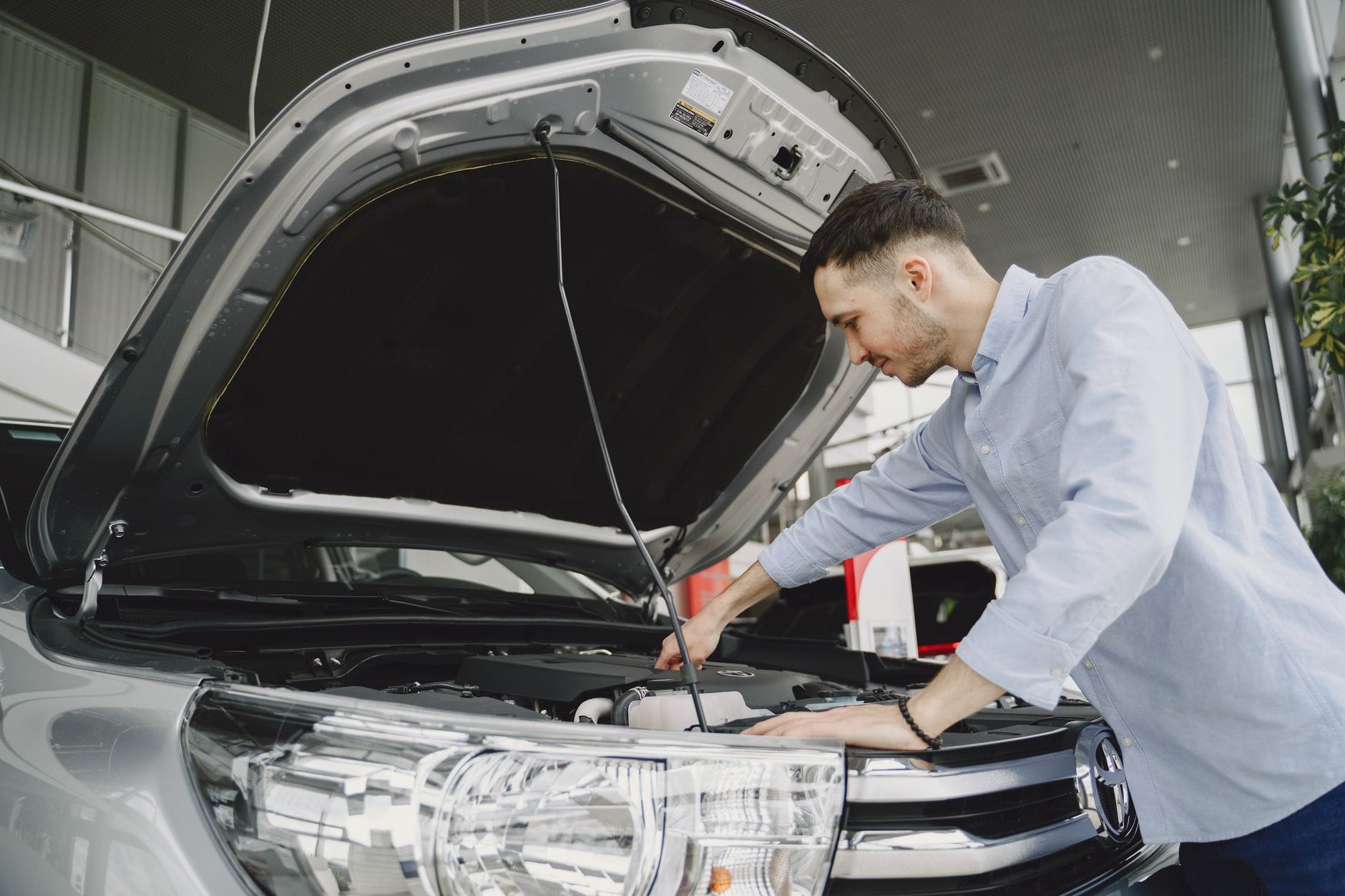
Pop the bonnet when the engine is cold and check three levels against their min/max marks: coolant, engine oil, and screen wash. Coolant is the one that strands you in summer — a low level points to a slow leak, and an overheating engine on a hot motorway is a head-gasket bill waiting to happen, easily £600 to four figures. If the coolant's low, find out why before you load the car; don't just top it up and hope.
Oil is quick: pull the dipstick, wipe, reinsert, read. If it's below minimum or hasn't been changed in over a year, sort it now — a long, hot, high-load trip is exactly when thin or old oil bites. Screen wash sounds trivial until you're chasing a low sun through a windscreen plastered with dead insects and can't see the lane markings.
The battery nobody thinks about in summer
Most men associate dead batteries with winter, but heat is harder on a battery than cold — high temperatures accelerate the chemistry that kills them, and a battery that's been quietly dying all year tends to give up on the first hot week. If your car has cranked sluggishly even once this spring, or the battery is more than four or five years old, get it tested before the trip — most parts shops do it free in the car park. A £120 battery fitted at home beats a £200 callout and a ruined first day of the holiday.
While you're at it, throw a set of jump leads or a compact lithium jump pack in the boot. A decent jump starter runs around £60-£90, lives in the glovebox, and turns the worst-case scenario into a two-minute inconvenience instead of a two-hour wait.
The five-minute walk-around
Finish with a slow lap of the car. Check every exterior light works — get someone to stand behind while you run through indicators, brake lights and reverse, because a blown brake light is both an MOT fail and a genuine rear-end risk on a motorway. Top up the washer reservoir, test the wipers and replace any that smear (a £15 set of blades versus a wet motorway with poor visibility is not a close call). Confirm your breakdown cover is current and the policy number is in your phone, not in a drawer at home.
That's the whole job. Tyres, fluids, battery, lights — ten minutes that turns the side-of-the-motorway nightmare into a non-event. The men who never seem to break down on holiday aren't lucky. They spent ten minutes in the driveway while everyone else was packing the cool box.