Shelby GT500: Supercharged American Muscle Reality Check
The Shelby GT500 at 760 hp makes a Corvette look slow. It also eats rear tires every 4,000 miles and runs through clutches on its DCT. The experience is worth it anyway.
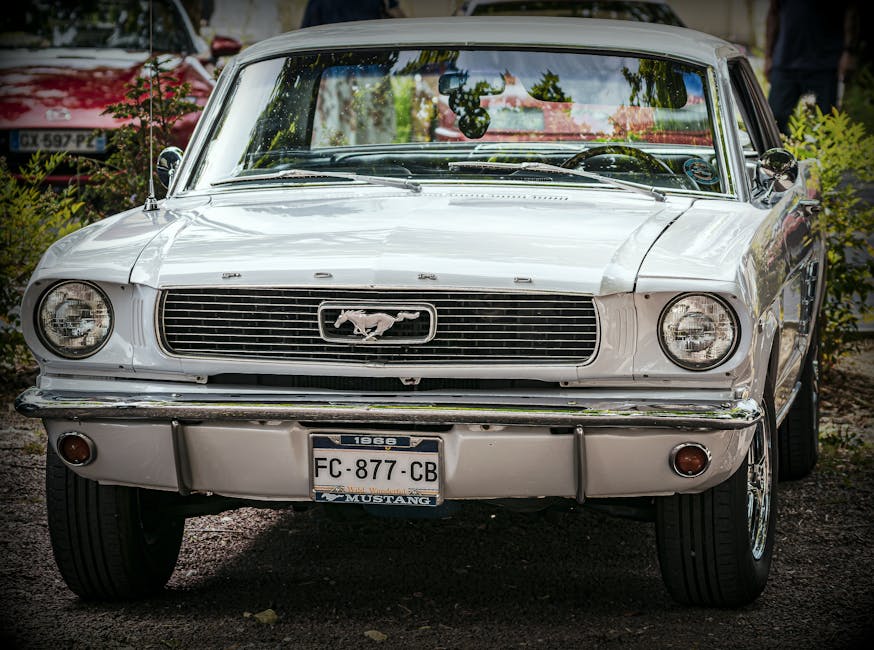
The 2020 to 2022 Ford Shelby GT500 makes 760 horsepower from a supercharged 5.2-liter V8 and will run zero to 60 mph in 3.3 seconds. It lapped the Willow Springs track faster than the Porsche GT3 RS of the same era, and at a new MSRP of $76,000 it was the biggest performance bargain in the American car market in the last decade. In 2026 a clean GT500 with 15,000 to 30,000 miles sells for $82,000 to $105,000 depending on whether it has the Carbon Fiber Track Package. The prices have actually gone up from new, which is almost unprecedented for a modern muscle car.
I have spent meaningful time in a 2021 GT500 owned by a friend, and I have also watched two other friends wrestle with the ownership realities of this car. The GT500 is both better and more demanding than the online forums make it out to be. Understanding what you are actually signing up for is worth doing before you commit to this specific car, because it is not exactly what you think it is.
The Engine and Transmission Are the Whole Story
The Predator 5.2-liter V8 in the GT500 is the best mass-produced American engine of the past 25 years. Full stop. Cross-plane crankshaft design, aluminum block, 2.65-liter Roots-type supercharger with intercooling, redline at 7,500 rpm. Peak power is 760 hp at 7,300 rpm and peak torque is 625 lb-ft at 4,500 rpm. The sound at wide-open throttle is something you can physically feel in your chest from 20 feet away.
The transmission is a Tremec seven-speed dual-clutch, the first DCT ever fitted to an American muscle car from the factory. The shifts are violent in Drag mode (which is what you want), smooth in Normal mode, and genuinely quick-witted in Sport. There is no manual transmission option because the Predator V8 produces too much torque for any available manual gearbox to handle reliably. This bothered some traditionalists. It should not. The DCT is genuinely excellent and makes the car dramatically faster than a manual would.
Drag mode launches are the party trick. Put the car in Drag mode, build brake torque to 3,500 rpm, release the brake, and the car leaves so hard it pulls your eyes into the back of your skull. Sub-4.0-second zero to 60 is routine. A properly prepared GT500 will run 10.7 seconds in the quarter mile on street tires, and below 10.5 on drag radials. That is supercar acceleration from a car with back seats and a trunk.
The quarter mile is not even where the GT500 is most impressive. The midrange punch from 40 to 100 mph in fourth gear is where the car really shocks you. The supercharger provides linear, relentless pull across the entire rpm range, and the DCT responds to downshifts in 50 milliseconds. You can make a gap happen on a highway that would be impossible in almost any other car at any price.
The Handling Is Actually Good
The factory MagneRide adaptive dampers on the GT500 are genuinely well-calibrated. The car rides firmly in Sport but not unreasonably, and Comfort mode is daily-drivable on rough pavement. The massive 305-width front tires and 315-width rears (on the Carbon Fiber Track Package) provide grip levels that would have been supercar-level in 2015.
The car's real weakness is weight. At 4,200 lb it is 600 lb heavier than a Porsche 911 GT3 and 1,000 lb heavier than a Porsche Cayman GT4. You can feel this weight in direction changes. The GT500 is fast in a straight line and fast through a single large radius corner, but it is less graceful through a tight sequence of corners than a proper sports car.
Braking is excellent. The front Brembo calipers are among the largest brake systems ever fitted to an American car. Pedal feel is firm and progressive. Stopping distance from 70 mph in repeated tests comes in at 149 feet, which matches Porsche GT3 numbers. The brakes can handle hot laps on a track day without significant fade.
Steering feel is better than I expected. The electric power steering rack is calibrated better than the GT500's predecessor GT350 car, and the feedback from the road surface is adequate for the task. It is not a hydraulic Porsche steering rack, but it is the best American muscle car steering I have experienced.
What the GT500 Actually Costs to Own
Tires are the dominant cost center. The factory Michelin Pilot Sport Cup 2 tires on Carbon Fiber Track Package cars are $2,800 to $3,400 for a set of four installed. A daily-driven GT500 that sees occasional hard use will go through a set of rears in 4,000 to 6,000 miles, and a set of fronts in 8,000 to 12,000 miles. Annual tire costs for an enthusiast owner run $3,000 to $4,500.
The DCT transmission has a service interval of 40,000 miles or three years, whichever comes first. The service is $400 to $600 at a Ford dealer. Beyond scheduled maintenance, the DCT in aggressive use can wear out a clutch pack at around 30,000 to 50,000 miles, especially on cars used heavily in Drag mode. Clutch replacement on the DCT is $7,000 to $9,000 at a Ford dealer.
Oil changes are 5,000 miles with Motorcraft 5W-50 synthetic. The Predator V8 takes 10 quarts and the cost at a Ford dealer is $180 to $220. DIY oil change is $120 to $140 in parts.
Fuel economy is worse than the EPA rating suggests. The EPA says 12 city and 18 highway. Real-world mixed driving averages 13.5 mpg. On premium gas, a GT500 driven 10,000 miles per year costs $3,100 in fuel. This is an inevitable consequence of moving 4,200 lb with a supercharged V8.
Insurance on the GT500 runs $2,400 to $3,800 per year for most drivers. The car is treated as a performance vehicle by most insurers and the premium reflects the risk profile.
What Goes Wrong and When
The known reliability issues on the GT500 are relatively limited. The supercharger snout has experienced some failures around 40,000 to 60,000 miles, though the rate is much lower than on the previous-generation GT500 (2007 to 2014). A snout replacement is $2,500 to $3,500.
The DCT has had software updates that addressed some early-production shifting issues. Cars that have the latest calibration behave better than early-production cars. Always verify that the latest software update has been applied before buying.
The rear differential on aggressively-driven cars can develop whine after 30,000 miles. This is addressed by fluid service and in some cases a cover upgrade with a higher fluid capacity. Preventive service costs $400 to $600.
Cooling system upgrades are a common modification on cars that see track duty. The factory cooling system can reach its limits during extended hot-weather track use, at which point the ECU pulls timing to protect the engine. Aftermarket auxiliary coolers are $600 to $1,500 depending on scope.
Which Configuration to Buy
The Carbon Fiber Track Package is the version every enthusiast wants. Carbon fiber wheels that save 60 lb of unsprung weight, adjustable front splitter, GT4 rear wing, Recaro seats with harness bar, and premium paint protection. These cars command a $15,000 to $25,000 premium over standard GT500s and will hold value better long-term.
The Handling Package on standard GT500s adds MagneRide dampers, a larger front splitter, and sport-tuned drive modes but retains the standard aluminum wheels and interior. This is a good middle-ground option at a lower price than the Carbon Fiber Track Package.
Standard GT500s without either package are still genuinely excellent cars and cost $15,000 to $30,000 less than track-packaged equivalents. For most buyers who will not track the car, the standard configuration delivers 90 percent of the experience at a significantly lower price.
The Heritage Edition, introduced for the 2022 model year, adds period-correct paint schemes, specific badges, and numbered plates. Production was limited to a few hundred units and these cars carry significant premiums. Collector value is strong and will likely remain so.
What Happens to GT500 Values
Production of the 2020 to 2022 GT500 is ended and the new Mustang Dark Horse, while interesting, does not match the raw performance of the GT500. This means the supply of GT500s is fixed at around 30,000 total units produced. As cars get consumed by accidents, salt-belt corrosion, or attrition, the available inventory shrinks.
My prediction for GT500 values through 2028 is continued appreciation. Carbon Fiber Track Package cars will probably reach $130,000 to $150,000 by 2028. Standard cars will probably reach $90,000 to $105,000. These numbers assume the market continues to value the GT500 as the definitive modern American muscle car.
The comparison car that looms over GT500 values is the Dodge Demon, which was produced in limited numbers for 2018 and is now selling for $125,000 to $180,000 for low-mileage examples. The Demon has more cultural cachet and more limited production, but the GT500 has better road-course performance and similar quarter-mile capability. If Demon values continue their trajectory, GT500 values will probably follow upward.
Should You Actually Buy One
The GT500 is the right car for a buyer who wants maximum American muscle performance and can afford both the purchase price and the running costs. The combination of 760 hp, dual-clutch transmission, adjustable suspension, and genuine track capability is not available in any other domestic performance car.
It is the wrong car for a buyer who wants a daily driver that can also be spirited on weekends. The tire budget alone makes this impractical. The fuel economy makes it expensive for commuting. The weight makes it less enjoyable in corners than a pure sports car.
It is also the wrong car for a buyer who plans to heavily modify it. The factory calibration is already near the optimum for the hardware, and reliability-conscious modifications are limited. Owners who try to push the car to 900+ hp usually end up with transmission or supercharger problems within a few years.
For an owner with the budget for both the car and roughly $8,000 per year in running costs, the GT500 delivers one of the most visceral, powerful, and capable driving experiences available at any price. The 760 hp cross-plane V8 is something you will remember for the rest of your driving life, and that is exactly why the market values these cars the way it does.