Heat Is What Kills Cars: The Summer Cooling and AC Check That Saves Men a $1,500 Tow
Almost no summer breakdown is a surprise. The hard hose was hard in May. Here's the ten-minute cooling and AC check that saves you the July tow truck.
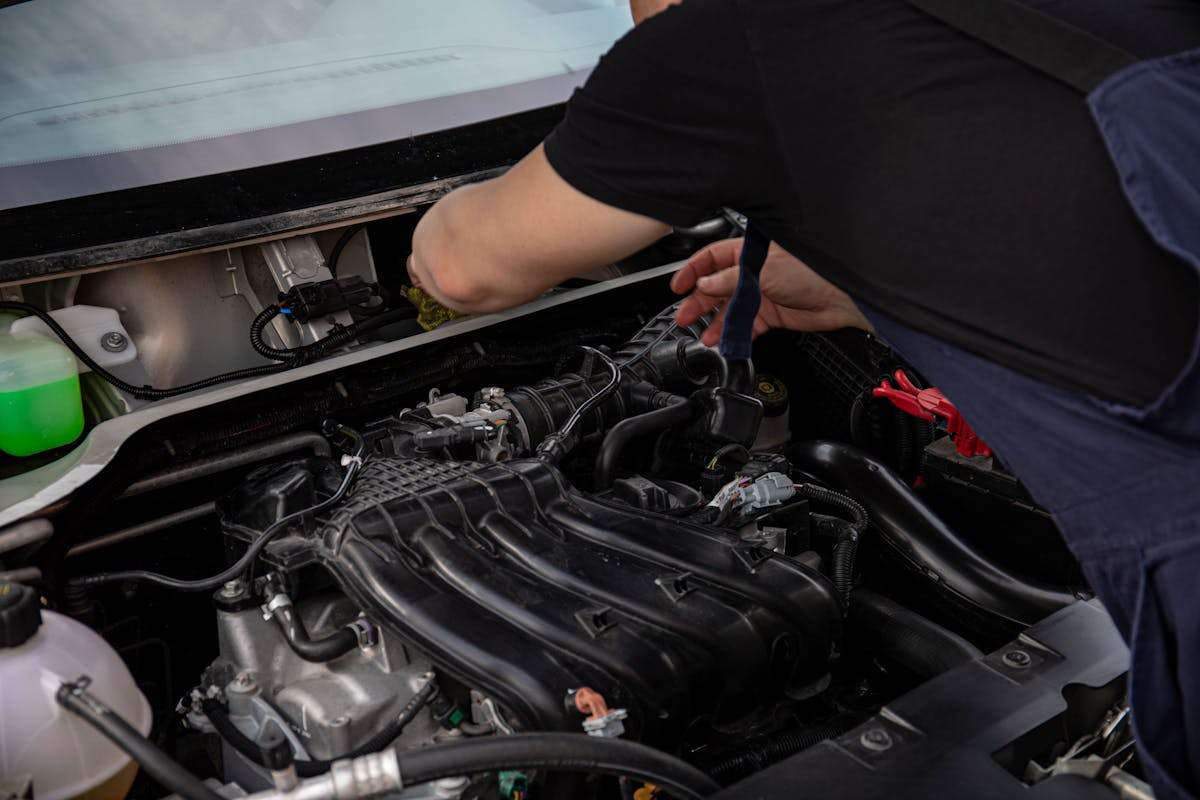
Heat is the thing that kills cars in summer, and it does it two ways most guys never think about until they're stranded on a shoulder watching steam curl out from under the hood. The first is the cooling system, which fights to keep your engine from melting itself. The second is the air conditioning, which fails on exactly the day you need it most — a 95-degree traffic jam in July. Both are cheap to maintain and brutally expensive to ignore, and June is the right month to deal with them, before the first real heat wave finds the weak spot you've been driving around for a year.
This isn't about being a mechanic. It's about ten minutes of looking and a couple of small decisions that separate the guy who cruises through August from the guy who's calling a tow truck and rearranging his afternoon around a $1,200 repair.
The cooling system is where the real money hides
Your engine runs best around 200 degrees and stays there because coolant circulates through it, carries the heat to the radiator, and the radiator dumps it into the air rushing past. Simple system, lots of failure points. The coolant itself breaks down over time — it's not just colored water, it's got corrosion inhibitors that wear out, usually somewhere between 60,000 and 100,000 miles depending on the type and the manufacturer. Old coolant turns acidic and starts eating the aluminum parts of your engine from the inside, which is how a $40 flush you skipped becomes a $900 water pump or a cracked radiator.
Pop the hood when the engine is dead cold — never warm, the system's pressurized and hot coolant will burn you badly — and look at the overflow reservoir. The level should sit between the min and max lines, and the coolant should look bright, like the fresh stuff. If it's rusty brown, murky, or you can't remember the last time it was changed, get it flushed. On most cars a shop charges $100 to $150 for the job, and it's some of the best money you'll spend all year.
The hose and belt check that takes ninety seconds
While the hood's up and the engine's cold, squeeze the big radiator hoses. They should feel firm but with a little give, like a ripe tomato. If they're rock-hard, mushy, or you feel cracks when you bend them, they're on borrowed time — a hose that lets go on the highway dumps your coolant in seconds and the engine overheats before you've found a safe place to pull over. A replacement hose runs $20 to $40 in parts. A blown head gasket from running an overheated engine runs $1,500 to $2,500. That's the whole math of summer car care in one comparison.
- Check the serpentine belt for cracks, glazing, or fraying — it drives the water pump, and if it snaps, cooling stops instantly. Most belts last 60,000 to 100,000 miles but heat ages them faster.
- Look for any crusty white or green residue around hose connections and the radiator — that's dried coolant, the fingerprint of a slow leak you'll want to chase down before it becomes a fast one.
- Glance at the ground where you park. A puddle of sweet-smelling orange or green fluid is coolant and means a leak that won't fix itself.
Air conditioning: cheap to recharge, expensive to neglect
If your AC blows cool but not cold, the most common culprit is low refrigerant, and that usually means a small leak somewhere — the refrigerant doesn't get "used up," it escapes. A recharge kit from any auto parts store runs $30 to $50 and buys you a season, but understand it's a patch, not a fix. If you're recharging every few months, you've got a leak worth finding, and a shop diagnosis runs around $100 to $150 to pinpoint it.
Here's the honest part most guys skip: a single recharge is fine and frugal. Doing it three summers in a row while ignoring the leak is how you eventually wreck the compressor, and a compressor replacement on a typical sedan — say a Honda Accord or a Toyota Camry — runs $800 to $1,500 installed. Catch the leak early and it might be a $200 hose or O-ring. The expensive failure is almost always the cheap problem you let ride.
What's actually worth doing before July
Not everything, and not all at once. Check the coolant level and color this weekend — five minutes, free. Squeeze the hoses while you're in there. Run the AC on max for ten minutes and feel whether the air at the vents is genuinely cold or just less hot. If the coolant's old or murky, book the flush now while shops aren't slammed. If the AC's weak, recharge it once and watch whether it holds; if it doesn't, get the leak found before the compressor pays for it.
The truth about summer breakdowns is that almost none of them are surprises. The hard hose was hard in May. The murky coolant was murky in April. The AC was blowing lukewarm in June and you decided to deal with it later. Later is a tow truck and a wasted Saturday. Ten minutes this weekend is the whole difference.