Timing Chain vs Timing Belt: Which Cars Have Which
A broken timing belt destroys your engine. A stretched timing chain can cost $4,000 to fix. Here is what is under the front cover of your car, and when to worry.
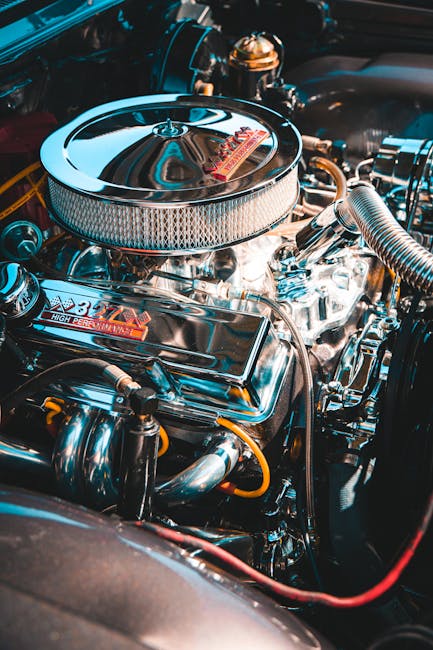
A timing belt replacement on a Honda Accord V6 is a $1,200 job that should happen every 60,000 to 105,000 miles depending on the year. If you skip it, the engine does not just fail, the valves slam into the pistons and destroy the top end of the engine. Repair is $5,000 or engine replacement at $8,500. A timing chain on a BMW N20 engine does not have a scheduled replacement interval, but the chain stretches around 80,000 miles and the repair is $3,500 to $5,000. Different technology, different failure modes, different repair bills. Knowing which one your car has matters more than you might think.
I have replaced both in my own garage and watched both fail in friends' cars. The rules about when to worry, what to do, and how much it costs are less obvious than the basic "chains are forever and belts need replacement" story that dominates internet conversations. In 2026 the landscape is complicated by the fact that modern timing chains fail in patterns that older chains did not, while modern timing belts are more reliable than they used to be.
Why This Matters
The timing belt or chain connects the crankshaft to the camshaft. The crankshaft is driven by the pistons going up and down. The camshaft opens and closes the intake and exhaust valves. If the timing of these two is wrong by even a little bit, the valves open when the piston is at the top of the cylinder, and the result is what mechanics call "interference engine" damage. Bent valves at minimum. Damaged pistons, broken connecting rods, or cracked cylinder heads in severe cases. On an interference engine, a timing belt or chain failure is an immediate engine rebuild.
Most modern engines are interference engines. Non-interference engines, where the valves and pistons cannot hit each other even if timing fails, are essentially extinct in anything newer than a base-trim Chrysler or an older Toyota inline-four. If your car is less than 20 years old, assume the engine is interference and assume that timing system failure equals major damage.
Timing Belt Cars That Still Exist
Timing belts are increasingly rare in new cars but are still common on used cars from the last 20 years. The most common timing belt engines you will encounter in 2026 include Honda V6 engines in the Accord and Odyssey from 2003 to 2017, Honda four-cylinder engines in the Civic from 2001 to 2005, Toyota V6 engines in the Camry and Avalon from 2000 to 2006, Audi 2.0T and 3.2 V6 engines in the A4 and A6 from 2005 to 2012, Subaru flat-four engines from 1999 to 2012, and many Volkswagen engines through 2014.
Timing belt intervals vary by engine. Honda J-series V6 is 105,000 miles. Toyota 1MZ V6 is 90,000 miles. Subaru EJ25 is 105,000 miles. Volkswagen 1.8T is 60,000 miles on early cars, 90,000 miles on later cars. Audi 2.0T FSI is 80,000 miles. Always check the specific year and engine of your car against the manufacturer's service manual, not against an internet guideline that may be out of date or wrong for your specific engine.
The cost of a timing belt replacement on a four-cylinder engine is typically $500 to $800 at an independent shop. On a V6 or V8 with a timing belt, the cost rises to $900 to $1,400. A proper timing belt service also includes replacing the water pump (usually driven by the timing belt), the idler pulleys, the tensioner, and the serpentine belt. If your shop quotes you $500 for just a timing belt without the associated components, find another shop.
Timing Chain Cars and Their Real-World Failure Rates
Timing chains are now standard on most new engines. Chains do not have a fixed replacement interval because they are designed to last the life of the engine. The word "designed" is doing a lot of work in that sentence. In reality, many modern timing chains fail well short of the life of the engine, and the failures are expensive.
The most problematic timing chain engines in the used car market include BMW N20 four-cylinder engines from 2011 to 2015, BMW N55 inline-six engines from 2010 to 2015, Audi 2.0 TFSI engines from 2008 to 2014, Mini Cooper N18 engines from 2011 to 2016, Hyundai and Kia 2.4 and 2.0 GDI engines from 2011 to 2019, and Ford 1.0 and 1.6 EcoBoost engines from 2012 to 2019.
The BMW N20 timing chain failure pattern is well-documented. The plastic chain guides wear prematurely, allowing the chain to develop slack. The engine begins to make a characteristic rattle at cold start, which gradually gets louder. If ignored, the chain eventually skips a tooth and the engine is destroyed. Preventive replacement at 80,000 to 100,000 miles is $3,500 to $5,000 at an independent specialist. Waiting until the engine fails costs $10,000 to $14,000 for a used replacement engine installed.
The Audi 2.0 TFSI chain failure is similar but happens earlier, around 60,000 to 80,000 miles. The tensioner design was updated several times and the last generation is reasonably reliable, but earlier engines with the original tensioner are genuine time bombs.
Hyundai and Kia GDI engines have a different chain failure pattern, where the chain develops rattle from stretched links rather than worn guides. The typical failure point is around 100,000 to 120,000 miles. These engines also have other documented issues including rod bearing failures on some 2011 to 2015 Theta II engines, so the chain issue is sometimes masked by other problems.
How to Tell If Your Chain or Belt Is Going
The warning signs for both chains and belts are similar but not identical. Belts usually fail without warning, which is why scheduled replacement is so important. Chains give you warning signs in the form of rattles, rough idle, check engine lights with camshaft position sensor codes, and eventually power loss.
Cold start rattle on a chain-driven engine is the first warning sign. A healthy modern timing chain is silent. A chain with worn guides or tensioners will produce a distinct metallic rattle for the first few seconds after cold start, usually from the passenger side of the engine where the timing cover is located. Any cold start rattle that lasts longer than 2 seconds warrants diagnosis.
Check engine codes in the P0011 to P0019 range (camshaft position, timing correlation) are strong indicators of timing chain stretch. These codes may come and go intermittently in early stages, then become persistent as the chain gets worse.
Rough idle and reduced performance at low rpm can indicate timing chain issues on engines with variable valve timing. The VVT system relies on precise chain position, and a stretched chain causes the VVT solenoids to work outside their calibrated range.
For timing belts, the warning signs are usually tensioner-related rather than belt-related. A squealing or whining noise from the front of the engine when the engine is cold can indicate a failing tensioner pulley. A small amount of oil or coolant leaking from the front of the engine near the timing cover can indicate a failing front main seal or water pump, both of which usually share the timing belt service.
When to Do What
If you own a timing belt car, replace the belt at the manufacturer's recommended interval or earlier. Do not wait for signs of failure. The belt gives no warning and the failure is catastrophic. When you do the service, replace the water pump, tensioner, idler pulleys, and front seals all at the same time. Budget $800 to $1,500 for a proper service on most engines.
If you own a timing chain car and the chain has a known problem pattern (BMW N20, N55, Audi 2.0 TFSI, Hyundai GDI, Mini N18, Ford 1.0 EcoBoost), consider preventive replacement around 80,000 miles. The $4,000 preventive service is dramatically cheaper than waiting for the chain to fail and needing a new engine.
If you own a timing chain car on an engine without a known chain problem pattern (most Toyota, Honda, Mazda, and GM engines from the last 15 years), drive it normally and pay attention to warning signs. Change oil at proper intervals to avoid contributing to chain wear. Chain replacement on these engines is genuinely rare before 150,000 miles.
If you are buying a used car, research the specific engine family before you commit. A chain-failure-prone engine at 60,000 miles is a purchase decision. A chain-failure-prone engine at 90,000 miles without documented replacement is a car that needs $4,000 spent on it immediately. Negotiate accordingly, or walk away.
My Own Rule of Thumb
The simplest way I think about this is that timing belts are a maintenance item on the manufacturer's schedule, while timing chains are a wear item that may or may not need attention depending on the specific engine. Neither is inherently better than the other. Belts are more predictable because you can schedule their replacement. Chains are unpredictable but usually last longer when they are good.
If I am looking at two otherwise identical cars, one with a timing belt and one with a timing chain, I usually prefer the one with the chain if the engine is from a family without known chain problems. The chain car has no scheduled expense in the 100,000-mile range. If the engine is from a problematic family, I prefer the timing belt car because at least the replacement is a known cost on a known schedule.
What you should never do is ignore the timing system entirely. I have watched friends buy used cars at 85,000 miles, skip the timing belt service to save $800, and two months later be looking at a destroyed engine. I have watched other friends hear a faint chain rattle on a BMW, ignore it for 3,000 miles, and end up needing a full engine replacement. This is one of those car maintenance areas where paying attention saves real money. Ignore it at your own peril.