What Men Actually Want in a Car at 40 vs 25
The car priorities you have at 25 are not the priorities you will have at 40. Here is what changes and why.
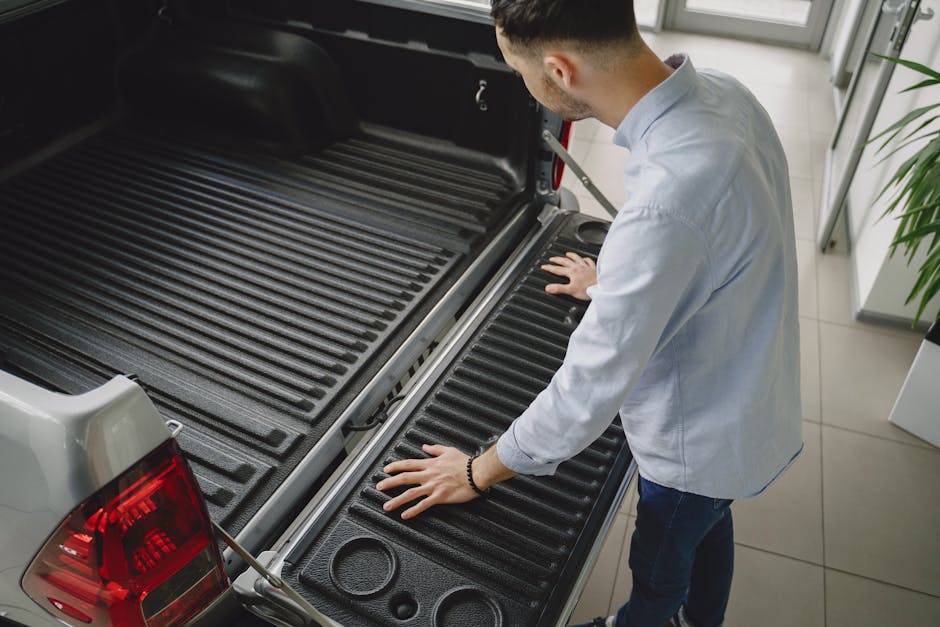
A conversation I had with my best friend's dad a few years ago sticks with me. He said something like "when I was 25, my dream car was a Corvette. Now I'm 55 and I just want a Camry that's really quiet." He wasn't unhappy. The Camry genuinely satisfied him in a way the Corvette never would have at this stage of his life. The shift in what men actually want from cars as they move from 25 to 40 to 55 is one of the better unspoken truths of adulthood. It happens gradually and almost everyone goes through it.
I'm 39 as I write this. I bought an M3 at 27, an M4 at 31, and my current car is a lightly-modified Tacoma TRD Off-Road. The trajectory has been consistent even when I fought it. What 25-year-old me wanted from a car and what 40-year-old me wants are genuinely different things, and the difference is worth understanding if you're currently somewhere in that age range and trying to figure out what to buy next.
What 25 actually wants
At 25, the car is a declaration. A 2005 WRX, a 2015 Mustang GT, or a used E46 M3 says something specific about who you are to yourself and the world. You're establishing identity. The car is part of the performance of being an adult who has arrived. This isn't bad. It's developmentally appropriate. Young adults build identity through external choices, and cars are one of the accessible ways to do this.
The priorities at 25 tend to be specific and emotional:
- Acceleration matters enormously; zero to sixty times are memorized
- Cornering feel matters; the car should respond to inputs immediately
- Exhaust note matters; quiet cars are for dentists
- Image matters; the car communicates status and taste
- Modification potential matters; factory is usually a starting point
- Reliability matters less than advertised; you can hack around problems
- Comfort matters less; stiff suspension and bucket seats are features
- Fuel economy is a boring adult concern
The 25-year-old will accept compromises a 40-year-old won't. Forty-minute commute in a track-tuned M3 with rock-hard suspension? Sure, fine. Running premium gas at $5.80 a gallon? Whatever. No back seat useful for adults? Irrelevant. The driving experience is worth the downsides.
The financial reality at 25
Here's where it gets complicated. Most 25-year-olds buying performance cars are stretching financially. The M3 I bought at 27 cost me a third of my take-home pay once I factored insurance, premium fuel, maintenance, and depreciation. I wasn't being financially wise. I was making a choice about what I valued. Other sacrifices made that possible.
This is the subtext nobody says out loud: the performance car in your mid-twenties is usually financed by pushing other aspects of life down the priority list. Smaller apartment. Less saving. Less travel. Less of whatever you're not prioritizing. Whether that trade-off is worth it depends on how much joy the car provides you. For some people it's absolutely worth it. For others it becomes a resentment they carry for years.
What 40 actually wants
The priorities shift. They don't shift because you become less interested in cars. They shift because life has taught you where driving fits in the broader picture, and the answer is different from what you thought at 25.
By 40, you've probably accumulated context. Marriage, kids, mortgage, career responsibilities, health events, the loss of at least one close friend or family member. These things reshape perspective. The car becomes less about identity and more about function. Not purely functional, because you still care, but functional in a way that integrates with the rest of life.
Typical 40-year-old priorities:
- Reliability matters enormously; unexpected problems disrupt too many other commitments
- Comfort matters; a stiff ride is no longer a feature
- Space matters; kids, dogs, camping gear, hockey bags
- Quietness matters; road trips happen more often and matter more
- Running cost matters; insurance, fuel, maintenance add up across a longer time horizon
- Resale and depreciation matter; you're thinking about the car as part of financial planning
- Performance still matters, but defined differently
"Performance still matters, but defined differently" is the line that deserves expansion. At 25, performance means "how fast can it go" and "how does it handle at the limit." At 40, performance often means "can it handle a loaded family of four plus gear for a 1,200-mile road trip across mountain passes without drama." Different definition, but still performance. The Lexus LX570 that a 40-year-old chooses is a performance vehicle in its own category, it's just not a sports car.
The specific cars that resonate at 40
The pickup truck that's gotten popular. Toyota Tacoma, Ford F-150, Chevy Silverado mid-trim. Comfortable, capable, useful for actual tasks like helping friends move or hauling home improvement supplies. A surprising number of 40-year-old men end up here and discover they're happier with a truck than they ever were with a sports car.
Mid-size SUVs. Toyota 4Runner, Lexus GX, Ford Bronco. The category offers space, ability, some personality, and reasonable running costs compared to luxury SUVs. A 4Runner TRD Pro is a legitimate enthusiast vehicle that also takes three child seats.
Wagons and SUVs that handle well. Audi Allroad, Volvo V90 Cross Country, BMW X5, Porsche Macan. These split the difference between family hauler and driving pleasure, and for many 40-year-olds that's exactly the right compromise.
Enthusiast cars as secondary vehicles. A lot of 40-year-old men have a garage spot for something fun alongside the practical family vehicle. A 996 911 for weekends, a Miata for autocross, a classic they've rebuilt. This two-car approach lets them have the reliability and space in their primary car while keeping enthusiasm alive in their hobby car.
Why the shift happens
Three things drive it. First, time becomes scarcer. A 25-year-old has 8 hours a day after work and most weekends. A 40-year-old with a career and family has maybe 4 hours of discretionary time per week, much of which goes to kids' activities, house maintenance, and relationships. The car can no longer be a demanding project because you don't have the time to manage a demanding project.
Second, priorities clarify. At 25, you might genuinely believe driving is your primary passion. By 40, you've realized it's one of several things you enjoy, and probably not the thing that gives you the deepest satisfaction. That clarity changes how much you're willing to sacrifice for the driving experience.
Third, you've discovered what comfort actually means. A 25-year-old thinks uncomfortable cars are tolerable. A 40-year-old has realized that small daily discomforts accumulate into real suffering. A stiff suspension on your 55-minute commute is 500 hours a year of being uncomfortable. That quickly becomes not worth any theoretical handling benefit.
What stays the same
Appreciation for good driving dynamics doesn't disappear. If anything, it becomes more refined. A 40-year-old can feel the difference between good and bad handling in a minivan, and will choose the better-handling minivan even if they'd never admit it to their 25-year-old self. The appreciation just gets applied to different categories of vehicle.
Enjoyment of driving at appropriate speeds remains. Country road cruising, canyon driving on a Sunday morning, the occasional track day. The 40-year-old with a Tacoma daily still enjoys these activities, maybe more than ever now that they're scarcer. Driving pleasure doesn't go away; it just becomes less demanding of attention.
Respect for craftsmanship matures. At 25, you might have preferred a loud exhaust for the attention it brought. At 40, you appreciate a subtly tuned exhaust note that sounds right to you but doesn't announce itself to strangers. Taste evolves toward nuance.
The 30 to 35 transition zone
The years from 30 to 35 are where most men navigate the shift. Early 30s, many still have the sports car from their 20s and are fighting the recognition that it's no longer optimally suited to their life. Late 30s, they've usually surrendered and bought something practical, often with a mix of relief and mild regret.
The men who handle this transition well tend to do one of two things. They either accept the shift fully and find enthusiasm for their new category (becoming the guy who modifies his Tacoma and does overland trips), or they split the garage and maintain a practical daily plus an enthusiasm vehicle. Both work.
The men who handle it poorly try to keep the 25-year-old's choice in their late 30s and early 40s. The M3 that was perfect at 27 becomes a source of low-grade frustration at 38 because it doesn't fit anymore. These guys usually end up selling the car in their early 40s and buying something completely different, often overcorrecting in the opposite direction.
What women notice about this
I've been married for eleven years. The conversation in our house about cars is different now than it was when we first started dating. At the time, my wife thought the M3 was great, partly because it was part of who I was when we met. Ten years later she cares more about whether the car starts reliably when she needs to get our son to the emergency dentist, which is a more rational standard.
Most long-term partners end up on the side of practical over performance. This isn't antipathy toward your hobbies. It's recognition that cars are infrastructure that affect the whole household, and cars chosen purely for driving pleasure often create recurring household friction. A partner who tolerates one sports car probably doesn't tolerate two, and may want the family vehicle to be above reproach.
The financial angle at 40
By 40, financial planning has usually matured. You understand that cars are generally depreciating assets and should be purchased with clarity about that reality. You've probably had enough unexpected expenses (medical, home repair, child-related, career transitions) to value financial flexibility over luxury.
The 40-year-old version of car spending tends toward: fewer cars, longer ownership periods, buying slightly used rather than new, and picking platforms with known reliability and reasonable running costs. Exotic brands become less attractive because the maintenance costs interfere with other financial priorities. Cars become infrastructure decisions rather than identity decisions.
None of this means 40-year-olds can't enjoy cars. It means the enjoyment is structured differently. Weekend car events, track days, long road trips, garage projects done at a pace that respects other commitments. The enthusiasm is alive; it's just more mature.
The cars to avoid in your 40s
Anything that requires constant attention. A Lotus that leaks in the rain. A used exotic with expensive service intervals. A project car that will consume time you don't have. Don't sign up for a vehicle that will frustrate you on average weeks. Save your energy for the vehicle you enjoy.
Cars that don't fit your life. If you have three kids, a coupe is wrong regardless of how much you like it. If you live somewhere with snow, rear-wheel-drive with summer tires is wrong. If your garage is small, a full-size SUV is wrong. Honesty about your life situation is more valuable than aspiration.
The acceptance
The 40-year-old's car choices aren't a defeat. They're a recognition of how life actually works and what makes for satisfaction across thousands of hours of daily use. The Tacoma or Highlander or 4Runner isn't less of a car than the M3; it's the car that fits the life you actually have.
What 25-year-old me wouldn't have understood: the drive home from a vacation with my family, the dog in the back, everyone tired and quiet, rain on the windshield and an easy ride at 70 mph through empty countryside is one of the most genuinely satisfying experiences cars provide. The Tacoma does this perfectly. The M3 would have been miserable for exactly the same drive.
If you're 25 reading this, buy the sports car. Go have the experience. But know that it will lose its magic at some point between 33 and 42, and that's not a failure. It's exactly what should happen. The car that matters at 40 will be different, and that's fine. It might be better.