Running Out of AdBlue: Why Your Diesel Won't Just Warn You, It'll Refuse to Start
Ignore the AdBlue warning long enough and your diesel won't stall on the road — it'll simply refuse to start again next time you switch it off. Here's what's actually happening, and how to stay ahead of it.
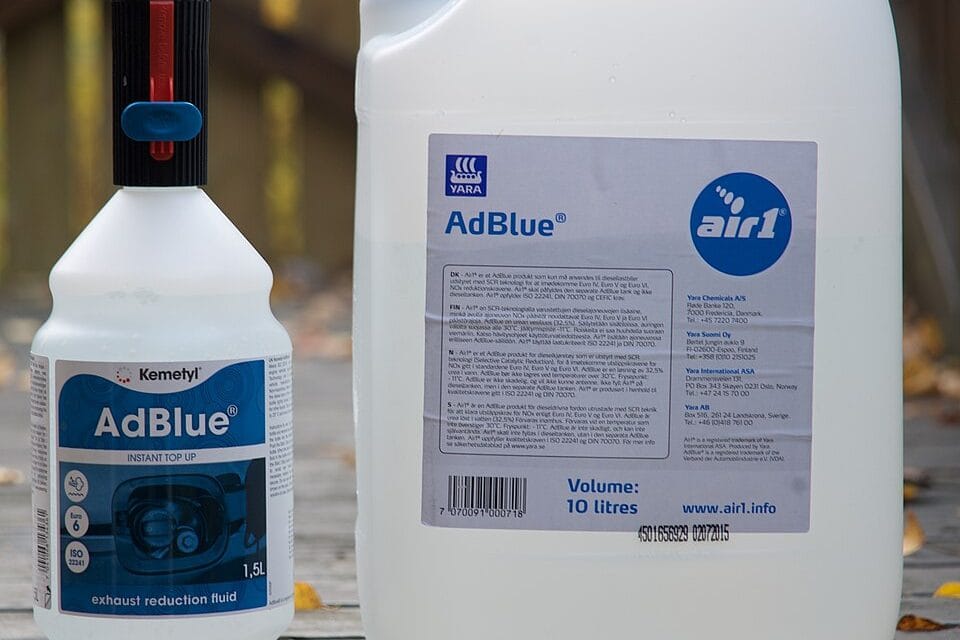
The Car That Won't Start, and There's Nothing Wrong With It
The battery's fine. The starter motor turns over. The dash lights up exactly as it should, and then the engine simply refuses to catch — no splutter, no false start, just a flat refusal and a message on the display that most drivers have never actually read properly. It's not a fault in the conventional sense. Somewhere in the last few hundred miles, a warning light most owners treat as background noise finally ran its course, and the car's software did exactly what it was built to do: lock the ignition out rather than let a diesel run without its emissions system working. For a driver who's never let AdBlue get anywhere near empty, this looks like a breakdown. For the car, it's a design feature working precisely as intended.
What AdBlue Is Actually Doing Under the Car
AdBlue is a solution of 32.5% urea in deionised water, sprayed into the exhaust stream ahead of a catalyst called the SCR — selective catalytic reduction — where it breaks down nitrogen oxide emissions into nitrogen gas and water vapour before they ever reach the tailpipe. Every diesel car type-approved to Euro 6 since September 2015 in the UK and EU carries this system as standard, from a Ford Focus 1.5 TDCi to a Range Rover D350. Volkswagen Group cars use the AdBlue trademark, which belongs to the German motor industry association VDA; Ford, Vauxhall, and most others simply call it Diesel Exhaust Fluid, but it's the identical ISO 22241 fluid doing the identical job under a different label on the dash. The tank sits separately from the diesel tank, usually with its own blue-capped filler next to or behind the fuel neck, and it drains on its own schedule that has nothing to do with how much fuel is left.
The Countdown Nobody Reads Until It's Too Late
Most systems start nagging around 2,400 km — roughly 1,500 miles — of AdBlue range remaining, which sounds generous right up until you realise most owners never look at that particular readout between services. The message escalates in stages: a low-priority notice first, then an amber warning somewhere under 1,000 km, then a harder red alert inside the final 400 km with a countdown that updates every time you start the car. Ignore all of that and the range display eventually reaches zero, at which point nothing dramatic happens on the road — this is the detail that catches people out, because the engine doesn't cut out mid-journey. It keeps running perfectly normally right down to empty. What changes is the next time you switch the ignition off, whether that's for fuel, a supermarket run, or simply parking outside your own house overnight. Turn the key again and the engine management system won't let the starter engage, full stop, and that's not a fault code a local garage can quietly clear with a diagnostic tool.
Why Manufacturers Aren't Allowed to Soften This
This isn't a manufacturer being heavy-handed to sell more dealer top-ups — it's a regulatory requirement baked into Euro 6 type approval. Real Driving Emissions testing, phased in from 2017 onward, pushed NOx limits down hard enough that carmakers needed a way to guarantee the SCR system couldn't simply be starved of fluid and ignored, which is exactly what happened with some pre-2015 systems that had no hard lockout at all. The engine-start inhibit exists because regulators had already watched drivers treat AdBlue as optional once the warning light became routine background noise, and a car that keeps running with a disabled emissions system defeats the entire point of fitting one. Manufacturers that want their diesel range type-approved in the UK and EU don't get to choose whether this feature exists; they only choose how the warning is worded on the way there.
The Water Myth That Costs More Than It Saves
Don't do it.
Somewhere on every owners' forum, someone suggests topping up with tap water when the AdBlue light comes on and the nearest bottle is forty miles away. The SCR system doses fluid based on a known 32.5% urea concentration, and diluting that ratio doesn't just make the system slightly less effective — on most cars it trips a fluid-quality sensor that throws its own fault code, sometimes locking the ignition out faster than simply running dry would have. Worse cases involve the dosing injector itself, a precision component that can clog or corrode when fed the wrong fluid, and that's not a five-minute fix: a replacement SCR dosing module runs anywhere from £500 to £1,500 depending on the platform, before labour. Genuine AdBlue costs a few pounds a litre. There's no version of this trade that favours the water.
One Genuine Exception Worth Knowing
The one caveat here — and it's a real one, not a loophole — is that a handful of older systems, mostly early Euro 6b implementations from 2015–2016, are more forgiving of a brief low-level warning than the newer Euro 6d-Temp and Euro 6d cars fitted since 2019, which run tighter NOx thresholds and correspondingly less patient software. If you're driving a 2016 Passat versus a 2022 Tiguan, the older car may give you a slightly longer grace period after the first amber warning appears. That's not licence to ignore the light either way — it's simply why two people can compare notes about the same warning and get different real-world outcomes.
Topping Up Is Genuinely Not a Big Job
Buy AdBlue at a Halfords, an Euro Car Parts branch, or most large supermarkets, and a 5-litre bottle from a recognised brand like Millers Oils, Prime, or Halfords' own range costs somewhere between £6 and £10. Motorway service stations including Moto and Roadchef increasingly run dedicated blue-nozzle AdBlue pumps alongside diesel, and buying it that way — by the litre rather than the bottle — usually works out at 65p to 90p a litre, noticeably cheaper than pre-bottled containers once you're doing it regularly. The filler itself sits under a blue cap, most often next to the diesel filler flap, though on some estate and SUV models it's tucked into the boot near the spare wheel well instead, so it's worth checking the handbook once rather than hunting for it at a service station forecourt in the rain. Pour steadily, replace the cap fully, and the dash warning typically clears within a few miles of driving once the sensor recalculates the new level.
How often this comes up depends heavily on the car. A Ford Fiesta or Focus with a small SCR tank — often around 8 litres — burns through AdBlue at roughly one litre per 600 to 900 miles and can need topping up between services on a high-mileage year, while something like a Volkswagen Passat or a Transporter van with a 17- to 24-litre tank will often go a full service interval without the driver ever touching it. Larger, heavier vehicles under harder load — a loaded van, a car doing constant towing — burn AdBlue faster than the same engine cruising gently on a motorway, because dosing scales with how hard the engine is working, not just distance covered. That's worth knowing if you've just bought a used diesel and don't yet have a feel for its particular appetite.
Not Every Dashboard Tells You the Same Story
Premium infotainment systems tend to make this easier than it needs to be — BMW's iDrive and Mercedes' MBUX will both show a precise litre count and an estimated range in miles the moment you dig into the vehicle status menu, and Audi's virtual cockpit does the same without much digging at all. Step down to budget diesel ranges and the information gets thinner: some Dacia Duster and entry-level Kia Sportage diesels reduce the whole system to a single amber icon with no numeric readout, which tells you a warning exists without telling you how much runway is actually left. That gap matters more than it should, because a driver checking a precise "1,200 km remaining" figure behaves differently to one staring at an ambiguous icon that could mean anything from a fortnight's grace to a same-week problem. Anyone buying a used diesel is worth spending five minutes with the manual working out exactly what their particular dash is — and isn't — telling them.
Build the Habit Into Something You Already Do
Check the AdBlue level whenever you check tyre pressures or wiper fluid — most manufacturers now show the range in miles or kilometres on the driver display, a few taps into the trip computer menu away from the fuel gauge. Buy a spare 5-litre bottle and keep it in the boot the way you'd keep a can of screenwash, because the fifteen minutes it takes to top up at home beats standing at a motorway services forecourt at 6am after an overnight warning finally tipped into the red. And if you're shopping for a used diesel, ask the seller or check the service history for AdBlue top-ups specifically — a car that's been driven to zero and reset by a dealer more than once has usually had a driver who ignored the dash for months at a time, which tells you something about how the rest of the car's been looked after too.
None of this is really about the fluid itself, which is cheap, widely available, and about as complicated to top up as washer fluid. It's about the fact that a diesel's AdBlue range and its fuel range run on completely separate clocks, and only one of the two dash warnings actually stops the car from starting again. Treat the blue-capped filler with the same seriousness as the black one, and the countdown never gets anywhere near becoming a problem you find out about outside a shut petrol station.