Antifreeze Before the First Frost: Why a Full Coolant Tank Can Still Be a Weak One
The coolant level can sit between MIN and MAX while the antifreeze inside has lost much of its strength. Here is the five-minute test, what a tester and a garage coolant change cost, and why you should never buy by colour.
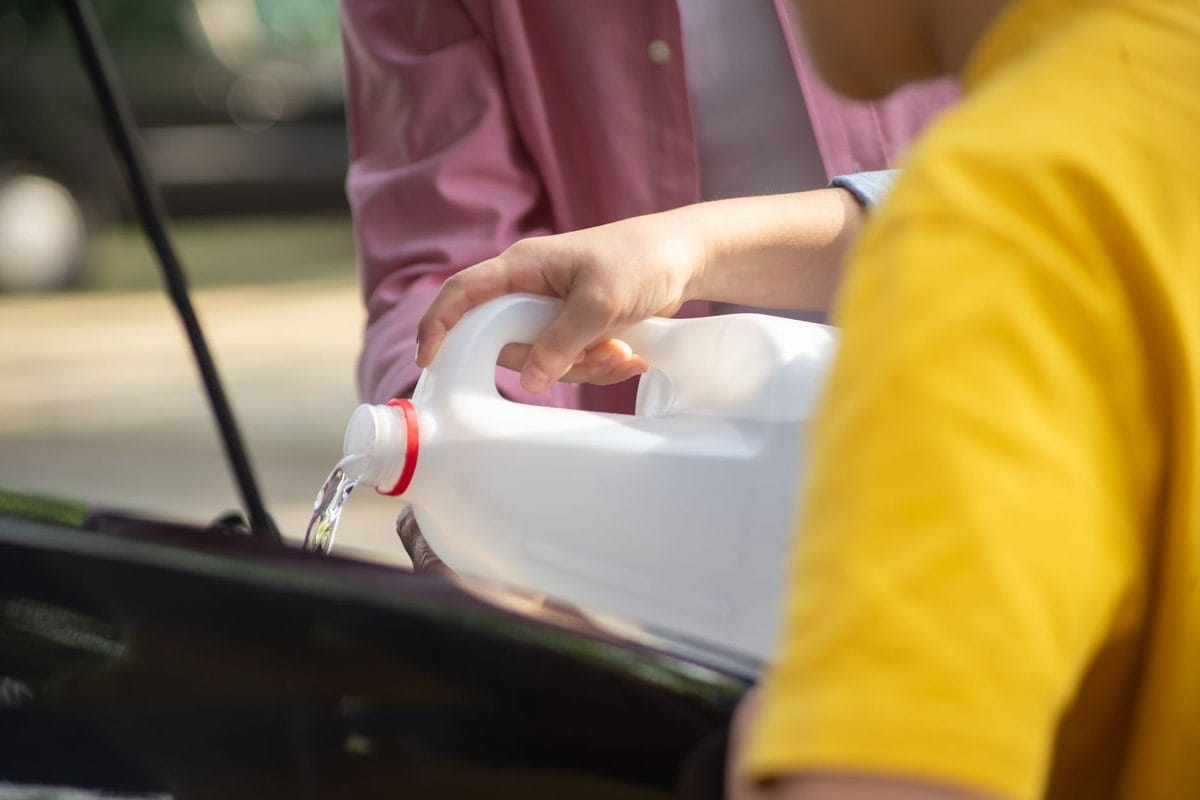
Lift the bonnet on a chilly October morning and the coolant expansion tank looks perfectly healthy: a pink, green or blue liquid sitting neatly between the MIN and MAX marks. For most drivers that glance is the whole winter check, and it answers only half the question. The marks tell you how much liquid is in the system, but they say nothing about how much of it is antifreeze. A tank topped up with tap water for a few years, or one whose additives have simply aged out, passes the glance test while protecting far less than the label on a fresh bottle promises.
Both the AA and the RAC advise checking coolant at least twice a year, once before winter and once before summer. October suits the winter check because nothing has frozen yet, so whatever you find is a planned job rather than a roadside one. The test takes about half an hour on a dry Saturday and needs one cheap tool, which is the part most people skip.
What Frozen or Weak Coolant Actually Breaks
Water expands as it freezes, and the AA's guidance is blunt about the consequences: it can split radiators, pipes and water pumps, or even break engine casings. A radiator repair runs between £200 and £700 according to the RAC, and a split casing is a different order of bill altogether. Weak coolant has a second way of hurting you that has nothing to do with frost. Antifreeze also raises the boiling point of the coolant and carries the corrosion inhibitors, so an old, diluted mix is more likely to let the engine overheat, and the RAC warns that repeated overheating can cause major engine damage. Its average price for a head gasket replacement is around £633, with the manufacturer-by-manufacturer figures on the same page running from £522 to £1,071.
Here is the nuance, though. A correctly mixed system will almost never be tested by a British winter. The Met Office lists the lowest temperature ever recorded in England as -26.1°C, at Newport in Shropshire in January 1982, and the UK record of -27.2°C belongs to Scotland, while a healthy 50/50 mix is good for roughly -36°C. The danger is not the coolant you think you have. It is the one you have never measured, after a hose repair, a cheap top-up or three winters of adding water whenever the level dipped.
Why 50/50 Beats "Extra Strong"
More antifreeze does not mean more protection. Hella's technical guide puts the ideal water-to-antifreeze ratio between 60:40 and 50:50, which usually corresponds to protection from -25°C to -40°C, and it states that going richer than 40:60 does not lower the freezing point any further. Undiluted antifreeze freezes at around -13°C, and Monarch Chemicals, a UK supplier, gives a similar figure of about -12°C for pure ethylene glycol against roughly -36°C for a 50/50 mix. Neat concentrate also carries heat away poorly, so Hella notes that an engine running on it would overheat once temperatures climb above 0°C. Pouring in a splash of concentrate "to be safe" is therefore the wrong instinct. Top up with ready-mixed coolant, and if you buy concentrate, dilute it before it goes anywhere near the engine, using distilled water as the AA recommends.
Plain water is a fine emergency measure and a bad habit. The RAC says a little water added to coolant shouldn't do any real damage, but too much lowers the boiling point and stops the coolant working efficiently, and the AA treats water as a get-me-home option only. Kwik Fit's advice is to keep spare coolant in the boot, and at the time of writing a 2-litre bottle of Halfords OAT ready-mixed is listed at £14.99, with the 5-litre at £20.99.
The Five-Minute Test
You need a cold engine, a torch and a coolant tester. Never open the cap on a warm engine: the RAC points out that pressurised hot water can build up inside, and the AA says never to open it when the engine is warm or running.
- Park on level ground and leave the engine off for a few hours, so everything is properly cold.
- Read the level against the MIN and MAX marks on the side of the tank. A level that keeps falling after a top-up usually points to a leak, the RAC says, and that needs a garage rather than more fluid.
- Look at the colour and clarity of the liquid.
- Draw a sample with the tester and read the freeze-protection figure.
- Write the reading and the date somewhere you will find it again, such as the service book.
On the look test, Hella says coolant turns brown once its corrosion-protection additives are exhausted, Prestone lists cloudy, dirty or particle-filled coolant as a reason to flush the system, and the RAC says rust or discolouring means it needs changing straight away. Clear and clean is not proof of strength, though, which is where the tester comes in.
A tester is essentially a pipette attached to a small see-through container, and its built-in gauge shows the level of freeze protection, as Prestone's guide describes it. Auto Express tried seven of them last November, and noted that a tester can cost from under £8. It tested them on a fresh bottle of Prestone rated to -37°C and on a car whose coolant had not been serviced since 2021. The Halfords tester, priced at about £13.99, read -32°C to -37°C on the fresh bottle and between +5°C and -15°C on the neglected car. That gap is the whole argument for testing: the old coolant looked like coolant and was nothing like the strength on the label. Pipette-style testers give a range rather than a single figure, and Auto Express found the rotary-dial types more accurate, ranking the BGS DIY 1822 and the Sealey Twin-rotor ahead of the Halfords. Buy a rotary-dial tester if you will use it every autumn; the pipette type is fine for a simple pass or fail. If you would rather not buy one, the AA says most garages have the tools, and Kwik Fit says its centres can check the strength of your existing antifreeze.
Judge the result against Hella's range, because a healthy mix protects somewhere between -25°C and -40°C. If the tester shows something much warmer than that, the system has been diluted, and the cure is a proper drain and refill rather than another splash of anything.
Colour Will Not Tell You What to Buy
Do not choose antifreeze by colour.
The AA states that the colour of the liquid in your tank is not proof of the type or quality of product that was used, and Kwik Fit gives the same warning. Even the motoring organisations do not agree on the code: the AA lists red or orange as organic acid technology (OAT) and yellow or gold as the hybrid (HOAT), while the RAC calls red antifreeze the hybrid. What matters is the specification in your handbook, and Hella's guide cites Volkswagen Group codes such as G12++ and G13 as examples. Mixing coolants that are incompatible or unsuitable for your car can cause serious damage, according to F1 Autocentres, and the AA says to use only the manufacturer's recommended fluids while the car is under warranty, then a product meeting the same specification afterwards.
| Type | Usual colours (AA) | Typical life (AA) |
|---|---|---|
| IAT | Green or blue | 2 to 3 years or 30,000 miles |
| OAT | Red or orange | Up to 5 years or 150,000 miles |
| HOAT | Yellow or gold | Around 5 years or 150,000 miles |
| Si-OAT | Blue | Around 5 years or 150,000 miles |
Treat that table as a rough guide and the handbook as the rule. Spend the extra on the bottle it names: two of the Halfords 5-litre ready-mixed bottles are listed at £20.99 for OAT and £27.99 for the G40, a gap of about £7, which is nothing beside the radiator figures above, and the AA calls a cheaper, inferior product a false economy.
How Often It Needs Changing, and What a Garage Charges
The sources disagree, and that is worth admitting. ClickMechanic says most manufacturers recommend replacement every 30,000 miles or two years, with long-life coolants lasting up to 60,000 miles or five years. The AA gives two to three years or 30,000 miles for traditional green or blue and up to five years or 150,000 miles for OAT, while the RAC says three years or 36,000 miles for green and five years or 150,000 miles for orange. Hella adds that some long-life fills are not changed at all under normal circumstances, and newer Mercedes models only after 15 years or 250,000 km. Your handbook's service schedule outranks every one of those numbers. If you have bought a used car and nobody can tell you when the coolant was last done, treat its age as unknown and test it, which is Prestone's advice too.
A garage coolant change costs less than most people expect. ClickMechanic quotes £40 to £90 with an average around £65, while Autobutler says to expect about £100 and nearer £200 on some cars. Do the top-ups yourself, because it is a two-minute job with a funnel, but pay a garage for a full drain and refill. The AA calls antifreeze a hazardous substance and says a wrong-type fill should be drained and flushed by a professional, and F1 Autocentres is clear that old coolant must not go onto the ground, down a drain or into the bin; garages and some recycling centres will take it.
The Sweet-Tasting Hazard on Your Garage Shelf
Ethylene glycol tastes sweet, and dogs and cats go for it. The PDSA says even very small amounts can cause permanent kidney damage in a dog, that signs can appear within an hour, and that many dogs die from ethylene glycol poisoning. Survival chances are better when treatment starts within 12 hours, and the charity's advice is to ring a vet at once rather than wait for symptoms. Clear any spill immediately, keep the product in its original labelled, sealed container out of reach, and dispose of empties properly, because dogs may be poisoned by rain water collected in old antifreeze containers. Some products add a bittering agent, Prestone's Bitrex among them, though the PDSA says that is not completely reliable.
Do the test this month while the weather is mild. Write the reading on the first page of the service book, and next October you will have a number to compare it with, which beats guessing from a glance at the tank.