Best Used Sports Cars Under $30,000 in 2026: Fun Without the Depreciation Hit
A used sports car at $30K can mean a Cayman that still feels brand new, or a money pit that eats a transmission every spring. Here is how to tell.
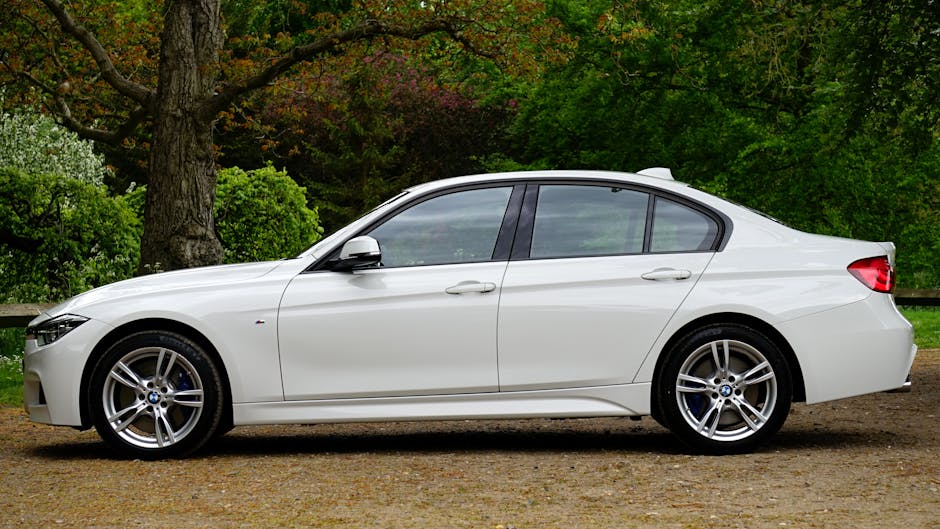
Two weekends ago, a friend drove his 2016 Porsche Cayman into my driveway with a grin that said the $28,500 he paid for it last month had been one of the best decisions of his life. That same weekend, another friend spent $2,400 on a new turbocharger for a Nissan 370Z he bought for $19,000 the year before. Both cars are "sports cars under $30K." One is a genuine bargain. The other is a warning, and a warning that tends to get louder the longer you own the car.
The used sports car market in 2026 has quietly become one of the most interesting segments in the whole industry. New performance cars keep climbing, most of them now start north of $50,000 and the good stuff lives near $80,000. Meanwhile, a small group of two-door cars from 2014 to 2018 has reached the bottom of the depreciation curve. They are still fast, still engaging, and they still feel like something special in a world filling up with identical crossovers. If you pick carefully you can drive a car that will make you look forward to Saturday morning, and if you pick badly you will spend more on repairs than you paid for the car itself.
Most buyers in this bracket are making the jump from a sensible sedan or a crossover, which means they also bring with them the expectation that any 12-year-old car should run like a new Camry. That expectation is the single biggest reason people end up unhappy with their used sports car purchase. The cars on my list below are reliable for what they are. They are not as reliable as a new Civic, and they never will be.
The Cars That Actually Deserve Your $30,000
The 2014 to 2016 Porsche Cayman 981 is the first car I tell anyone about. These are showing up in the $25,000 to $29,000 range now, and the base 2.7-liter flat-six makes 275 hp which does not sound like much on paper but feels plenty quick when the steering is this good. The PDK dual-clutch is fine, but the six-speed manual is one of the last honest-to-god shifters left in production. Mileage on most examples sits between 45,000 and 75,000, and the engines are solid on the 981 generation after Porsche fixed the IMS bearing issue of the earlier 987 cars. Watch for RMS oil leaks but do not panic about them, they are cheap to fix during a clutch job. The big thing to check is water pump age, they fail around the 70,000 to 80,000 mile mark and a DIY replacement is a two-Saturday job on a lift.
The 2015 to 2017 BMW M235i is the second car. You can find nice examples for $22,000 to $28,000 depending on transmission and options. The N55 inline-six puts down 320 hp and will run 5.0 seconds to 60 all day long. It is not an M-car and the purists will remind you of this endlessly, but honestly the M235i was better sorted than the first-generation M2 in some ways, especially on rough roads. Manual cars hold their value noticeably better than the ZF automatics. Weak points include the valve cover gasket, the oil filter housing gasket, and the water pump, all of which are normal BMW inline-six maintenance and total maybe $1,600 if you pay a shop or $400 if you do it yourself.
For something more raw, the 2013 to 2016 Scion FR-S or Subaru BRZ remains the purest driving car you can buy for the money. These start around $14,000 and nice ones with less than 60,000 miles run $19,000 to $23,000. Yes, 200 hp is not enough on paper. No, it does not matter. The steering, the chassis balance, and the feeling of driving a car at 80 percent of its limit on a public road is worth more than horsepower you will never use. Swap in a proper set of tires, a 200-treadwear Michelin Pilot Sport 4 or better, and the car transforms. The one real weakness is the 2.0-liter flat-four engine itself, the FA20 is known for valve spring issues on early cars, so aim for 2015 or newer.
The 2014 to 2019 Chevrolet Corvette Stingray is the wildcard. Early C7 base cars with under 50,000 miles are now dipping into the $29,000 range, and they have 460 hp from a naturally aspirated 6.2-liter V8. Fuel economy is actually decent on the highway thanks to cylinder deactivation. The interior is rough by modern standards, hard plastics and dated infotainment, but you are buying it for the drivetrain and for the fact that this car used to cost $55,000 new. Watch out for the seven-speed manual shifter, it is notchy and many owners have complained about third gear grinding if the transmission fluid has not been changed.
Cars That Look Great on Paper and Break Your Budget
The Nissan 370Z is the biggest trap in this price range. They sell for $18,000 to $22,000 all day, the VQ37VHR engine sounds glorious, and they look the part. What the listings do not say is that the original radiator design cracks, the clutch slave cylinders leak at around 70,000 miles, and the oil cooler lines weep. A full round of preventive maintenance can easily cost $3,500. Get one only if you are willing to wrench.
The Audi TT RS is another one people ask me about. Gorgeous cars, five-cylinder turbocharged sound, but these are $40,000 cars that dip briefly to $35,000 when high-mileage examples come up, and the repair bills when they do break will humble anyone. DSG clutch packs and carbon cleanings on direct-injected engines add up fast. Not a $30,000 car in any real sense.
Older Jaguar F-Types show up around $32,000 sometimes and people get tempted. Do not. The supercharged V6 and V8 cars both eat supercharger snouts, and a full replacement is north of $4,000 if you pay a shop. Beautiful cars, terrible values. Same story with older Maserati GranTurismo models that occasionally dip into the $30K territory with 80,000-plus miles. The Ferrari-sourced V8 is glorious and the clutch replacement costs $6,000 on a dual-clutch version.
Mileage Sweet Spots and What to Check
For any of the cars I recommend, I stop paying attention to a car at under 30,000 miles and over 90,000 miles. The low-mileage ones are priced at a premium that almost never pays back, and the high-mileage ones are one major failure from costing more than the car is worth. The 45,000 to 75,000 range is where the bargains live. By this point the first owner has already paid for the worst depreciation, but the car has not yet hit the age where things start to fail from simple time.
Before you hand over any money, get a pre-purchase inspection from a shop that specializes in the brand. Not your local neighborhood mechanic. If you are buying a Cayman, find a Porsche specialist. If you are buying a Corvette, find a Chevrolet performance shop. This will cost you $150 to $250 and it is the single most important thing you can do. The inspector will put it on a lift, check the underbody for accident damage, scan for stored fault codes, and drive it hard enough to expose issues that will not show up in a 20-minute test drive. I have had a shop catch a salvaged Porsche with unreported frame damage that saved me from losing the entire purchase price. A real PPI is not a formality, it is the whole point.
Check the maintenance records with actual paper receipts, not verbal promises. A Cayman with a documented 30,000-mile clutch service, annual oil changes, and fresh coolant is worth $4,000 more than a Cayman with no records. The market has not fully caught up to this fact yet, so a well-documented car is a genuine bargain in 2026. A seller who shrugs when you ask for records is telling you something important. Listen to that information.
My Actual Pick if I Had to Do This Tomorrow
If someone handed me $30,000 and said find a fun car right now, I would be on the phone about a 2015 or 2016 Cayman base with the six-speed manual, sport exhaust, and sport chrono. Expect to pay $28,000 to $29,500 for a clean one with records and 55,000 miles. Factor in another $1,500 for the PPI, fresh tires, and a good detail. For roughly $31,000 out the door you get a car that will keep its value for the next three years, make you want to drive home the long way, and cost less than a new Honda Civic when you start looking at what $31,000 buys in the new car market. The math is almost absurd.
The alternative budget play, if you want different character, is an FR-S with $3,000 in suspension and tire upgrades. It will be slower in every measurable way, and it will still be more fun on a twisty road than a lot of supercars. That is the trick with used sports cars. Horsepower is not what makes them worth owning. Feel is, and feel comes from engineering that is still there regardless of how many owners the car has had.