Car Battery Testing in September: The Five-Minute Check That Beats a December Breakdown
A five-minute driveway test in September predicts winter battery failure before it happens — here's how to read the numbers and when replacement actually pays off.
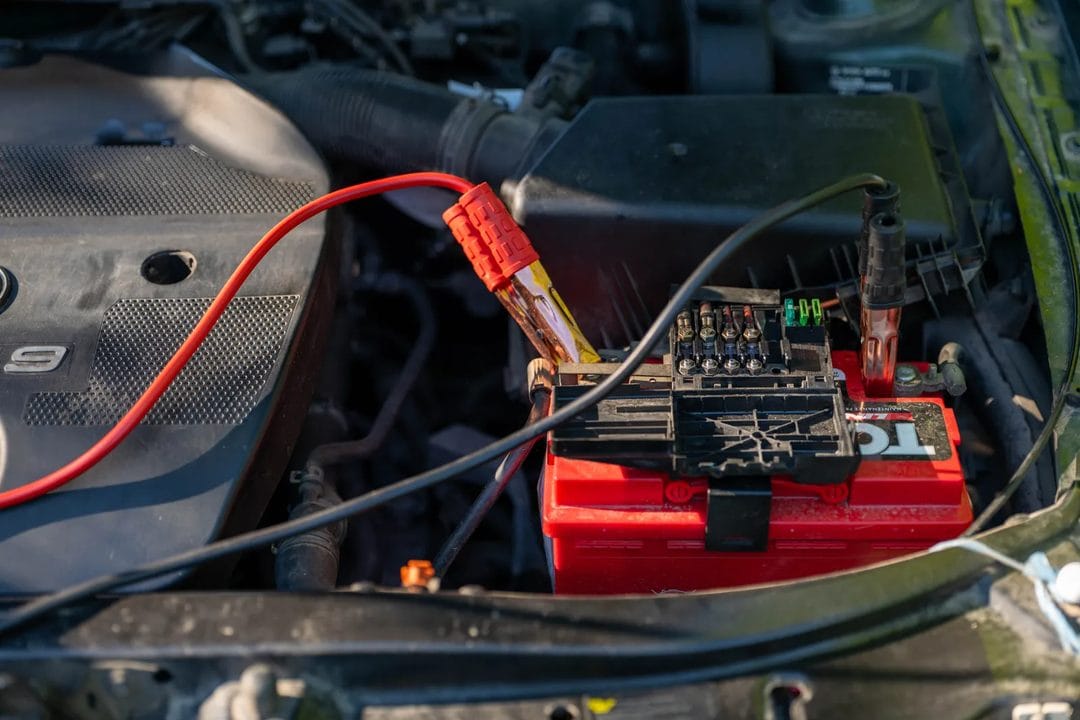
Turn the key on a frosty morning in December and get three slow clicks instead of a clean start, and there's a good chance the fault wasn't born that morning at all. It was sitting there in September — a battery running at 70% of its rated capacity that had no trouble turning over a warm engine on a mild afternoon, because a warm engine barely asks anything of it. Breakdown data from the AA and the RAC tells the same story every single year: flat and failing batteries are consistently the single biggest reason drivers get stranded on the roadside, and the spike in call-outs always lands in November and December. Batteries don't fail in bulk that month, though it can look that way from the outside. The ones that were already marginal simply run out of road once the temperature drops and the engine starts asking for more than they have left to give. It's the same battery, the same car, and often the same short commute it managed without complaint every day in August.
That's the case for testing now, in September, rather than waiting for the cold to make the decision for you. A five-minute check with a £10 multimeter tells you almost everything you need to know, and it costs nothing to do it in a dry driveway on a Saturday afternoon instead of paying an AA call-out fee plus a same-day replacement battery at whatever price the fitter happens to have in stock.
Why the Failure Always Looks Sudden
A car battery doesn't hold a fixed amount of power — its usable capacity shrinks as the plates inside sulphate with age, and that shrinkage is invisible under normal summer driving. A healthy 12V battery sits at roughly 12.6V at rest and needs to deliver several hundred amps for a second or two to spin the starter motor. In July, with thin engine oil and a warm block, that's an easy ask even for a battery that's lost a third of its original punch. Drop the temperature to 0°C and the oil thickens, the engine needs more torque to turn over, and the battery's own chemical reaction slows down at the same time — a double penalty that a summer test never reveals. Most drivers only find this out the hard way, on the one morning a year they can least afford it. None of this shows up on the dashboard, because most cars have no battery-health warning light at all — the only instrument that reliably tells you the truth is a multimeter, and almost nobody owns one until after the first failed start.
The Cold-Cranking Math
Lead-acid batteries lose roughly 20% of their cranking power at freezing point and as much as 50% at -18°C, according to the figures battery manufacturers like Bosch and Varta publish alongside their Cold Cranking Amps (CCA) ratings. A battery rated at 500 CCA that's already degraded to 350 CCA from age might still start the car every day in September. Come a proper cold snap, that same battery is effectively working with under 200 CCA of real output — often not enough for a diesel with a higher compression ratio, or any engine with a worn starter motor adding extra resistance to the circuit.
The Five-Minute Test You Can Run in Your Own Driveway
You don't need a garage visit to get a useful reading. Let the car sit unused for at least an hour — ideally overnight — then connect a basic digital multimeter (Halfords sells its own for around £8–£15) to the terminals, red to positive, black to negative, with the ignition off.
- 12.6V or higher — full charge, healthy battery
- 12.4V–12.6V — about 75% charged, still fine for now
- 12.2V–12.4V — around 50% charged, worth keeping an eye on through autumn
- Below 12.0V — the battery is struggling and won't have much reserve left once temperatures drop
Then start the engine with the meter still connected and watch the reading during cranking, not after. A battery that drops below roughly 9.6V for more than a second or two while turning the engine over is failing its load test, even if the resting voltage looked acceptable a minute earlier. A quick second check worth doing at the same time: read the voltage again with the engine running at a fast idle. A healthy alternator should push that reading up to somewhere between 13.8V and 14.8V — anything lower suggests the alternator isn't fully recharging the battery on your daily journeys, which will hollow out even a brand-new battery over a few cold months.
Free Battery Checks Are Worth Doing — With One Catch
Halfords, Euro Car Parts and most independent garages will run a free battery and alternator check if you drive in and ask, using a proper load tester rather than a basic multimeter. It's a genuinely useful five-minute stop, and there's no reason not to take advantage of it. Just don't expect complete neutrality: a free test at a shop that also sells batteries is, unsurprisingly, more likely to recommend replacement than a home multimeter reading of the same battery would suggest. Cross-reference the shop's verdict against your own resting-voltage number before agreeing to a same-visit swap.
Stop-Start Cars Play by Different Rules
If your car has stop-start (and most petrol and diesel cars registered from around 2015 onwards do), it almost certainly needs an EFB or AGM battery, not the standard flooded lead-acid unit that older cars use. These are built to handle the hundreds of extra start-stop cycles a day the system demands, and they cost more — typically £120–£220 fitted, against roughly £70–£120 for a conventional battery of the same size. Fitting the wrong type isn't just a false economy; a standard battery in a stop-start car will degrade far faster and can trigger the system to disable itself permanently, leaving you with worse fuel economy and no warning that anything's wrong until the battery fails outright.
When to Replace Now, and When to Wait
If your battery is four years old or more and reads under 12.3V at rest, replace it now rather than waiting for a cold snap to force the issue. Batteries very rarely improve with time, and a September replacement means you choose the shop, the brand, and the price — a December roadside swap means you take whatever the van happens to be carrying, often at a 20–30% mark-up over the same part bought in a shop. If your battery is under three years old and holds 12.5V or better after an overnight rest, there's no reason to spend the money yet; a healthy battery of that age will almost certainly see out another winter.
One thing a static voltmeter reading won't catch: a battery can hold a perfectly respectable resting voltage and still fail a proper load test, because age affects a battery's ability to sustain current under load well before it affects open-circuit voltage. This is exactly why the free load-test at a proper shop is worth the ten minutes even if your own multimeter reading looked fine — the two tests are measuring genuinely different things, and a battery can pass one and fail the other.
The Real Cost of Waiting
An AA or RAC call-out for a flat battery is covered if you're already a member, but for anyone without breakdown cover, a roadside jump-start and diagnosis typically runs £80–£150, and that's before a same-day replacement battery gets fitted at whatever price the mobile fitter is charging that week. Compare that with a planned £90 battery bought and fitted at a local independent garage on a quiet Tuesday in September, and the maths isn't close. Membership itself is worth weighing up too: AA and RAC breakdown cover for a single car typically runs somewhere between £40 and £100 a year depending on the level of cover, which is still cheaper than one unplanned winter call-out for most drivers who go more than a couple of years between claims. Batteries are cheap right up until the moment they fail on a motorway slip road in the rain — after that, everything about the situation gets more expensive, including your afternoon.