EV Battery Degradation After 100,000 Miles: What 2026 Resale Data Actually Shows
A used EV's battery health, not its mileage, is what actually decides its resale value in 2026 — here's the fleet data and the tools to check it before you buy.
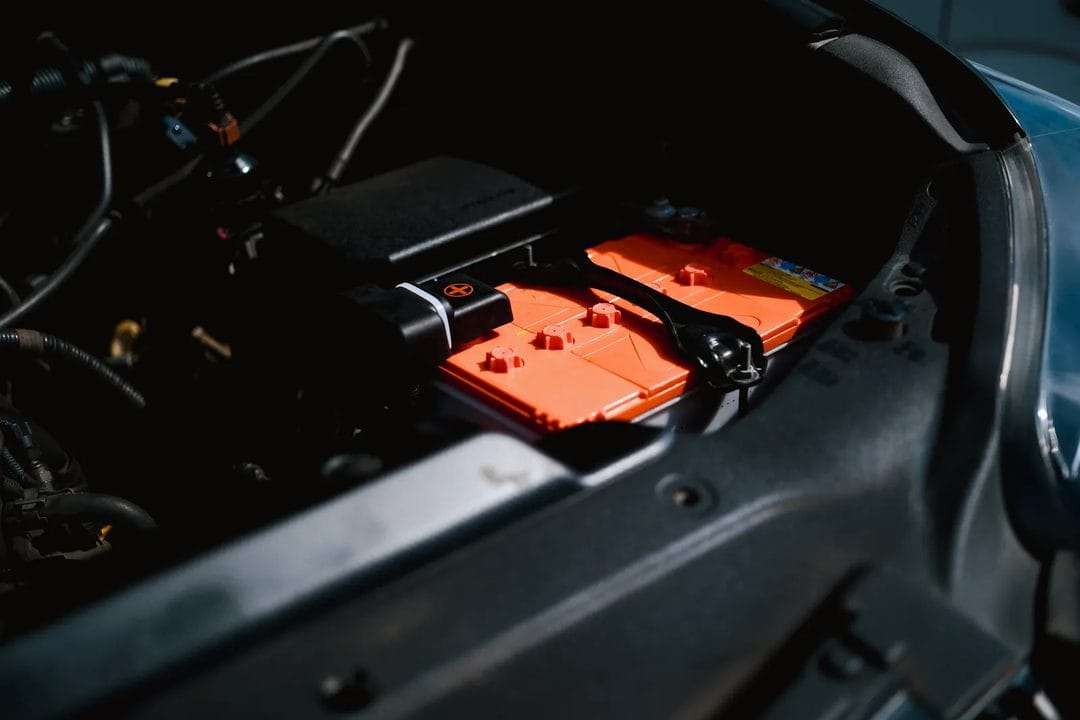
A 2019 Tesla Model 3 Long Range with 118,000 miles on the clock sold on Bring a Trailer earlier this year for $19,750 — roughly 58% of its original $49,900 sticker. The buyer didn't ask the seller much about tyres or brake pads. The first question, according to the listing comments, was: "What's the battery reading?" That single question is now the one that decides whether a used EV is a bargain or a five-figure gamble, and most buyers still don't know how to answer it.
What "degradation" actually means on the road
Every lithium-ion pack loses some usable capacity over time, the same way a laptop battery does, just on a much larger and better-managed scale. A pack rated for 310 miles when new doesn't suddenly drop to 250 miles after 100,000 miles — the loss is gradual, and it's measured against the battery's original capacity in kWh, not against a single range figure that changes with weather, speed and tyre pressure anyway. Manufacturers publish a warranty threshold instead of a hard number: under the federal minimum in the US, an EV battery must retain at least 70% of its original capacity for eight years or 100,000 miles, whichever comes first, or the manufacturer has to repair or replace it under warranty. Hyundai and Kia go further, backing their packs for 10 years or 100,000 miles, which is currently the longest coverage in the mainstream segment and one reason a used Ioniq 5 tends to hold value better than buyers initially expect. Tesla splits the difference depending on the model: the Model 3 and Model Y carry 8 years or 100,000-120,000 miles, while the Model S and Model X stretch to 150,000 miles over the same 8-year window. None of these numbers tell you what a specific car in front of you actually has left, though — they only tell you the point at which the manufacturer is contractually on the hook.
That 70% floor is a legal backstop, not a realistic expectation of where most packs end up. It exists because a handful of early EVs — the 2011–2015 Nissan Leaf being the textbook case — actually got close to it in hot climates. Everything since has done considerably better, and the gap between "worst-case regulatory floor" and "what a well-built 2022 Ioniq 5 pack actually does at 100,000 miles" is the whole story here.
The fleet data: what actually happens by 100,000 miles
Geotab's 2019 study of more than 6,000 fleet EVs, still the most-cited independent dataset in the industry, found average degradation of about 2.3% per year across all makes — meaning a battery at 100,000 miles, roughly 6-7 years of typical driving, would sit somewhere around 85-90% of its original capacity for a mainstream, actively-cooled pack. Recurrent, the battery-health tracking company that now pulls telematics data from more than 20,000 EVs to generate resale reports for dealers and private sellers, publishes numbers that track closely with that. Tesla Model 3 and Model Y cars from 2018 through 2022, built on NCA or NMC chemistry, typically retain 88-92% capacity at 100,000 miles, and Tesloop's high-mileage taxi fleet has shown some Model S packs still sitting above 90% past 200,000 miles. The Chevrolet Bolt, from the 2017-2019 model years, averages around 90% at 100,000 miles in Recurrent's sample, though those specific years carry the shadow of GM's 2021 recall over fire risk in a defective batch of LG cells — resolved through full pack replacement under a class action, so a used Bolt from that window most likely has a replacement pack with a fresh warranty clock, and that's worth confirming on the vehicle history rather than assuming the worst. Hyundai's Ioniq 5 and Kia's EV6, both 2022-on, are too new for full 100,000-mile data yet, but early reports through 60,000-70,000 miles show under 5% loss, helped by active liquid cooling. The clear outlier is the early Nissan Leaf: 2011-2015 cars with no active thermal management at all, and Arizona and Texas examples in Recurrent's dataset showing 20-30% loss by 100,000 miles. Heat, not mileage, is the real driver there — a Leaf that spent its life in Seattle looks nothing like one that spent it in Phoenix.
Buy a used EV built after roughly 2020 with active liquid cooling, and 100,000 miles is not the cliff-edge it sounds like on paper — most owners will see single-digit range loss they'd struggle to notice without a scan tool. That's the recommendation, not a hedge: an actively-cooled pack from a mainstream manufacturer is a safer bet at 100,000 miles than a comparable ICE engine with the same mileage and an unknown oil-change history.
Chemistry and cooling decide almost everything
LFP vs NMC/NCA
Lithium iron phosphate (LFP) packs — used in the standard-range Tesla Model 3, most current Model Y base trims, and BYD's entire lineup — degrade more slowly than nickel-based NMC or NCA chemistry under identical conditions, largely because they tolerate being charged to 100% daily without the same long-term stress. The trade-off is lower energy density, meaning an LFP pack needs to be physically larger to store the same range, which is part of why Tesla reserves LFP for the shorter-range trims rather than the Performance models.
Active vs passive cooling
This is the bigger factor of the two. A liquid-cooled pack keeps individual cells within a tight temperature band during fast charging and hot-weather parking; a passively (air) cooled pack — the early Leaf's fatal flaw — lets cell temperature swing with the ambient weather, and heat is the single biggest accelerant of lithium-ion degradation. Every mainstream EV sold new since about 2018 uses active liquid cooling. If you're looking at anything older than that without it, treat the battery health check as mandatory, not optional.
Checking battery health before you buy — the 2026 tools
You can no longer take a seller's word for range. Three practical options exist right now, and none of them require you to trust a dealer's sales pitch:
- A Recurrent Battery Report ($30, delivered in about a day from the VIN) pulls the car's telematics history where the manufacturer shares data — currently Tesla, Chevrolet, Nissan and a handful of others — and gives an estimated capacity retention percentage plus a projected range curve.
- An Aviloo Battery Certificate (used more widely in Europe, around €99-149 depending on market) runs an actual load test on the car itself rather than relying on telematics, so it works on brands that don't share data, including most Hyundai, Kia and Volkswagen Group EVs.
- A dealer-side scan with a tool like OBDLink or a brand-specific diagnostic reader can pull the battery management system's state-of-health value directly, though not every independent mechanic has one calibrated for EVs yet — ask before you book the appointment, because plenty will say yes and then discover they can't actually read the pack.
Skip all three and you're buying blind. A car with an indicated 300-mile range that actually delivers 230 on the highway in winter isn't necessarily degraded — cold weather alone can cut real-world range by 20-30% on any EV — but you want a number from a tool, not a guess from a test drive on a mild afternoon.
After the warranty clock runs out
The warranty doesn't disappear so much as become someone else's problem.
Most used-EV shoppers in 2026 are looking at cars built between 2018 and 2022, which puts a meaningful share of them right at or past the 8-year battery warranty window already, or close enough that the next owner will run out the clock. That changes the calculation: a pack that's failing a health check on a car still under warranty is the dealer's problem to fix before the sale, but the same result on a warranty-expired car becomes a straight negotiation over the eventual replacement cost. Budget accordingly rather than hoping the pack holds — a full Tesla Model 3 pack replacement runs $13,000-$16,000 out of warranty as of 2026, a Bolt pack is closer to $16,000 before the recall-era discounts some owners received, and a Leaf pack replacement through Nissan's official channel runs $5,500-$8,500 depending on capacity, which is actually the cheapest of the group despite the Leaf having the worst degradation reputation of any mainstream EV.
What it does to resale value right now
Cox Automotive's 2026 used-vehicle data puts EVs at roughly double the depreciation rate of comparable gas cars over the first three years, and battery-health uncertainty is a meaningful part of that gap — buyers discount hard for the unknown, even when the actual pack is fine. That creates a genuine opportunity: a well-documented 2021-2022 Model Y with a Recurrent report showing 92% capacity retained is arguably a better buy today than an equivalent-mileage BMW X3 at a similar price, because you have hard data on the one component that's expensive to replace, where the BMW's turbocharged four-cylinder is a black box you're trusting on faith and a service stamp.
Use the replacement figures above, not vague worry, to negotiate the price down if a seller can't or won't produce a health report. A seller who refuses is telling you something, whether or not that's their intention.
The bottom line for buying used in 2026
Ask for a battery health report before you ask about the interior condition. Walk away from any seller who won't allow one — a $30-$150 test is nothing next to a $13,000 mistake, and a seller with nothing to hide will usually have already run one for their own listing. The oil-change sticker on a used sedan told you almost everything you needed to know for the last fifty years of car buying; for an EV, the battery report is that sticker now, and it's worth exactly as much attention.