What It Actually Costs to Charge an EV in 2026: Home Charging vs Public Fast Chargers, State by State
Charging at home in Idaho costs a fraction of what a Friday-night Electrify America session runs in Los Angeles — and the gap between the two is the number that actually decides whether an EV saves you money.
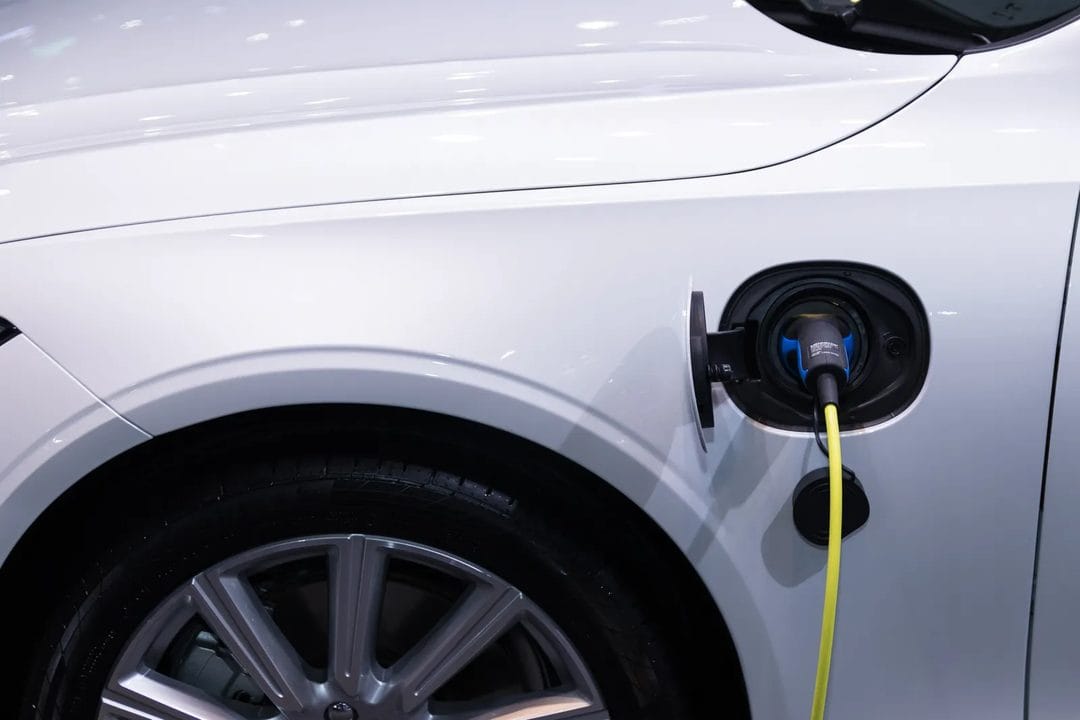
Pull into an Electrify America station in downtown Los Angeles on a Friday evening and you'll pay close to triple what your neighbor two states over pays plugging in at home in Boise. Same charger network, same brand of car, same kilowatt-hour — a completely different bill. That gap is quietly the single biggest variable in EV ownership economics, and it has almost nothing to do with which car you drive.
The Home Charging Math
A Level 2 home charger is the foundation of cheap EV ownership, and the installation cost swings more than most buyers expect. A basic setup — a ChargePoint Home Flex ($699) or an Emporia EV Charger ($399–$599) on an existing 240-volt circuit — can run as little as $400 to $800 installed if an electrician doesn't need to touch the panel. Add a panel upgrade, which a lot of homes built before 2000 need to handle the extra 40–50 amp draw, and the number climbs to $1,500–$3,000. Detached garages or long conduit runs push it higher still, sometimes past $3,500 once trenching and permitting fees enter the picture. Get two or three quotes before committing, because the spread between electricians on an identical job — same panel, same 50-foot run, same charger model — regularly runs $600 or more in a single metro area. That gap has nothing to do with quality and everything to do with how busy the shop's schedule already is.
The federal 30C tax credit that used to knock 30% (up to $1,000) off that bill for individual homeowners is gone — it was repealed for personal use under the 2025 tax legislation and stopped applying to new installs after June 30 of that year. What's left are state and utility programs, and they're worth checking before you call an electrician: Pacific Gas & Electric, Con Edison, and several municipal utilities in Massachusetts and Colorado still offer $250–$1,000 rebates for qualifying Level 2 installs. Skip that step and you're leaving real money on the table.
Why Your Electricity Rate Is the Real Variable
Residential electricity rates in the U.S. range from roughly $0.10 per kWh in Idaho and Washington to over $0.40 per kWh in Hawaii and parts of California — a four-fold spread that matters far more to your monthly charging bill than the car's advertised efficiency rating. California's tiered residential rates alone can put a homeowner anywhere from $0.28 to $0.48 per kWh depending on usage tier and time of day, while Louisiana and much of the Pacific Northwest sit closer to $0.11–$0.13.
Time-of-use plans change the math again. Utilities like PG&E, SCE, and Con Edison offer EV-specific off-peak rates that can drop the effective price to $0.09–$0.15 per kWh for charging between midnight and 6 a.m., against $0.30-plus during peak afternoon hours. Enroll in the EV rate plan if your utility offers one — most EV owners never check the box on the app and end up paying the standard residential rate for every overnight charge, which on a high-rate grid like California's can add $30–$50 a month for no reason at all.
Public Fast Charging: What the Big Three Actually Charge
Tesla's Supercharger network, now open to non-Tesla vehicles with a NACS adapter, prices sessions between roughly $0.25 and $0.48 per kWh depending on location and real-time demand — busier urban stations during peak hours run higher than a quiet highway stop at 2 a.m. Electrify America charges $0.48 per kWh for guest users, dropping to about $0.36 with the $4-a-month Pass+ membership. EVgo runs a similar structure, $0.31 to $0.58 per kWh depending on charger speed and location, with its own $6.99 monthly membership cutting the rate meaningfully for anyone who charges publicly more than a couple of times a month.
A handful of states complicate this further. Texas, Iowa, and a few others still restrict selling electricity by the kilowatt-hour outside utility regulation, so networks in those states bill by the minute instead — which means a slower car parked at a 350 kW-rated stall pays almost the same as a fast-charging one, even though it's pulling far less power per minute.
None of these numbers show up in the automaker's brochure.
The Hidden Costs Nobody Mentions Up Front
Idle fees are the one that catches new owners off guard. Electrify America and EVgo both charge $0.40 to $1.00 per minute once your session hits full charge (or after a grace period, usually 10 minutes) and you haven't moved the car — a penalty designed to keep stalls turning over, not to punish you specifically, but it adds up fast if you're grabbing coffee and lose track of time.
Membership tiers only pay for themselves at a certain usage threshold. Electrify America's Pass+ saves roughly $0.12 per kWh, which means the $4 monthly fee breaks even around 33 kWh of public charging a month — call it one meaningful road-trip stop. If you're charging almost exclusively at home and hitting a public fast charger once or twice a year, skip the membership; it's not worth the recurring charge.
Frequent DC fast charging also accelerates battery degradation more than Level 2 charging does — automakers including GM and Hyundai recommend keeping regular fast-charging sessions to 80% state of charge rather than topping off to 100%, since the last 20% draws slower and stresses the pack harder at high current. It won't wreck a battery in a year, but an owner who fast-charges to full every week is trading convenience for a faster capacity fade than someone who mostly plugs in overnight at home. Charge to 100% for a road trip and back off to 80% as your daily habit — that single adjustment costs nothing and measurably slows the pack's long-term fade. Most owners never touch the charge-limit setting buried in the car's settings menu, which is exactly why so many three-year-old EVs on the used market show more range loss than the same model driven mostly on Level 2 power. Ask for a battery health report before buying any used EV that spent its life on a fast-charging commute — the difference between a well-treated pack and an abused one can mean 15–20 miles of range gone before the car even hits 40,000 miles.
Cost Per Mile: The Numbers That Actually Matter
Run the math on a typical EV averaging 3.3 miles per kWh. Charging at home on the U.S. residential average of about $0.17 per kWh puts you at roughly $0.05 per mile. Charging exclusively on public DC fast chargers at $0.40–$0.48 per kWh pushes that to $0.12–$0.15 per mile — still competitive with gas, but nowhere near the home-charging figure everyone quotes in EV forum arguments.
- Home charging (off-peak TOU rate, ~$0.12/kWh average): about $0.036 per mile
- Home charging (standard residential rate, ~$0.17/kWh): about $0.052 per mile
- Public DC fast charging, member pricing: about $0.11–$0.13 per mile
- Public DC fast charging, guest/no membership — and this is the number that actually surprises people — can run higher per mile than a fuel-efficient gas sedan once idle fees are factored in
- Midsize gas sedan at 32 mpg, regular unleaded near the current $3.30/gallon national average: about $0.103 per mile
Full-size gas trucks tell a different story. At 18 mpg city, a gas-powered half-ton runs about $0.183 per mile — nearly four times the home-charging cost of an EV and still noticeably more than most public fast-charging scenarios.
Where Gas Still Wins
None of this means gas is dead on cost, and pretending otherwise does buyers a disservice. Apartment and condo renters without dedicated home charging access are the clearest case: paying public DC fast-charging rates for every single charge, week after week, can land close to what a fuel-efficient gas sedan costs to run — the EV still wins on maintenance (no oil changes, fewer brake jobs thanks to regenerative braking) but the fuel-cost advantage mostly evaporates. Heavy highway commuters who rely on public charging corridors for long trips face the same math, especially in states where per-minute billing punishes anything short of a top-tier fast charger.
Buy the home charger if you own the driveway. That single decision — not the car, not the trim level, not the battery size — is what determines whether an EV actually beats a gas vehicle on cost per mile, or just breaks even while asking you to plan your errands around a charging app.