Ford F-150 vs Ram 1500 vs Silverado: Real-World Truck Comparison 2026
Forget the spec sheets. After three weeks of hauling, towing, and commuting in all three, one of these trucks is clearly the best daily driver, and it is not the one winning the most sales.
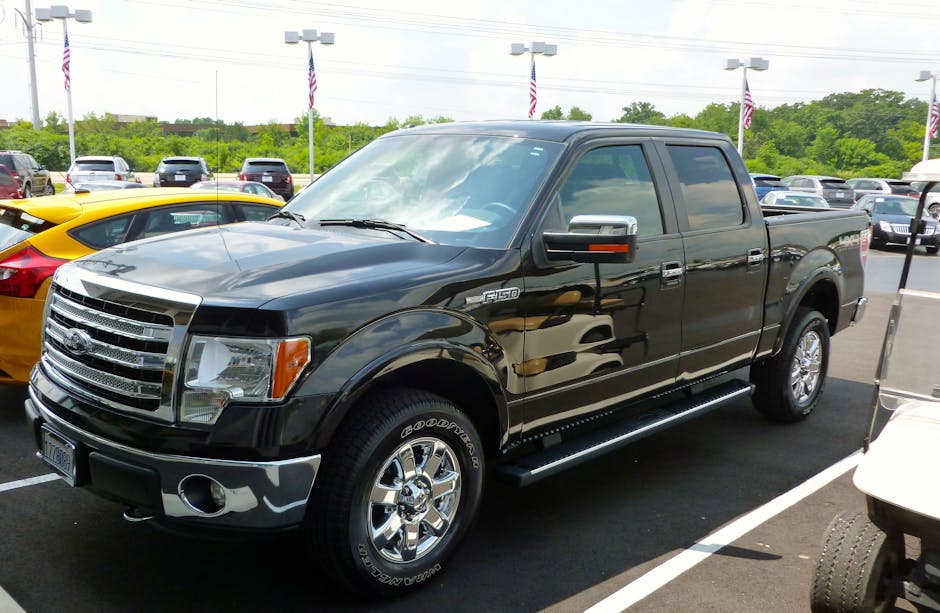
The parking lot at any American job site tells you the half-ton truck market is basically three choices. Ford F-150, Ram 1500, Chevy Silverado. You can throw in the Toyota Tundra and the GMC Sierra if you want to be technical, but the three Detroit trucks are where 80 percent of the sales happen. I spent three weeks this winter driving all three back to back, same loaner program, same roads, same loads in the bed. What I found is that the truck with the best sheet metal reputation is actually the worst daily driver, and the one I expected to like least surprised me more than I expected.
For this test I drove the 2025 F-150 Lariat with the 3.5-liter EcoBoost, the 2025 Ram 1500 Laramie with the new Hurricane straight-six, and the 2025 Silverado LT with the 5.3-liter V8. All crew cabs, all 4x4, all within $3,000 of each other at around $66,000 to $69,000 as equipped. I ran them on 90 miles of interstate, 40 miles of two-lane back roads, a loaded trailer run pulling a 7,200 lb boat, and a pile of mulch in the bed that put 1,100 lb over the rear axle. I also did a stop-and-go city loop for parking-lot maneuverability and to see how each truck handled tight lots.
How They Actually Drive When You Are Not Trying to Be a Truck Guy
The Ram 1500 is the best-driving truck in this class and it is not even close. The coil-spring rear suspension, which Ram has been using since 2009, makes the thing ride like a luxury SUV compared to the leaf-sprung F-150 and Silverado. On a beat-up Pennsylvania back road with frost heaves, the F-150 was hopping the rear wheels enough that my coffee needed a lid. The Ram soaked up the same road without complaint. This is a real quality-of-life difference when you drive the truck five days a week.
The F-150 hits back with the best steering feel of the three. Ford has been sorting this out for multiple generations now, and the on-center weighting and turn-in are genuinely good for a truck that weighs 5,400 lb. The Silverado steering is the most numb. You can feel the truck wander on the highway more than the other two, and you end up making more micro-corrections on a long drive. I do not love it. The GM steering rack has felt vague across three generations of Silverado and they have not addressed it.
Under acceleration all three are quick. The Hurricane straight-six in the Ram makes 420 hp in the high-output configuration, the F-150 EcoBoost makes 400 hp, and the 5.3 V8 in the Silverado makes 355 hp. The Ram and the F-150 will hit 60 mph in the mid-five-second range. The Silverado needs about 7 seconds, which is fine for a truck but not competitive in this group. If you want the real rocket you have to step up to the 6.2 V8 Silverado, which I did not have for this test but which is genuinely fast.
Towing, Payload, and Actually Using These as Trucks
All three trucks will tow between 11,000 and 13,000 lb when properly equipped. The differences on paper are smaller than the differences in how the trucks feel while towing. The F-150 with the Max Trailer Tow package feels most planted at highway speed with a big trailer behind it. The Ram also feels excellent and the coil rear actually helps with trailer manners on rough roads. The Silverado felt more wiggly at 70 mph with the boat, which may be partly tire related, but I could feel it.
On payload the F-150 wins the headline numbers with up to 2,455 lb in some configurations. In the trucks I drove, the F-150 was rated for 1,750 lb, the Ram 1,600 lb, and the Silverado 1,870 lb. With 1,100 lb of mulch in the bed the Silverado rode the best, the F-150 was flat and composed, and the Ram squatted a little more visibly, a side effect of the coil rear that trades load-carrying stiffness for ride quality.
Fuel economy matters more than truck guys admit. Over my three-week loop I averaged 21.3 mpg in the F-150 EcoBoost, 22.1 mpg in the Ram Hurricane, and 19.7 mpg in the Silverado 5.3. Over a typical 15,000-mile year, the Ram saves you about $280 in fuel over the Silverado. Not life-changing, but real. Towing fuel economy was closer, all three landed between 9 and 11 mpg with the boat, with the Silverado V8 surprisingly holding its own against the turbocharged competition.
Interiors Are Where the Real Gap Opens
This is where my opinions get strong. The Ram Laramie interior is the best-looking and best-feeling interior in any half-ton truck by a wide margin. The materials, the dash layout, the way the door cards wrap around, the 12-inch infotainment screen, all of it feels like a $75,000 truck. The F-150 Lariat is solid but the center console feels dated and the plastics on the lower dash are not as good. The Silverado LT interior is the biggest problem in the entire truck. GM has improved it over the past two years, but it still feels a generation behind the competition. Hard plastics everywhere, a fussy infotainment layout, and a steering wheel that feels cheap for the money.
Seat comfort is a tie between the F-150 and Ram for me. Both have well-shaped cushions with enough support for a four-hour drive. The Silverado seat base is too flat and I got tired in it faster. Headroom in all three is generous, and rear seat room in the crew cab configurations is large enough for three adults on a long trip without anyone complaining.
Infotainment in 2025 is a three-way race with Ford Sync 4 being the most polished, Ram Uconnect 5 being the most feature-rich, and Silverado Google Built-In being the most clever from a technology standpoint but the most frustrating when you actually want to change a radio station without looking at the screen. All three do wireless Apple CarPlay and Android Auto at this point. The Ram has the best native voice recognition, the F-150 has the best physical knobs for climate control, and the Silverado has the most powerful optional Bose audio system.
Ownership Costs and Which One I Would Actually Buy
Resale value is a real thing and Ford F-150s hold their value slightly better than the other two over five years. At typical mileage, a 2020 F-150 Lariat is worth about 62 percent of its original MSRP in 2026. A 2020 Silverado LT is at around 58 percent. A 2020 Ram 1500 Laramie comes in around 59 percent. Over $65,000 trucks, that is real money.
Reliability on modern half-tons is a mixed bag across all three. Ford had some real issues with the 10-speed automatic in early F-150s, Ram has had electrical gremlins with the Uconnect system, and Silverado 5.3-liter V8s with active fuel management have a pattern of lifter failures if oil changes get stretched. If you plan to keep a truck past 80,000 miles, spend the extra $30 per oil change and go with full synthetic at 5,000-mile intervals, not the 10,000-mile interval the manual allows.
Warranty coverage is almost identical across the three at 3 years or 36,000 miles basic and 5 years or 60,000 miles powertrain. None of the American brands offers anything like the 10-year powertrain coverage you get from Hyundai or Kia, which is worth considering if you plan to keep the truck to the end of its useful life. The Toyota Tundra, not included in this test, also offers stronger long-term reliability data though it costs more up front.
If I had to write the check tomorrow I would buy the Ram 1500 Laramie with the Hurricane straight-six. It is the best-driving, best-looking, and most comfortable truck in the class. The Hurricane engine is newer and I have less long-term data on it, so if you are the cautious type the F-150 EcoBoost is a known quantity with fewer surprises. The Silverado would be my third pick unless you need the 6.2 V8 specifically, in which case it becomes competitive again.
None of these trucks is a bad choice. But after three weeks with them I understand why Ram is eating into F-150 sales year after year. They are making a better truck for people who actually live in their truck.