Keyless Car Theft: How Relay Attacks Steal a Car in Under 30 Seconds
Two thieves, two radio boxes, and thirty seconds is all it takes to steal a keyless car straight off your driveway. Here's how relay attacks work and what actually stops them.
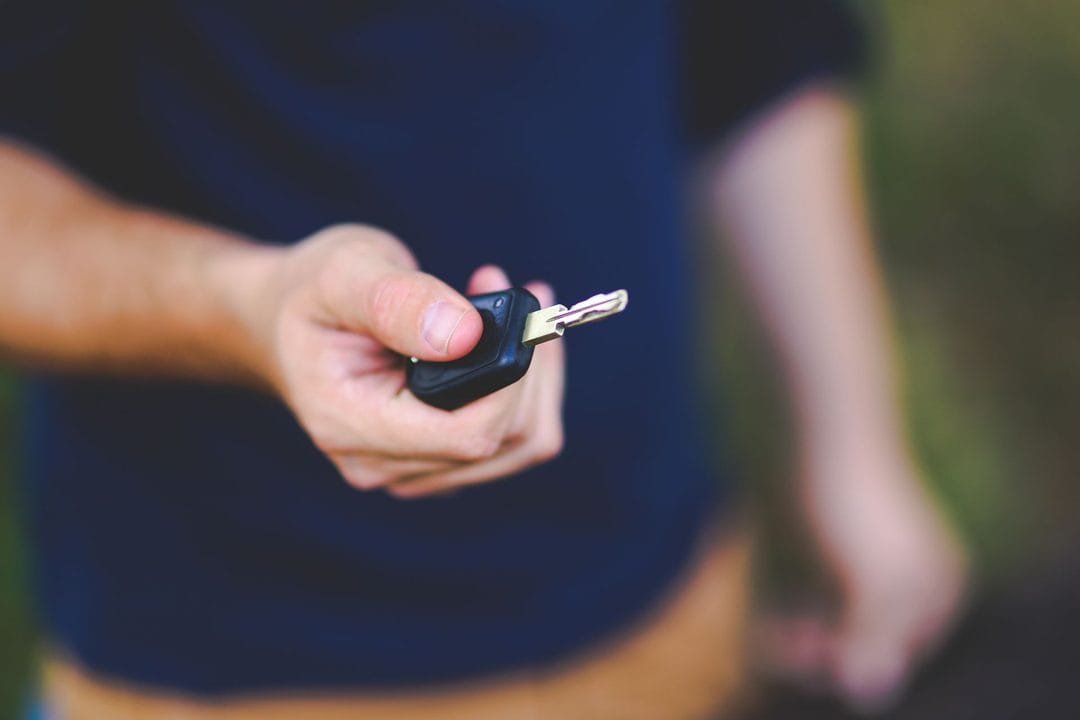
A driveway camera in Solihull caught the whole thing last winter: two men in dark jackets walking up to a parked Range Rover at 2am, one of them holding what looked like a small radio next to the house wall, the other standing by the car door with a second device. Twenty-six seconds later the car started, reversed off the drive, and was gone. No smashed glass, no alarm, no forced door. The owner's key fob was sitting on a table in the hallway the entire time, roughly four metres from where the thief stood.
That is a relay attack, and it is now the single biggest reason keyless cars go missing from British driveways. The trick doesn't require hacking, cloning a chip, or even touching your key. It exploits something your key fob was designed to do constantly and quietly: broadcast a low-power signal that tells a nearby car "I'm here, unlock yourself." Thieves have simply worked out how to make your car think the key is nearby when it's actually asleep on your kitchen counter.
The two-box trick that fools your key fob
One thief stands close to your front door or window holding a relay box, a device that can be bought online for well under £100 and, in some cases, built from parts costing barely £30. It picks up the faint signal your key fob emits — even through a wall, even while the key is doing nothing — and passes it wirelessly to a second relay box held by an accomplice standing next to your car. The car receives what looks like a genuine "key is nearby" handshake, unlocks, and lets the second thief press the start button. Because the car's electronics never check where the key physically is, only that a valid signal arrived, the whole exchange looks completely normal from the vehicle's side. The two thieves rarely need more than a minute of coordination, and modern relay kits amplify the fob's signal enough to work from 10 to 15 metres away. Because most people leave keys near a front door, a hallway table, or a kitchen worktop close to an exterior wall, that range is almost always enough. Once the engine starts, some keyless systems will keep running even after the relay signal is cut, meaning the car can be driven off long after the thieves have packed up their equipment and left the street.
Why this only became a problem with keyless entry
Cars with a traditional key and a physical immobiliser chip never had this vulnerability, because starting the engine required inserting metal into a lock. Keyless entry systems, first popularised by Mercedes-Benz in the late 1990s and now standard on the vast majority of new cars sold in the UK, removed that step entirely in favour of proximity sensing. It's a genuine convenience — nobody misses fumbling for keys in the rain — but it also means the car's only proof of authorisation is a radio signal, and radio signals can be relayed. Thatcham Research, the UK's vehicle security testing body, has been flagging this weakness in its annual security ratings since 2017, and it now marks down any new model that doesn't include a "sleep mode" for the fob or a secondary layer of authentication.
Which cars actually get targeted
Not every keyless car is equally attractive to a relay gang. Certain models turn up disproportionately often in theft figures because they're valuable, easy to resell abroad, and — crucially — because their factory security wasn't rated highly by Thatcham when the model launched. Land Rover's Range Rover and Range Rover Sport have topped UK theft-claim lists for years running; BMW's X5 and 3 Series, and various Ford models fitted with keyless entry as standard, also appear repeatedly.
- Range Rover and Range Rover Sport top the UK's keyless theft-claim tables year after year, partly because parts and whole vehicles are in high demand overseas.
- BMW X5, X6 and 3 Series
- Ford Fiesta and Focus with keyless-go fitted
- Various Audi Q-series and A-series models, particularly pre-2020 builds that lack updated relay countermeasures
- And a long tail of other keyless models that simply happen to be parked in the wrong street on the wrong night
So what if your own car isn't on that list? It doesn't mean you're safe — relay kits work on any keyless system, not just the ones that make the insurance headlines, and a gang working a street will often try several driveways rather than hunt for one specific badge. A newer model year doesn't automatically help either, since some manufacturers only rolled out motion-sensing fobs that go to sleep after a few seconds of stillness on specific trims, not across the whole range.
Faraday pouches are cheap and they mostly work
A Faraday pouch blocks radio signals with a layer of metallic mesh, so a key fob sitting inside one simply can't be picked up by a relay box, no matter how close the thief gets to your front door. Decent pouches cost £10 to £20 — brands like Disklok and KeyShield sell them alongside their other security products — and using one is as simple as dropping your fob in every time you get home. The catch is consistency: a Faraday pouch that lives in a drawer while your actual keys sit on the hook by the door protects nothing, so buy two, keep one by the front door and one by the back, and treat it as automatic as locking the door itself. Skip the tin-in-the-fridge and biscuit-tin advice that circulates online — it sometimes dampens the signal, but testing by consumer groups has shown results are wildly inconsistent depending on the tin's thickness and seal, and a fridge door left slightly ajar defeats the whole idea. A purpose-made pouch tested against the correct frequency range is the better option every time.
A steering lock still earns its keep
Even a perfectly executed relay attack only gets a thief as far as a running engine — it doesn't disable a mechanical steering lock clamped over the wheel. A Disklok or Stoplock, typically £40 to £90, adds a visible, physical obstacle that a two-minute theft window simply doesn't allow time to defeat. Most opportunist relay gangs move on to an easier target rather than spend ten minutes with an angle grinder in full view of a doorbell camera. This is the part serious car security people rarely disagree on: a visible steering lock is one of the few remaining deterrents that works regardless of how sophisticated the relay hardware gets, because it doesn't depend on radio frequencies at all.
Turning off keyless standby (and why it's harder than it should be)
Many manufacturers now let owners disable the fob's constant broadcast through the car's settings menu or by holding two buttons on the key simultaneously — check your handbook, because the sequence varies wildly between Ford, BMW, and Volkswagen Group cars. Doing this means the fob only wakes up when you physically press a button on it, which defeats a relay attack outright since there's no passive signal to intercept. The awkward truth is that most owners never do this, either because the dealer never mentioned it at handover or because it makes daily use slightly less convenient — you lose the walk-up-and-the-door-unlocks feel that keyless entry was built to deliver. It's a genuine trade-off, not a no-brainer: if you live somewhere with low relay-theft activity and value the convenience, a Faraday pouch alone might be enough. If you drive a Range Rover Sport parked on a street where three neighbours have already lost cars this year, disabling standby mode is worth the minor inconvenience. Owners who do switch it off tend to report barely noticing the change after the first week — pressing a button on the fob to lock up is hardly the hardship the "keyless is effortless" marketing implies.
What insurers are starting to demand
Several UK insurers now require a Thatcham Category 5 or 6 tracking device fitted to high-theft models like the Range Rover before they'll offer cover at all, and premiums for keyless SUVs in postcodes with high relay-theft rates have climbed accordingly. An aftermarket immobiliser such as the Autowatch Ghost — which requires a hidden PIN sequence entered via existing buttons before the car will move, even with a valid key present — has become common enough among Range Rover and BMW owners that some brokers now offer a discount for fitting one. It sits below £300 fitted in most cases and defeats relay attacks completely, since the stolen signal never gets the car past its hidden second lock.
If it happens anyway
Report it to the police immediately and give them the exact time window from any doorbell or driveway footage — timestamps matter more than most owners realise, because they help link separate incidents to the same gang operating in an area. Contact your insurer the same day, and if the car has a tracker fitted, most providers can begin monitoring within minutes of a report rather than waiting for a formal claim to process. None of this fixes the underlying design flaw sitting in millions of keyless fobs on the road right now. But between a £15 pouch by the door, a steering lock in the boot, and five minutes spent finding the standby-off sequence in your car's handbook, the odds swing heavily back in your favour — and that's before a single manufacturer changes anything about how the next generation of fobs talk to your car.