The Stick Shift Refuses to Die: Every New Car Still Selling With a Clutch Pedal in 2026
Fewer than two dozen new cars sold in America in 2026 still offer a manual gearbox — but on the models that do, from the Porsche 911 to the Subaru BRZ, take rates are climbing, not falling.
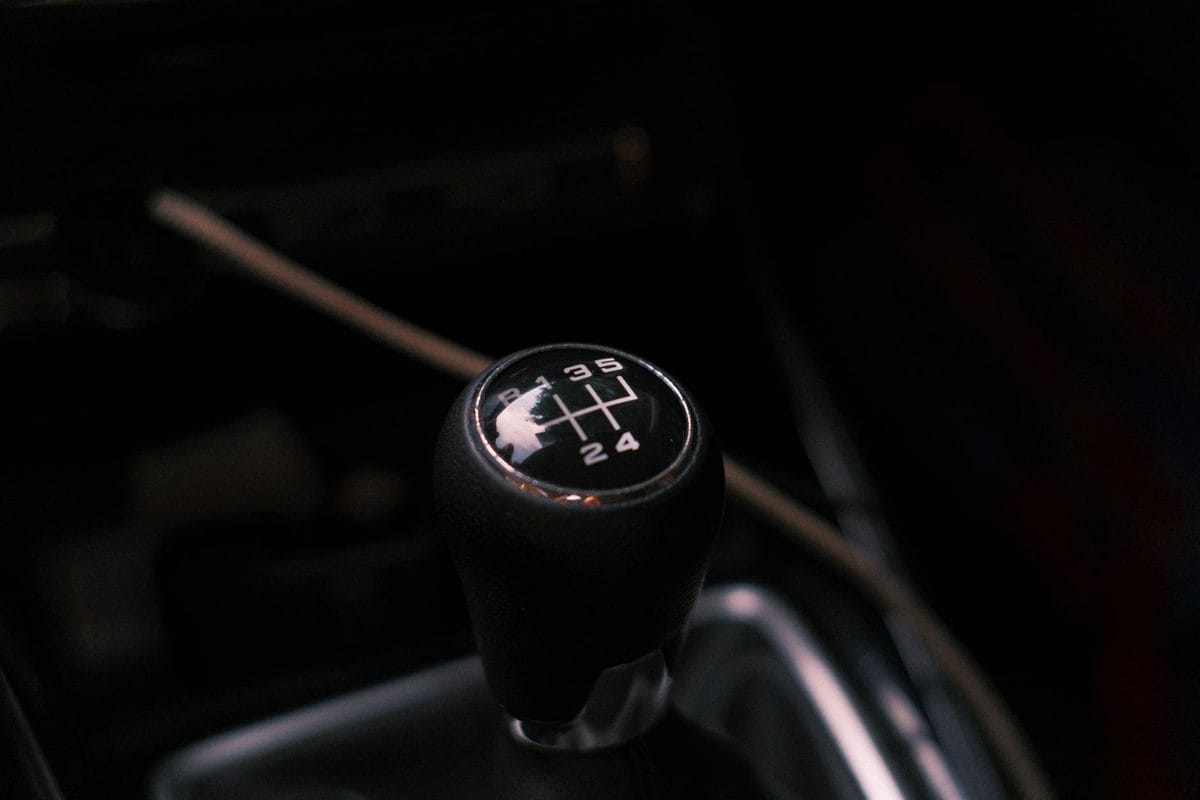
Twenty-Four Cars, One Clutch Pedal
Fewer than two dozen new cars sold in America this year still come with a clutch pedal. Porsche will sell you one of them for as much as $238,150, and buyers keep ordering it in three-pedal form anyway. That's the strange state of the manual transmission in 2026: mathematically irrelevant to the industry's bottom line, and yet more culturally loaded than it's been in a decade. Automakers that once treated a stick shift as a baseline feature now treat it as a marketing signal, something you offer on two or three halo models to prove you still remember how to build a car for someone who wants to be involved in driving it.
Who Walked Away
The list of brands that have quietly killed the manual entirely reads like a who's who of performance pedigree. Audi cut it across the whole lineup, betting everything on S tronic dual-clutch boxes and torque-converter automatics. Mercedes-AMG hasn't offered a manual in any model for years and shows no sign of reconsidering. Lamborghini, which once sold a gated shifter in the Gallardo that enthusiasts still talk about at car meets, builds nothing but dual-clutch cars today. MINI, a brand whose entire identity used to be built around a tossable, engaging drive, dropped the manual option too. None of these decisions were reversible mistakes — they were deliberate bets that automatics now shift faster, get better fuel economy, and sell better to the buyers actually writing checks.
Toyota and Subaru Are Carrying the Torch
Here's the part that surprises people who assume manuals only survive in German sports cars: Toyota and Subaru together account for nearly half of every manual-equipped new car sold in the U.S. right now. Toyota builds a manual into the GR Corolla, the GR86, and — for now — the GR Supra, and it's the only brand still selling a manual pickup truck in America with the Tacoma. Subaru keeps the WRX and BRZ in stick form as a point of brand pride rather than profit. Neither company is under any illusion that these transmissions move volume. They exist because Toyota and Subaru have both concluded, correctly, that the enthusiast halo effect on the rest of the lineup is worth more than the manufacturing complexity of keeping a third pedal in production.
The GR Supra situation is worth watching closely if you've been circling one. Toyota only added the manual option back in 2023 after enthusiasts complained loudly that the launch car was automatic-only, and take rate jumped to roughly 65 percent of Supra buyers in 2024 — up sharply from the year before. That's about as clear a signal as an automaker ever gets that it read the room correctly. But the "MkV Final Edition" badge now showing up on Supra trims is not subtle. When a manufacturer starts calling a model a final edition, it's telling you the production run has an end date, and it isn't inviting a debate about it.
BMW Still Builds the Manual M Car
BMW's 2026 lineup keeps the manual alive in the M2, M3, and M4, all still available with the 3.0-liter twin-turbo inline-six paired to a proper six-speed, plus the Z4 roadster. That's genuinely rare territory — a German luxury brand that still lets you order a six-figure-adjacent performance sedan with rowed gears when most of its direct competitors have moved on entirely. Buy the manual M2 if driver engagement is the point of the purchase; the automatic is faster on paper and nobody cross-shopping an M2 actually cares about paper.
Porsche's Math Doesn't Add Up — And They Don't Care
Porsche doesn't build the manual 911 because it's the smart financial call.
The 2026 911 still offers a manual across a range that runs from $150,350 for the Carrera T up to $238,150 for the GT3, and the take rates prove this isn't a token gesture. Roughly 83 percent of GT3 Touring buyers choose the manual over the PDK dual-clutch, a number that would make any product planner outside Stuttgart nervous. Porsche keeps building it because those buyers are exactly the ones who write the enthusiast press coverage and set the resale values three years later.
The catch: 2026 is also the last model year for the 718 Boxster and Cayman, both of which end production this year as Porsche shifts that platform toward an electric successor. If a manual mid-engine Porsche has been on your list, the window isn't closing — it's already down to the last allocations at dealers.
The Odd One Out: Jeep Wrangler
The Wrangler's manual story took a step backward rather than forward. For 2025, Jeep eliminated the manual option on the turbocharged four-cylinder engine, and that cut carries into 2026 — the V6 is now the only engine you can pair with a stick. It's a reminder that "still offers a manual" doesn't mean "manual availability is stable." Even brands committed to keeping the option are narrowing which powertrains get it, engine by engine, model year by model year.
The Rest of the Holdouts
A handful of other models round out the list, and none of them follow the same logic. The Nissan Z offers a six-speed manual across all three trims, unusual for a sports car at this price point in 2026. The Hyundai Elantra N pairs a 280-horsepower turbo four with a manual gearbox and stickers under $40,000, making it the cheapest new manual performance car sold in America — though the manual is front-wheel drive only, with no all-wheel-drive manual option available. Mazda has trimmed its manual lineup down to just the MX-5 Miata and the Mazda3 Hatchback, and even then, the Mazda3 only offers it on the 2.5 S Premium trim, not across the range.
Then there's the Acura Integra Type S, which flips the usual script entirely: a six-speed manual is the only transmission offered, full stop, no automatic alternative at any price. At $55,195, that's Acura betting the entire model exists to be driven manually or not exist at all — no hedge, no automatic trim to fall back on if demand for three pedals dries up.
Why Take Rates Keep Climbing Anyway
What makes 2026 different from, say, 2015 is that manual take rates on the surviving models aren't just holding steady — they're climbing in specific pockets. Subaru's BRZ sees roughly 90 percent of buyers choose the manual. Cadillac's CT4-V and CT5-V Blackwing models see more than half their buyers pick the stick over the automatic, on a car that costs upward of $80,000 and would arguably launch quicker with the dual-clutch. None of that makes financial sense if you're optimizing for R&D dollars per unit sold. It makes complete sense if you accept that the buyers left in this segment are self-selecting hard: nobody accidentally orders a manual Blackwing.
This is the nuance that gets lost in every "manual transmission is dying" headline. The manual isn't dying in the sense that matters to the people still buying one — it's concentrating. Fewer models offer it, but the ones that do are seeing some of the highest take rates in the segment's history, precisely because everyone who wanted the convenience of an automatic already left for one years ago. What's left in the manual column is a self-selected group of buyers who specifically sought it out, which is a healthier market position than it looks like from the sales-volume spreadsheet.
What This Means If You're Actually Shopping
If a manual matters to your next purchase, don't wait on the fence hoping the option list grows back — it won't. Buy the 718 Cayman or Boxster now if you want one; there won't be a next generation with a clutch pedal. The GR Corolla and GR86 remain the smartest entry points for anyone who wants a proper manual without six-figure Porsche money attached, and Toyota has given no indication either is getting cut soon. Watch the Supra closely: a "Final Edition" badge on a sports car is never a marketing flourish, it's a countdown.