Wheel Bearing Failure: The Humming Noise Most Men Ignore Until It Costs Three Times More
That hum that changes pitch with speed isn't tire noise. Here's how wheel bearing failure actually progresses, and why waiting triples the repair bill.
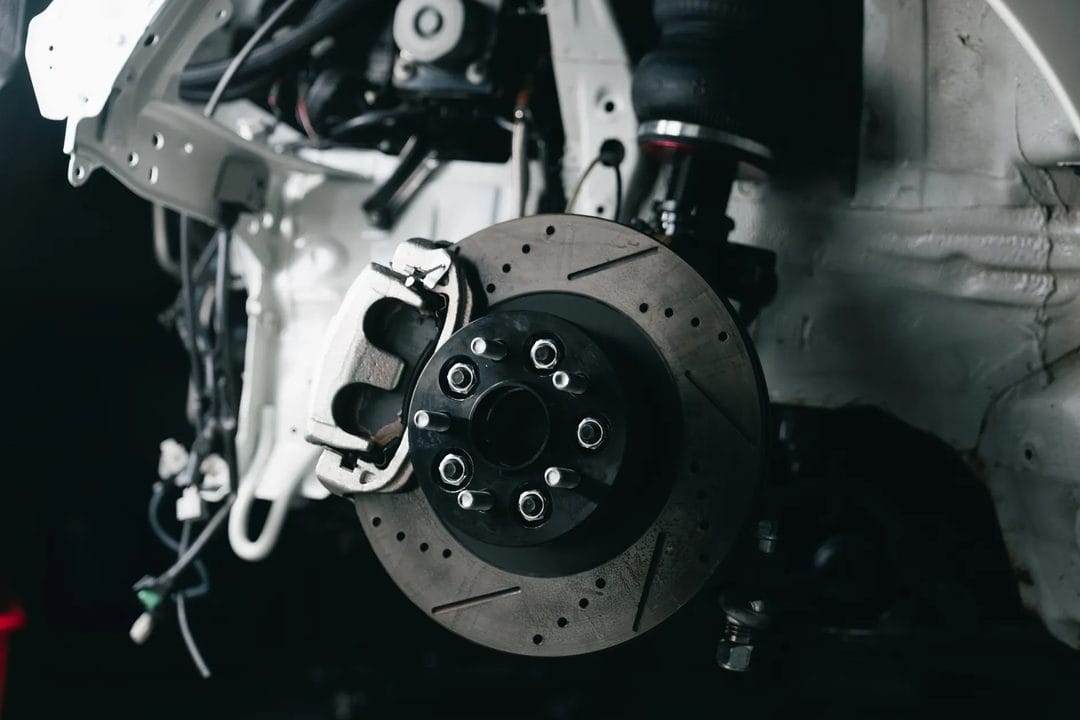
A failing wheel bearing announces itself quietly at first — a low hum that rises and falls with speed, easy to blame on tire wear or a rough patch of highway. Most men drive on it for weeks, sometimes months, because the car still handles fine and the noise isn't loud enough to trigger real concern. That delay is exactly what turns a $250 bearing replacement into a $700 repair, and in the worst cases, into a wheel that separates from the hub at speed.
Wheel bearings sit inside the hub assembly and let the wheel spin freely while carrying the full weight of the vehicle plus every cornering and braking load on top of it. They're sealed units on almost every car built since the early 2000s, packed with grease and designed to run without maintenance for 85,000 to 100,000 miles under normal conditions — but "sealed" doesn't mean "immune," and once the seal fails, water and road grit get in and the countdown to full failure starts.
What the sound actually tells you
A humming or growling noise that changes pitch with vehicle speed — not engine RPM — is the single most reliable early sign, and it's the detail that separates a bearing problem from a dozen other noises a car makes. Turn the steering wheel gently left and right at low speed on an empty stretch of road: if the noise gets noticeably louder in one direction and quieter in the other, that's the bearing on the side opposite the direction that quiets it down, because turning shifts load onto or off the affected wheel.
The three stages, and how much each one costs to fix
- Stage one — hum only, no play in the wheel: replace the bearing now, parts and labor typically $250 to $450 per wheel at an independent shop
- Stage two — hum plus a clicking or grinding sound when turning: the bearing has started to gall internally, $350 to $550, and some shops will find the hub itself needs replacing along with it
- Stage three — noticeable play when you rock the top of the tire in and out by hand, or a wheel that visibly wobbles at speed: $600 to $900, because at this point the hub assembly is usually shot and ABS wheel-speed sensors mounted in the same assembly often fail alongside it
Skip stage three entirely if you catch stage one. That's not a hedge — it's the single most avoidable repair-cost jump in routine car maintenance, and the only thing standing between you and it is actually acting on a noise instead of turning up the radio.
Why the delay is dangerous, not just expensive
A wheel bearing that fails completely doesn't fail gently. In the worst documented cases, the wheel separates from the hub entirely — NHTSA has logged complaints and recalls tied to hub bearing failures across multiple manufacturers, including a 2015 recall covering more than 400,000 vehicles for exactly this failure mode. That's an extreme outcome, and most bearings give plenty of warning before reaching it. But "most" isn't "all," and the warning only protects you if you act on it instead of treating a hum as background noise for three more oil changes.
ABS and traction control depend on wheel-speed sensors that live inside the same hub assembly on most modern cars. A degrading bearing throws off the sensor reading before it throws off the ride quality, which means an ABS warning light on the dash can be the bearing talking to you before your ears ever pick up the hum. Don't dismiss an ABS light as "just electrical" without having a shop check bearing play first — that assumption costs people a second diagnostic visit more often than it should.
DIY replacement — realistic about when it's worth it
Front-wheel-drive bearings on most cars are pressed into the hub carrier and require a hydraulic press or a specialized bearing puller kit — not a job for a driveway with hand tools alone, and this is the one where renting the tool from an auto parts chain like AutoZone or O'Reilly still leaves you needing a shop vise and real mechanical confidence. Rear bearings on many trucks and older sedans are a simpler bolt-on hub assembly, closer to a genuine weekend DIY job with basic tools and a torque wrench.
Parts alone run $80 to $200 per wheel for a quality aftermarket hub assembly from Timken or Moog — both names that show up repeatedly in mechanic forums as the parts worth paying slightly more for over the cheapest bearing bin option. Buy the OEM-spec sealed unit, not the bare bearing race that needs pressing separately, unless you already own a press and know exactly what you're doing.
The maintenance habit that actually prevents this
Rotating tires every 5,000 to 7,000 miles gives a mechanic a routine excuse to spin each wheel by hand and listen for early bearing roughness before it ever reaches the passenger cabin as a hum. Ask specifically for this at every rotation — it takes thirty seconds and most shops won't volunteer it unless you ask, because it's not a line item they bill for separately.
Driving through standing water at speed, repeatedly, is one of the more overlooked accelerants of bearing seal failure — the pressure differential from a hot bearing hitting cold water can pull moisture past a seal that would otherwise have held for years. If you regularly drive flooded roads or deep puddles during storm season, that's a real factor in your bearing lifespan, not just an old mechanic's superstition.
One thing worth saying plainly: don't let a quiet, tolerable hum talk you into believing it'll resolve itself. It won't. Bearings don't heal, they only get louder, and the $250 fix at month one becomes the $700 fix at month five with nothing gained in between except three more months of driving on a wheel bearing that's actively getting worse under load every single mile.