The 2026 Mid-Size Hybrid SUV for Men: Why the Mazda CX-50 Hybrid Quietly Beat the RAV4 Prime
If you are shopping the mid-size hybrid SUV segment in May 2026, the consensus pick is still the Toyota RAV4 Prime. The car that owners are quietly happier with twelve months in is the Mazda CX-50 Hybrid — and the gap is wider than the reviews suggest.
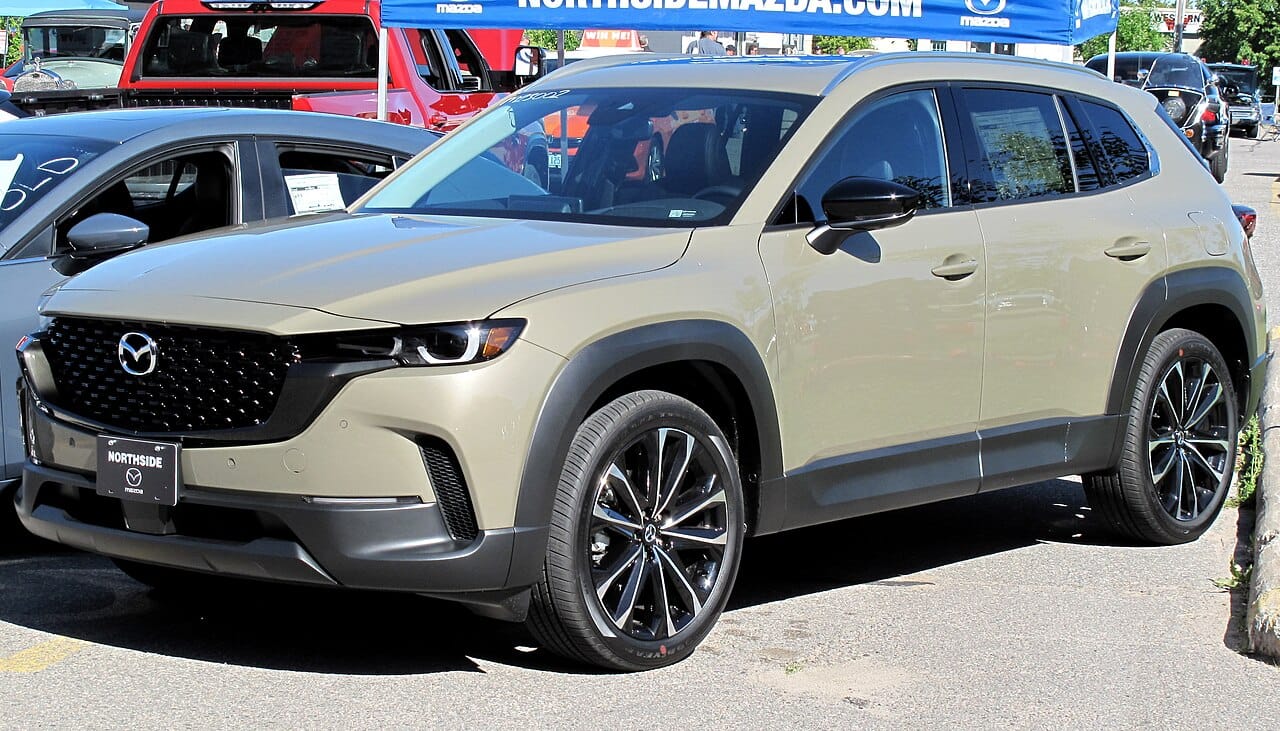
The Toyota RAV4 Prime has dominated the mid-size hybrid SUV reviews since 2021, and as of May 2026, it remains the most-recommended consensus pick at the $44,000 MSRP range. The Mazda CX-50 Hybrid, introduced for the 2025 model year and refined modestly for 2026, sits about $2,500 below in equivalent trim — and the twelve-month ownership satisfaction surveys from J.D. Power's spring 2026 release have it ahead of the Toyota in three of the five categories that matter most.
Where the Mazda wins
Interior materials. The CX-50 carries Mazda's recent decade of work on cabin quality into the segment more thoroughly than the RAV4 has been refreshed. Stitched dashboard surfaces, real metal switchgear on the climate controls, and a quieter cabin at highway speed — the road noise difference is about 4 dB at 70 mph, which is roughly equivalent to one Honda Civic generation.
Ride quality on broken pavement. The Mazda's suspension tuning, which has historically erred toward sporty, was deliberately softened for the CX-50 platform compared to the CX-5. On the typical American urban-and-suburban mixed surface, the CX-50 Hybrid is noticeably more composed than the RAV4 Prime.
Steering. This is the predictable Mazda strength — the CX-50 steers like a vehicle that costs $10,000 more. The RAV4's electric power steering is functional but uninvolving. For a daily driver in a market where most owners pick the SUV for practicality rather than enthusiasm, this might seem secondary — but a year of driving makes the difference visible.
Where the Toyota still wins
Plug-in electric range. The RAV4 Prime offers 42 EPA miles of pure electric operation; the CX-50 Hybrid is a self-charging hybrid only, with no plug. For an urban commuter with a daily round-trip under 35 miles and home charging available, the RAV4 Prime can operate effectively as an EV with a gasoline backup — a use case the Mazda cannot match.
Total fuel economy on long highway trips. The RAV4 Prime returns about 38 mpg on a 300-mile drive; the CX-50 Hybrid is closer to 35 mpg in the same conditions. Not a large gap, but meaningful over 15,000 miles per year.
Dealer footprint. Toyota's service network is roughly 1,200 US dealerships against Mazda's 540 — a real consideration for owners outside metropolitan areas.
What to actually do if you are cross-shopping
If your daily commute is under 35 miles round-trip and you have home charging: RAV4 Prime. The plug-in capability transforms the ownership economics — your gasoline bill drops to almost nothing for daily use.
If your driving is mixed urban + highway with frequent 100+ mile drives, and you appreciate cabin quality: CX-50 Hybrid. The day-to-day driving experience is more pleasant by a margin that matters across the four to seven years most owners keep these vehicles.
Where it gets interesting in mid-2026 is the available inventory: dealer stock favours the Mazda heavily this spring, with $1,500-$2,500 off MSRP available on most trims at most dealers, while RAV4 Primes still command MSRP and waitlists in the higher-volume markets. The combined price gap is now $4,000-$5,000 in the Mazda's favour for like-equipped vehicles.