MOT Test Prep 2026: Avoid a Fail and a Second Visit
The pre-MOT walk-round that catches the same faults the tester will — lights, tyres, brakes and washer fluid — before you're paying for a retest.
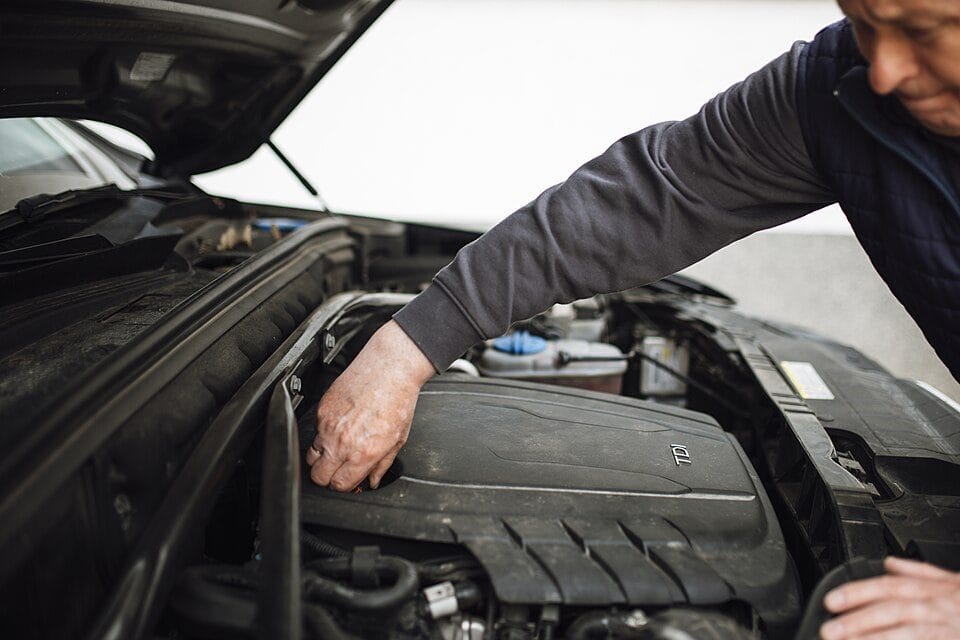
Your MOT reminder lands in the post, you glance at the date, and you book the first slot the local garage has open. That's the moment most men get this wrong — not because the car is actually unroadworthy, but because nobody looked at it between now and the last certificate. A ten-minute walk-round the week before the test catches the same faults the tester will catch, except you get to fix them on your own driveway for the price of a bulb instead of paying for a retest and driving back a second time.
The DVSA runs roughly 30 million MOT tests a year in Great Britain, and its own failure data keeps landing on the same handful of causes. Lighting and signalling faults sit at the top almost every year — a blown sidelight, a hazy headlamp lens, a number plate light nobody noticed had gone. Tyres and suspension follow close behind, then brakes, then windscreen and wiper issues. None of these need a mechanic. All of them need five minutes and a bit of attention before the test, not after the fail sheet comes back.
Start With Lights — All of Them
Walk around the car with the engine running and a phone camera, because a reversed image in a wing mirror doesn't show you what's actually lit. Get someone to sit in the driver's seat and cycle through sidelights, dipped beam, main beam, fog lights, indicators, hazards and reverse gear while you check each corner. Number plate lights get missed constantly because they're small and tucked under the boot lid trim — pop the lid and look. A single failed bulb is an instant, guaranteed fail point; there's no partial credit for "three out of four indicators work."
Replace bulbs with the correct wattage and type listed in the handbook — mixing a halogen with an LED replacement in the same pair, or fitting the wrong base fitting, can throw the beam pattern out and cause a fail on aim rather than function. Halfords and most Euro Car Parts branches will match the bulb to your reg plate at the counter for under a fiver a pair on most hatchbacks and saloons. If a headlight lens has gone properly cloudy and yellow rather than just dirty, that's a different problem — polishing kits fix UV haze, they don't fix a cracked or moisture-fogged unit, and a tester will fail a lens that's let water in regardless of how clean it looks from three feet away.
Tyres: Depth, Damage, and the Bit Everyone Skips
The legal minimum tread depth in the UK is 1.6mm across the central three-quarters of the tyre's width, measured all the way round — not just at one point you happened to check. Use the 20p test: insert a 20-pence coin into the main grooves at three or four points around the tyre, and if the outer rim of the coin is ever visible, that tyre is too close to the limit to risk. Do this on all four corners, not just the two you can see from the driver's door, because uneven wear from a tracking fault often shows up on one side long before the other. Don't stop at tread. Run a bare hand around the sidewall feeling for bulges, cuts, and cracking from age or kerb strikes — a tyre can have plenty of tread left and still fail on sidewall damage, and that's the fault owners miss most because they only ever look at the bit touching the road. Mismatched tyre sizes or tread patterns on the same axle are worth a second glance too, since a spare or a replacement fitted in a hurry sometimes ends up paired with something the tester will flag on its own.
Check the spare too, if the car carries one, along with the jack and brace — some testers will flag a completely flat or perished spare, and it's an easy thing to have sitting unnoticed in the boot floor for two years. While you're down there, glance at tyre pressures against the figures on the door-shut sticker. Under-inflated tyres wear unevenly on the shoulders, which is exactly the kind of damage that turns a borderline pass into a fail six months earlier than it should.
A tyre with 3mm of tread and a cracked sidewall will fail before a tyre with 2mm and a clean sidewall — depth isn't the only thing being measured.
Brakes, Discs, and the Handbrake Nobody Tests Properly
You can't fully inspect a brake system in a driveway without pulling wheels off, but you can catch the obvious signs. Listen for grinding or a metallic scraping sound when braking gently at low speed in an empty car park — that's usually the wear indicator on a pad telling you it's near the end. Feel for the car pulling to one side under braking, which points to uneven wear or a sticking caliper. Check the handbrake holds the car on a slope with the footbrake released; testers check this on a rolling road, and a handbrake that's been slowly stretching its cable for two years is a very common, very avoidable fail. Look through the spokes of each alloy at the discs themselves if you can — a lip of rust around the outer edge is normal after a damp week sitting unused, but a deep groove scored into the disc face usually means the pads wore down to bare metal at some point and it's worth having checked before the test rather than after. Spongy pedal travel that needs a second push to firm up is another sign the fluid or a seal needs attention, and it's not something a tester will miss.
Brake fluid matters more than most owners think. It absorbs moisture over time, which lowers its boiling point and can affect pedal feel long before it shows up as an obvious fault — most manufacturers specify a two-year fluid change regardless of mileage. If your last change was more than that ago, it's worth booking it alongside the MOT rather than waiting for a problem to show up mid-test.
The Small Stuff That Fails Cars Just as Often as the Big Stuff
Windscreen chips matter more than owners expect. A chip larger than 10mm anywhere in the swept area of the windscreen, or one sitting directly in the driver's primary view — a 290mm-wide band in front of the steering wheel — is a fail, even if it's a single tiny stone chip that hasn't spread. Get it repaired before the test; a repair costs a fraction of a replacement windscreen and takes about half an hour at a Halfords Autocentre or an independent glass fitter.
Wiper blades that smear or judder will fail a test just as reliably as a cracked screen — replace them every twelve months regardless of how they look, because rubber perishes from UV exposure even when the blade edge looks intact. Top up washer fluid and actually test that the jets reach the screen at speed, not just that they dribble at idle. Check the horn works with one press, not a hopeful jab. None of this takes more than fifteen minutes combined, and all of it is on the tester's checklist.
- Seatbelts: pull each one out fully and let it retract — a belt that doesn't lock under a sharp tug is a fail
- Number plates: check for cracks, missing screws, or lettering that's peeling and no longer legible from 20 metres
- Exhaust: listen for a rattle or a change in note that suggests a loose heat shield or a hole starting to form
- Mirrors: confirm both wing mirrors and the interior mirror are present, secure, and not cracked
Timing the Test So a Fail Doesn't Cost You the Car
You can book an MOT up to a month (minus one day) before the current certificate expires without losing any time on the renewal date — the new certificate still runs a full year from the old expiry date, not from the test day. That gap is your safety net. Book it three to four weeks early, and if something fails, you've still got time to fix it and retest before the old certificate actually runs out, without the car becoming instantly illegal to drive on the day itself.
Miss that window and book on the last possible day, and a fail puts you in a genuinely awkward spot: if the fault is classed as "dangerous" or the previous MOT has already expired, you cannot legally drive the car away from the test centre, full stop — not to a garage, not home, nowhere. Most testers will let you book a retest within ten working days at a reduced fee, sometimes free if it's the same test centre and a simple item, but that's cold comfort if the car is sitting on their forecourt and you're the one arranging a flatbed.
What This Actually Costs You Either Way
A car MOT test is fee-capped at £54.85 in Great Britain — garages can charge less, and plenty do as a loss-leader alongside a service, but none can legally charge more for a standard car test. Compare that to the retest fee, which varies by garage but is often the same as the original test if the car needs to come back for a full re-check, plus whatever the actual repair costs. A bulb is under a fiver. A pair of decent wiper blades is £15–£20. A windscreen chip repair runs £25–£40 at most chains. None of that comes close to the cost of a second test, a second morning off work, and potentially a taxi home if the car's failed on something dangerous.
Do the walk-round the weekend before, not the morning of. Rushed checks in a test centre car park find nothing you didn't already know was wrong, and by then it's too late to fix anything before the tester starts the clock.