Summer Tyre Switching Mistakes: What Most Men Get Wrong When They Pull Off Winter Rubber in May
Winter tyres past 7°C add real metres to your braking distance. What most men get wrong during the May tyre swap — torque specs, pressure recalibration, and the tread depth check they skip.
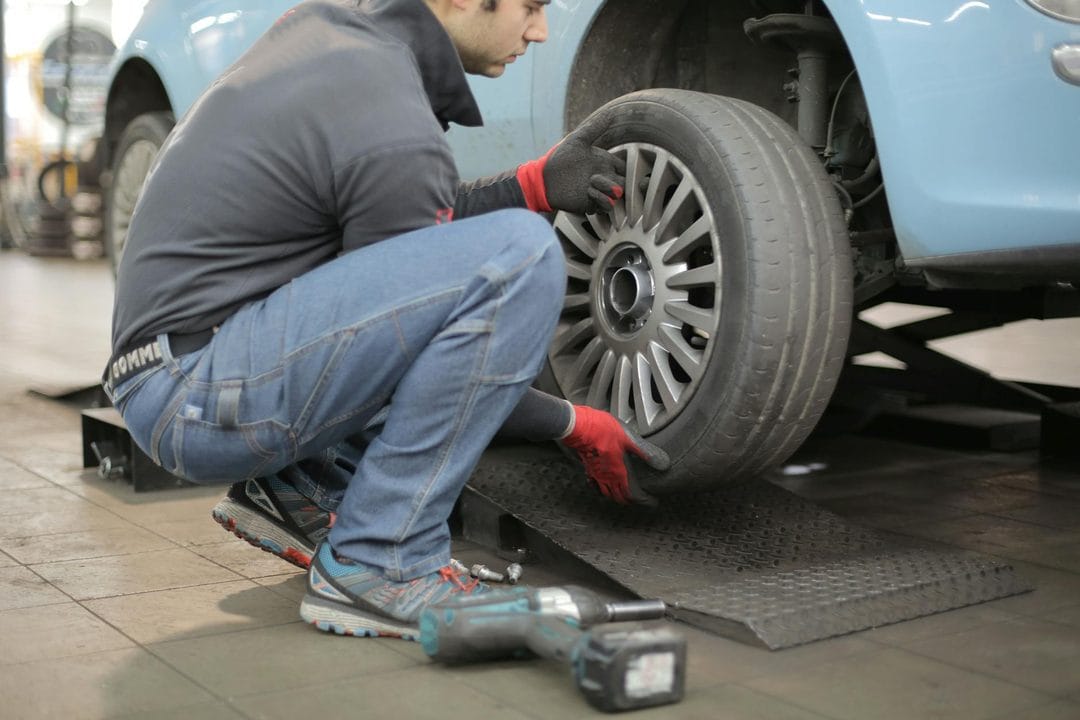
The window between seasons is shorter than you think
Late May is the point in most northern-state and northern-European markets where winter tyres have been sitting on cars for two to three weeks past the practical cutoff. The snow is gone, temperatures are running 10–15°C consistently, and the winter compound — designed to stay supple below 7°C — is now operating above its effective temperature range every day you drive on it. Winter rubber above 7°C doesn't just wear faster; it becomes structurally less responsive, with braking distances on dry summer asphalt extending by 10–15% compared to a summer compound at the same speed. That's not a marginal degradation. At 100 km/h, a 10% braking distance increase adds roughly 4–5 metres to your stopping distance — the kind of difference that matters when someone brakes unexpectedly in front of you on a warm June afternoon.
Most men who run dedicated winter tyres on steel wheels know roughly when to switch. The mistake isn't usually timing — it's the shortcuts taken when doing the actual swap. Specifically: torque settings, tyre pressure recalibration, and tread depth checks that get skipped because the swap feels routine after three or four years of doing it yourself.
Torque is the thing most home mechanics get wrong
Wheel nut torque specifications exist because they matter — not as bureaucratic caution, but because under-torqued nuts work loose under the lateral and braking loads of normal driving, and over-torqued nuts stretch and weaken the wheel stud, making the next removal harder and eventually causing stud failure. Impact guns used without a torque stick or follow-up torque wrench are the single most common source of incorrect torque in home tyre swaps.
The correct sequence: fit the wheel, hand-tighten the nuts in the star pattern (or cross pattern for five-bolt hubs) to pull the wheel flush against the hub, then use a calibrated torque wrench to final-torque to spec. For most family cars and light trucks, wheel nut torque specs run between 85–130 Nm — a 2021–2025 VW Golf is 120 Nm, a Ford F-150 with factory 17-inch steel wheels is 190 Nm, a Mazda CX-5 is 108 Nm. These are not interchangeable numbers. Check your owner's manual or the sticker on the door jamb. Then retorque after 50–80 km of driving — the first few heat cycles seat the wheel against the hub and slightly relax the initial torque; the follow-up torque check is not optional.
If you're using an impact gun, the only safe approach is to torque stick plus final manual check. A torque stick (around $30–$60 for a decent Park Tool or Snap-on item) limits maximum delivered torque at the gun. They're calibrated per spec range — a 100 Nm torque stick won't stop a professional-grade impact gun from delivering 100 Nm consistently across multiple sequential tightenings. Still use the manual follow-up. Impact gun consistency varies with battery charge and air pressure, neither of which torque sticks fully compensate for.
Tyre pressure after a seasonal swap is not the same as before
Tyres lose or gain roughly 1 PSI for every 10°F (5.5°C) change in ambient temperature. If your winter tyres were set to spec in November at 35°F and you're checking them in May at 70°F, they're running roughly 3–4 PSI over the winter-set pressure. Your summer tyres coming off storage were likely stored at reduced pressure or have drifted since last autumn. Neither set reads correctly at the start of summer without a fresh pressure check.
Check cold — meaning the car hasn't moved in at least three hours and hasn't been parked in direct sun. Summer tyres have tighter operating pressure bands than winter compounds; many high-performance summer tyres (Michelin Pilot Sport 5, Continental SportContact 7) are spec'd at 36–38 PSI front with a 1–2 PSI differential rear for certain load distributions. Running them 4 PSI under spec affects handling balance noticeably and wear pattern significantly over the season. A digital tyre pressure gauge costs $15 and removes the margin for error that analogue stick gauges introduce.
Check tread depth before you store the winter set
The EU legal minimum tread depth is 1.6mm; the practical safety threshold for winter tyres is 4mm — at 4mm, winter compound grip on packed snow begins degrading meaningfully. Check both sets during the swap. For summer tyres, 3mm is the practical threshold where wet-braking performance begins to degrade enough to notice; 1.6mm is legal but genuinely unsafe in heavy rain at motorway speeds.
A tread depth gauge (£3–£8 at Halfords or Amazon) is the right tool. The 20p/penny coin method works as a rough check — if the outer band of the coin is visible across the full tread, you're below 3mm on summer rubber — but it doesn't give you a number, and it doesn't catch uneven wear patterns that indicate alignment or pressure issues you'll want to address before summer driving. Uneven wear that appears during the winter season should be investigated before storing the winter set, not just accepted as next year's problem.
The summer set coming out of storage should also get a visual inspection for sidewall cracking. Rubber compounds degrade with age and temperature cycling even when a tyre isn't being used — if your summer set is more than six to seven years old by manufacture date (the four-digit DOT code on the sidewall gives week and year: 1524 means 15th week of 2024), consider replacing before putting in serious summer kilometres regardless of remaining tread depth. The compound's structural integrity is what matters, and it can't be measured visually with any precision. Six years is the practical replacement horizon for any tyre regardless of tread depth.