Audi RS6 Avant: The Wagon Americans Finally Got
A 591 hp Audi wagon that can out-accelerate a Ferrari 812 while carrying four adults and their luggage. The RS6 Avant is absurd in the best possible way.
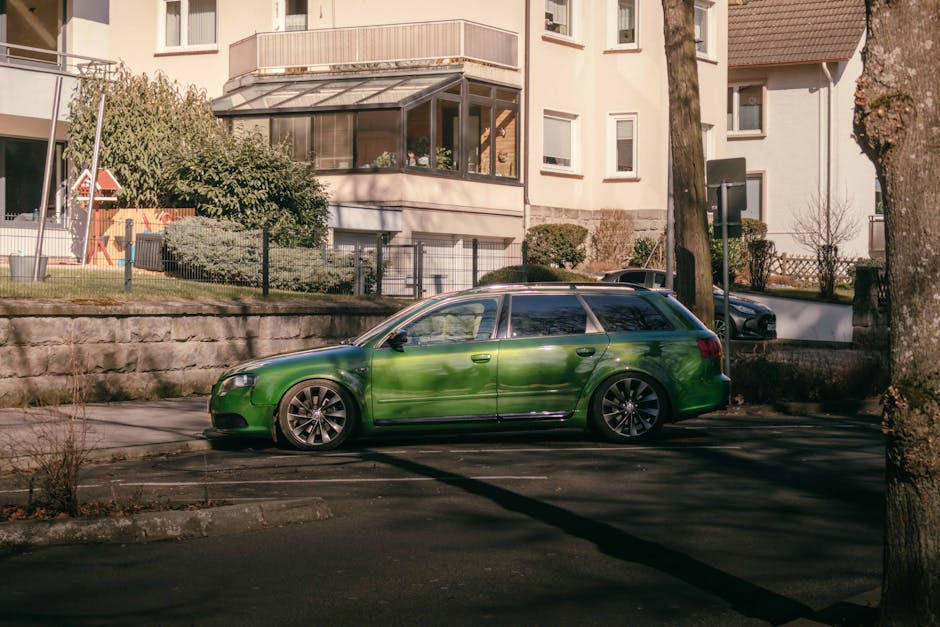
For two decades, American enthusiasts have watched Europeans drive 550+ horsepower Audi RS6 Avant wagons while the United States market received only the sedan-only RS7 or lesser-performance A6 Allroad. In 2020 Audi finally brought the RS6 Avant to America and the enthusiast community collectively lost its mind. The current-generation RS6 Avant runs a 4.0-liter twin-turbocharged V8 producing 591 hp in the standard version and 621 hp in the RS6 Performance. Zero to 60 in 3.1 seconds in a station wagon. Top speed 190 mph with the optional dynamic package. The RS6 Avant is the most absurd family vehicle ever built, and Americans can finally buy one.
I drove an RS6 Avant borrowed from a dealer for two days in 2023 before writing a review for a different publication. The experience was genuinely strange. The vehicle moves like a supercar but looks like a grocery-getter. The resulting identity confusion is part of the appeal, and what makes the RS6 Avant such a remarkable purchase for the specific type of enthusiast who appreciates what it offers.
The Powertrain That Embarrasses Sports Cars
The 4.0-liter TFSI V8 in the RS6 Avant uses Audi's biturbo V8 platform shared with the Lamborghini Urus and various RS models. Peak power is 591 hp at 6,000 rpm in the standard version, with 590 lb-ft of torque peaking at 2,050 rpm and holding flat until 4,500 rpm. The RS6 Performance variant bumps output to 621 hp with the same flat torque plateau.
The transmission is an eight-speed Tiptronic automatic, which is technically a torque converter automatic rather than a dual-clutch. Audi's calibration is excellent and shifts feel dual-clutch quick in Sport Plus mode. The ZF sourced eight-speed is rated to handle the torque output without reliability concerns.
All-wheel drive is Audi's Quattro with a sport differential and electronically controlled center differential. Power distribution is 40 percent front and 60 percent rear under normal conditions, with the ability to send up to 70 percent to the front or 85 percent to the rear depending on traction needs.
Launch control on the RS6 Avant is genuinely violent. From a dead stop, Launch Mode builds engine torque to 5,000 rpm against the brakes and releases with traction management optimizing wheel slip. The result is 3.1-second zero to 60 runs that feel like punching forward in a straight line. Passengers who are not expecting this often react in ways that suggest they were seriously alarmed.
Sound is exceptional. The V8 produces a proper V8 sound with appropriate turbocharger whoosh during hard acceleration. The sport exhaust system is active, meaning the mufflers open and close based on driving mode and rpm. In Dynamic mode the exhaust is loud enough to get attention but not offensive. In Comfort mode it is nearly silent at cruise.
The Wagon Body Is the Point
The RS6 Avant has 30.0 cubic feet of cargo space behind the rear seats and 59.3 cubic feet with the rear seats folded. This is more practical cargo space than many full-size SUVs and dramatically more than any coupe or sedan. You can fit a child's car seat and a full set of golf clubs without touching the rear passenger space.
Rear seat legroom is 37.4 inches, which is generous for a mid-size car and easily accommodates adults on long trips. The rear seats are well-bolstered with both lateral support and proper cushioning, which is rare in performance cars where rear seats are typically afterthoughts.
The roof rack provisions are rated for 220 lb, which allows for kayaks, bicycles, or roof-top cargo boxes. The rear bumper has hidden tow hooks that provide 4,850 lb of towing capacity. These are features no sport sedan matches.
Ground clearance is 5.5 inches, which is appropriate for pavement but limits capability on rough roads or driveway transitions. The active air suspension can raise the vehicle by 0.8 inches for slightly improved ground clearance on rough terrain.
Daily Driving Reality
Fuel economy is moderate for the performance. The EPA rating is 15 city and 22 highway, and real-world driving averages 18 mpg in mixed use. Premium fuel is required. An RS6 Avant driven 12,000 miles per year costs approximately $2,800 in fuel, which is reasonable for 591 hp.
Ride quality in Comfort mode is outstanding. The active air suspension provides luxury-car isolation from road imperfections while still maintaining enough body control for hard cornering when requested. Long interstate drives are genuinely comfortable.
Cabin noise is low at highway speed. The combination of laminated acoustic glass, properly insulated body panels, and a refined exhaust allows for normal conversation and music listening at 80 mph without any strain.
The driver assistance systems (adaptive cruise control, lane keeping, automatic emergency braking) work exceptionally well. The RS6 Avant can drive itself through moderate traffic with minimal driver input, which is useful on long commutes or road trips.
Visibility from the driver seat is excellent. The large windows, proper greenhouse design, and high seating position (for a wagon) provide clear sight lines in all directions. Rear visibility is adequate thanks to proper mirrors and a good backup camera.
The Price of Owning This Car
The RS6 Avant starts at approximately $125,000 in 2026 new, with typical as-equipped prices in the $135,000 to $150,000 range. The RS6 Performance starts at $135,000 and runs $150,000 to $165,000 as typically equipped.
Depreciation has been moderate. A 2021 RS6 Avant purchased for $120,000 MSRP is trading at approximately $95,000 to $110,000 in 2026, a 10 to 20 percent depreciation over 5 years. This is better than most luxury performance vehicles and reflects the specialty nature of the vehicle and limited supply.
Tires are expensive. A set of OEM Continental SportContact 7 summer performance tires costs $2,200 to $2,800 installed. Tire life is 15,000 to 22,000 miles depending on driving style. Winter tire sets are essentially required in snowy climates and cost an additional $1,500 to $2,200 with dedicated wheels.
Oil changes are every 10,000 miles with 8.2 quarts of Castrol Edge 5W-40 synthetic. Dealer cost is $240 to $290, while independent Audi specialists charge $180 to $220.
Brake pads are a real expense. The factory pads are aggressive and wear quickly, typically requiring replacement at 30,000 to 45,000 miles. Pad and rotor replacement is $2,400 to $3,200 per axle at a dealer, or $1,800 to $2,400 at an independent shop. Carbon-ceramic brake option adds $8,500 to $12,000 in replacement costs when needed.
Insurance runs $2,800 to $4,800 per year depending on age, location, and driving record. Performance vehicle classification combined with expensive parts results in higher-than-average insurance costs.
Reliability and Maintenance Considerations
The 4.0L V8 has generally been reliable on RS6 Avant applications, with no known systemic failure modes through the first four years of US availability. Earlier applications of this engine in other Audi models had coolant pump issues that were addressed through redesign.
Timing chain stretch is a concern on heavily-used engines at 80,000+ miles. Proactive chain replacement is $4,500 to $6,000 and is recommended for long-term ownership.
The dual-clutch transmission used in some other RS models is notably absent from the RS6 Avant. The torque converter automatic is proven and reliable, requiring only scheduled fluid services every 80,000 miles.
Air suspension is the component most likely to fail in the 6 to 10-year ownership window. Individual air struts cost $1,800 to $2,500 replaced. Full air suspension rebuilds are rare but run $6,000+ when needed.
Electronic components and infotainment systems can develop issues as the vehicle ages. Most are covered under warranty for 4 years or 50,000 miles, but out-of-warranty electronic repairs can be expensive.
The Configurations That Matter
The standard RS6 Avant provides the full 591 hp performance and most of the luxury features. Options that significantly add value include the RS Dynamic Package (raises top speed limiter, adds ceramic brakes), the Driver Assistance Package (full suite of safety features), and the Bang and Olufsen 3D Advanced Sound System.
The RS6 Performance variant adds 30 hp, revised rolling stock, additional interior materials, and unique exterior trim. The Performance is approximately $10,000 more than the standard and offers a meaningful step-up in both capability and luxury.
Color choices that hold resale value include Nardo Gray, Mythos Black, Tango Red, and Glacier White. Daytona Gray and Sebring Black Crystal are enthusiast favorites that command small premiums. Exotic colors like Turbo Blue or Green Hell hold value well but may have smaller resale audiences.
Interior leather options run from standard black to red and blue accent stitching. Alcantara steering wheel and headliner are worth the premium for most enthusiasts. The Valcona leather upgrade adds genuine luxury feel.
What Happens Next With Values
Audi has announced that the current-generation RS6 Avant will continue in production through at least 2027, with future variants potentially moving to hybrid or fully-electric drivetrains. This means the current V8 RS6 has a defined production window, and enthusiasts are already positioning these as future modern classics.
My prediction for RS6 Avant values through 2030 is strong. Early-year models (2020-2021) will probably stabilize at $85,000 to $95,000 and remain there, with low-mileage examples appreciating slightly. Later-year models (2023-2025) should hold value well as they become used-market staples. The limited production and the unique market position (V8 wagon) will prevent significant depreciation.
Compare this to the previous-generation C7 RS6 Avant that was never sold in the US, which has become increasingly collectible in European markets. Early C7 RS6 Avants are now valued at more than some later-model C8 examples because of their unique place in the car's history.
The Honest Verdict
The RS6 Avant is the correct choice for a specific type of buyer. The combination of supercar performance, genuine family practicality, and European wagon heritage is not available anywhere else in the American market. Buyers who want this specific combination are not going to find it in any other vehicle.
It is not the correct choice for a buyer who simply wants performance. A BMW M3 Competition sedan is faster and cheaper. A Porsche 911 is more engaging and more prestigious. Those cars make more sense for pure performance focus.
It is also not the correct choice for a buyer who simply wants practicality. A BMW X5 M50i or a Cadillac Escalade V offer more space and capability at similar performance levels. Those vehicles handle family duties better than the RS6 Avant does.
For the buyer who wants performance AND practicality AND the European wagon identity, the RS6 Avant is unique, and in 2026 it is the last opportunity to buy a new V8-powered example. Whether that specific combination justifies the $140,000+ cost is a personal question. For the right owner, the answer is clearly yes. For most enthusiasts, a regular M3 or 911 will deliver more enjoyment per dollar. Know which buyer you are before making the commitment.