BMW E46 M3: The $30,000 Future Classic Still Under the Radar
The E46 M3 is the last naturally aspirated six-cylinder BMW M-car. Prices were flat for a decade. Now they are starting to climb for real.
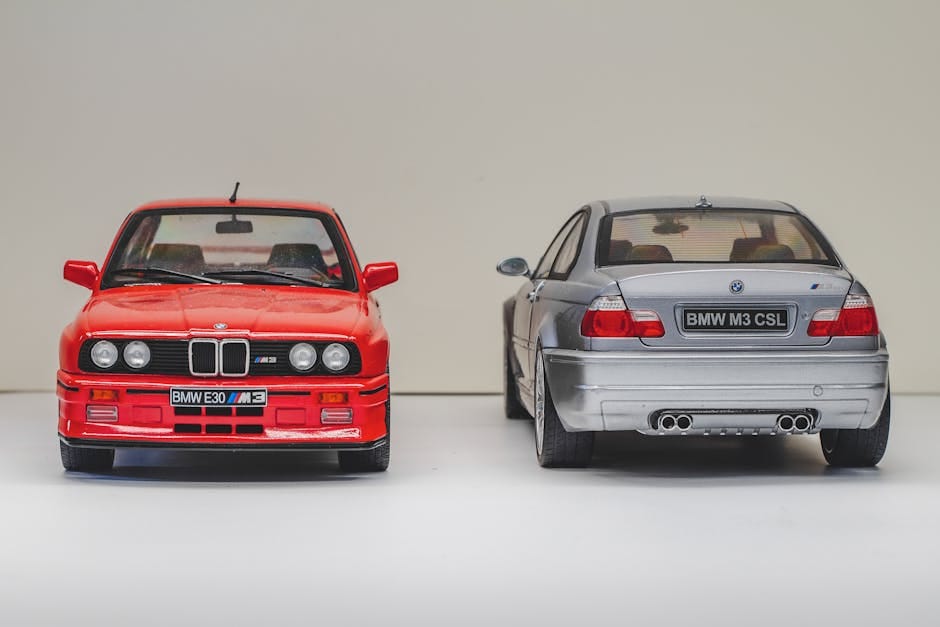
The BMW E46 M3 is the last naturally aspirated straight-six M3. Production ran from 2001 to 2006. The engine, the S54B32, makes 333 hp in US spec from 3.2 liters and revs to 8,000 rpm. There is no turbocharger, no direct injection, no electric motor anywhere in the drivetrain. Just six cylinders, individual throttle bodies, and a sound that has been imitated but never replaced. Prices on clean examples were flat between 2010 and 2019, drifting up slowly from 2020 to 2024, and have moved sharply in the last 18 months. In 2026 the floor for a running, driveable E46 M3 is roughly $28,000 and clean examples with under 90,000 miles are sitting at $35,000 to $45,000.
I owned a 2004 Interlagos Blue E46 M3 coupe with a six-speed manual from 2017 to 2021. Bought it at 86,000 miles for $17,500. Sold it at 112,000 miles for $28,000. That was the easiest five-figure appreciation I have ever gotten on a car I drove hard every week. The reason I eventually sold was that I wanted to buy a newer M-car, and in hindsight that was a mistake. Every E46 M3 owner I know has held onto theirs, and they all look smart now.
Why This Car Matters
The S54 engine is the reason to care about the E46 M3 and it is not an exaggeration. This engine made specific output of 104 hp per liter in 2001, which was at the absolute edge of what naturally aspirated engines were doing at the time. The individual throttle bodies respond instantly to the accelerator pedal. The redline is 8,000 rpm and the engine actually wants to be there. Modern turbocharged engines make more power but they do not feel anything like this. The experience of a properly running S54 at 6,500 rpm with the windows down is one of the great things a car enthusiast can experience.
The chassis is the other reason. The E46 M3 is under 3,400 lb, which in 2026 is what a compact sedan weighs. The steering is hydraulic and communicative in a way no electric power steering system has fully replicated. The suspension is stiff but not brutal, and the car has genuine feedback through the wheel, the pedals, and the seat. You know exactly what every tire is doing at all times.
The exterior styling has aged better than any BMW design of the last 25 years. The E46 M3 coupe has flared rear fenders, quad exhaust tips, and a wheel package that looks purposeful. The E46 M3 convertible is less visually impressive but is still handsome. Both the coupe and convertible are instantly recognizable as M-cars.
What Breaks and What It Costs
Before you buy an E46 M3 you need to understand the failure points. There are three big ones, and all three have to be addressed on any example you consider buying.
The rod bearings are the famous one. The S54 engine was shipped from the factory with rod bearing clearances at the tight end of specification. Combined with the break-in recommendations at the time, this has led to a pattern of rod bearing failure starting at around 80,000 miles and continuing through 150,000. A failed rod bearing destroys the engine. The fix is preventive rod bearing replacement, which is a $1,800 to $2,400 job at a BMW specialist. Any E46 M3 over 80,000 miles that has not had its rod bearings replaced needs them done within your first 5,000 miles of ownership. This is not optional.
The VANOS unit is the second one. The variable valve timing system on the S54 uses a mechanical unit that relies on internal seals which degrade over time. A failing VANOS causes rough idle, cold-start rattle, and power loss. Rebuilding the VANOS with upgraded seals is an $800 to $1,200 job. Most E46 M3s at this point need a VANOS refresh.
The subframe mounts are the third. The E46 M3 subframe is bolted to the chassis at four points, and over time the sheet metal around those mounting points cracks and tears. This is especially common on cars that were tracked or launched hard. A cracked subframe is repairable with specialist welding for $1,500 to $2,500. An unrepaired cracked subframe is a total loss for the chassis. Always check this on a PPI.
Beyond the big three, expect to deal with the typical BMW I6 maintenance items over ownership. Valve cover gasket around $500 installed. Vanos rattle solenoid clicking replacement. Cooling system refresh including water pump and thermostat at around 100,000 miles, $1,400. None of these are dealbreakers but they all add up.
What to Pay For
The good news is that proactive maintenance is visible and valued. An E46 M3 with documented rod bearing replacement, fresh VANOS seals, and reinforced subframe mounts is worth $5,000 to $8,000 more than one without any of that documentation. Well-loved cars are actually available at market prices, you just have to be patient and willing to pay the premium.
Color and configuration matter too. Laguna Seca Blue is the most valuable color and carries a 15 to 25 percent premium over standard colors. Imola Red, Silver Grey, and Jet Black are the mainstream colors that trade at the regular market price. Oxford Green, Topaz Blue, and Interlagos Blue are enthusiast favorites that hold value well. Avoid Alpine White on the E46 M3, it is the most common color and the least visually distinctive.
Transmission choice matters hugely. The six-speed manual is the enthusiast choice and carries a $6,000 to $10,000 premium over SMG cars. The SMG (sequential manual gearbox) is a single-clutch automated manual that was advanced for 2001 but feels primitive now. SMG cars are cheaper but they require a pump rebuild around 60,000 to 80,000 miles, which is a $2,000 to $2,800 job. Most experienced owners have moved on from SMG to manual.
Factory options that add value include the Competition Package (ZCP), which added lighter wheels, a revised steering rack, Alcantara steering wheel, and the limited-slip differential upgraded ratio. ZCP cars are worth $3,000 to $5,000 more than standard M3s of the same year and condition.
Daily Driving an E46 M3
The E46 M3 is genuinely usable as a weekly driver. I put 26,000 miles on mine over four years and most of those miles were commuting, weekend errands, and occasional spirited canyon runs. The car never let me down mechanically and I handled everything except rod bearings myself in my home garage.
Fuel economy is not great. I averaged 19 mpg in mixed driving and 24 mpg on the highway. At the time gas was $3 a gallon so this was not painful. In 2026 at $3.60 average, an E46 M3 costs about $240 per month in fuel for a typical 1,200-mile month of driving.
Reliability with proactive maintenance was excellent. Over four years I spent about $4,200 on scheduled and preventive maintenance, not counting tires and brakes. Tires were $1,100 for a set of Michelin Pilot Sport 4S summer tires that lasted 14,000 miles. Brake pads and rotors were $680 for both axles at around 95,000 miles. Total running costs excluding fuel were about $6,000 over four years.
What Will Probably Happen to Prices
The E46 M3 price appreciation that started in 2023 is still in early innings. The E30 M3, which preceded the E46 by two generations, went from $20,000 cars in 2010 to $60,000 to $120,000 cars today. The E46 M3 is a more usable, more driveable car than the E30, and there are more good ones available, which will cap appreciation. But the trajectory is clearly upward.
My guess is that by 2030 the floor for a clean, sorted E46 M3 is going to be $45,000 to $55,000 and the best examples will be pushing $75,000. That is pretty close to where the current market is, minus 10 to 15 percent. If you want one at a reasonable price and you find a well-maintained example now, you are buying at close to the last affordable moment.
The thing to remember about the E46 M3 is that it is the last BMW M-car that feels like a traditional mechanical sports sedan. Every M-car from the E90 generation onward has electronic controls, drive mode selectors, and engine mapping that makes the car feel slightly artificial. The E46 is the last analog M3 and it is going to be recognized as a benchmark car for as long as enthusiasts care about these things. Which, I suspect, will be a long time yet.