BMW X3 M Competition: Sport SUV That Actually Is One
The X3 M Competition is actually fast. Not fast for an SUV. Fast in a way that embarrasses most sports cars. Here is what owning one is really like.
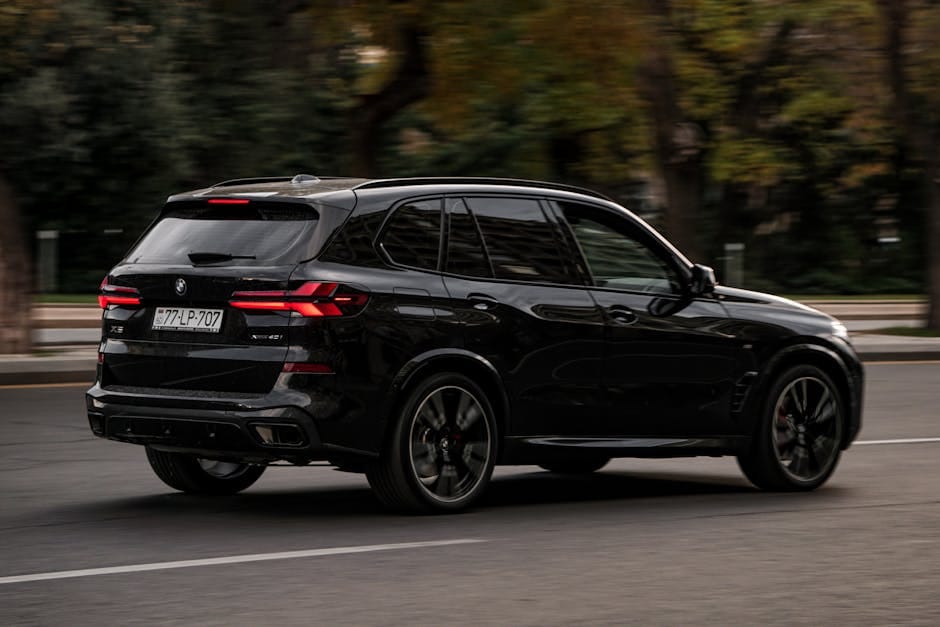
The BMW X3 M Competition is a 5,000-lb SUV with the same 503 hp S58 twin-turbo inline-six as the M3 Competition. Zero to 60 in 3.6 seconds, and top speed electronically limited to 155 mph, or 174 mph with the M Drivers package. It is a vehicle that technically makes no sense. Why put supercar performance in an SUV that does nothing particularly well for an SUV? And yet the X3 M Competition is one of the most genuinely fun vehicles I have driven in the last five years, and in 2026 a clean used example sits in the $65,000 to $85,000 range, which is supercar performance for family-SUV money.
I drove a 2021 X3 M Competition for three days last year when a friend needed someone to move his car 900 miles across the country. The experience completely changed my view of what a sport SUV can be. The X3 M is not a compromise. It is a sport sedan that happens to have SUV packaging, and the result is genuinely special in ways that most of its competitors are not.
The Powertrain Comparison That Actually Matters
The S58 engine in the X3 M Competition is the same engine found in the M3 Competition and M4 Competition. 503 hp and 479 lb-ft of torque. This is the exact engine, not a detuned version or a different configuration. BMW simply put the M3 engine into an X3 body, added the M-car all-wheel-drive system, and called it the X3 M.
The result is that the X3 M Competition has essentially M3 performance in a body that is 400 lb heavier and taller. The extra weight is meaningful but not catastrophic. Zero to 60 is 0.1 second slower than the M3, and quarter mile is 0.3 seconds slower. These are differences you feel in direct comparison but not in isolation.
The transmission is an eight-speed ZF automatic, the same unit found in the M3 Competition. No dual-clutch option exists on the X3 M. BMW's reasoning is that the torque converter automatic handles the weight of the SUV better while providing almost identical performance. In practice the automatic in Sport Plus mode shifts nearly as fast as a dual-clutch would and provides more relaxed daily-drive behavior than a DCT.
All-wheel drive is M-specific xDrive, which biases torque to the rear wheels under normal conditions and can send up to 100 percent of torque to either axle when needed. This is more aggressive than the xDrive in regular X3s and produces a more rear-wheel-drive feel in spirited driving. Launch control works beautifully on all surfaces, producing consistent sub-4.0-second 0-60 times in all weather.
How It Drives Compared to a Real Sports Car
The X3 M Competition does not drive like an SUV. This is the defining characteristic of the vehicle. Steering feel, body control, turn-in response, and chassis balance all feel more like a sport sedan than like a traditional SUV. The specific ingredient that makes this possible is the adaptive M suspension, which includes body-roll-resisting anti-roll bars, firm dampers, and chassis tuning focused on flat handling.
In corners, the X3 M stays flat. Not "flat for an SUV," actually flat. You can feel the outside wheels loading and the car balancing itself at meaningful cornering speeds without the queasy weight transfer that plagues most tall vehicles. The specific weight of the X3 M becomes apparent only when you reach the limits of grip, at which point the SUV character reveals itself with some understeer that a proper sports car would not have.
Direction changes, especially at low to medium speeds, are genuinely impressive. The car points where you tell it to and does so without complaint. The M-specific steering rack provides better feedback than most sport sedan racks, and the weighting feels natural without being overly heavy.
On a highway, the X3 M is remarkably refined despite its performance tuning. Road noise is reasonable, wind noise is well-suppressed, and the Comfort mode suspension is firm but not punishing. A 600-mile interstate drive is genuinely comfortable and you arrive feeling alert rather than beaten up.
The Practical Benefits of the SUV Body
The X3 M Competition has 28.7 cubic feet of cargo space behind the rear seats and 62.7 cubic feet with the rear seats folded. This is a genuine family SUV's cargo capacity, not a token amount of space. You can put two golf bags, a stroller, and a week of groceries in the back without touching the passenger cabin.
Rear passenger space is adequate for adults. The rear seats have 36.4 inches of legroom, which is less than the X5 M but more than the M3 sedan. Three kids across the rear seat is feasible. Three adults across is cramped but not impossible for short trips.
Ground clearance is 8.2 inches, which is higher than a regular X3 but lower than more off-road-oriented SUVs. The X3 M can handle gravel roads and moderate snow but is not intended for rough terrain. The aggressive front splitter and side sills limit ability to cross significant obstacles.
Towing capacity is 4,850 lb with a proper trailer brake controller. This is less than a full-size SUV but more than most sport sedans or sports cars. An X3 M can tow a small boat, a utility trailer, or a lightweight recreational vehicle without strain. Performance is not dramatically affected by moderate loads.
What It Costs to Live With
Fuel economy is worse than the rating suggests. The EPA says 14 city and 19 highway, and real-world driving averages 16 mpg in mixed use. Premium fuel is required. An X3 M driven 12,000 miles per year costs approximately $3,000 in fuel.
Tires run $1,800 to $2,400 for a set of OEM Michelin Pilot Sport 4S summer tires. Expect 15,000 to 22,000 miles of tire life depending on driving style. Winter tire sets are highly recommended and run $1,400 to $1,900 additional for dedicated wheels and tires.
Oil changes are every 10,000 miles per BMW, though 5,000 miles is recommended for long-term durability. Cost at a BMW dealer is $220 to $260 with Shell Helix Ultra 5W-30. Independent BMW specialists provide equivalent service for $160 to $200.
Brake pad replacement is typically needed at 25,000 to 40,000 miles depending on driving style. The factory M-spec brakes are large, and pad and rotor replacement runs $1,600 to $2,400 per axle at the dealer. Independent shops can do the same service for $1,100 to $1,600.
Insurance on the X3 M Competition runs $2,200 to $3,600 per year for most drivers. The classification as a performance vehicle increases premiums over regular SUVs.
Depreciation on the X3 M has been relatively steep. A 2022 model has dropped from $78,000 MSRP to approximately $62,000 in 2026, a 21 percent decline in 4 years. This is worse than an equivalent M3 but slightly better than a standard X3 xDrive30i over the same period.
The Competitor That Actually Matters
The Porsche Macan GTS is the closest direct competitor at similar pricing. The Macan GTS has 434 hp, slightly more refined interior, and more traditional Porsche steering feel. The X3 M Competition has more power, slightly more cargo space, and better technology features. Both are excellent choices depending on brand preference.
The Mercedes-AMG GLC 63 at similar price offers 503 hp from a four-cylinder turbo with electric assist (newer model) or 469 hp from a biturbo V8 (older model). The Mercedes is more comfort-oriented and less visceral in its performance delivery. For buyers who want a more luxury-focused sport SUV, the AMG is a good choice.
The Audi SQ5 Sportback offers 349 hp and a more modest performance level at a lower price. The SQ5 is the value play in this segment but does not match the dynamic capability of the X3 M Competition. For buyers who want a sporty SUV without full-M performance, the SQ5 works.
The Jaguar F-Pace SVR offers 550 hp from a supercharged V8 in a distinctive British package. The SVR is faster than the X3 M in a straight line but less refined in daily use. Jaguar reliability concerns are also a factor.
Which Production Year Is the Sweet Spot
The 2020-2021 X3 M Competition is the first generation of the platform and has the highest value on the used market at $55,000 to $68,000 with reasonable mileage. Early production had some minor software issues that have been addressed through updates, and the ride quality was slightly harsher than later models.
The 2022-2024 X3 M Competition benefits from mid-cycle refinements, including improved suspension calibration and updated infotainment. These cars sell at $65,000 to $82,000 in 2026. The mid-cycle refresh is a more mature product and represents the best value for most buyers.
The 2025 X3 M Competition received minor updates including the iDrive 8.5 infotainment system and some exterior trim changes. Prices are $78,000 to $95,000 for low-mileage examples. For buyers who want the latest version, the 2025 is the choice.
Options That Matter
The M Carbon exterior package is cosmetic but adds meaningful value to resale. Budget $3,500 to $5,500 premium on a used X3 M with this package versus one without.
The executive package includes soft-close doors, remote start, and wireless charging. These are useful features that add to the daily ownership experience but do not significantly affect resale value.
The Bowers & Wilkins Diamond Surround Sound System is genuinely excellent and worth the $3,400 original cost if the seller is not charging premium for it. Used cars with this option typically command $1,500 to $2,500 premium.
Heated front and rear seats are standard equipment. Ventilated front seats are optional and genuinely useful in warm climates. The premium for ventilated seats on the used market is typically $1,000 to $1,800.
The Honest Bottom Line
The X3 M Competition is one of the best sport SUVs available at any price point. The combination of M3 performance with family-SUV practicality is genuinely compelling, and the used market has brought prices into territory that makes this a reasonable purchase for enthusiasts with family needs.
It is the right choice for a buyer who needs SUV practicality but does not want to give up performance. The fact that this is a real category with real buyers is something BMW understood before most competitors did.
It is the wrong choice for a buyer who simply wants an SUV. The performance tuning, the firm ride, the tire costs, and the fuel economy all cost real money and effort that a regular X3 does not require. If you do not value the performance, you are paying for features you will not use.
It is also the wrong choice for a buyer who wants a pure sports car. An M3 sedan provides similar performance with better handling and lower running costs. The SUV body exists for practicality, and if you do not need that practicality, the sedan is the more efficient choice.
For the right buyer, the X3 M Competition is genuinely special. It is one of the few vehicles that delivers serious performance in a package that can also handle family duties without compromise. In 2026 the used market price makes this accessible to enthusiasts who would not have been able to afford the car new, and that combination of performance and practicality at a reasonable price is worth taking seriously.