Classic Car Investment: 1980s Cars Appreciating in 2026
1980s cars are in the sweet spot of the appreciation cycle. Here is what is climbing and what the actual returns look like.
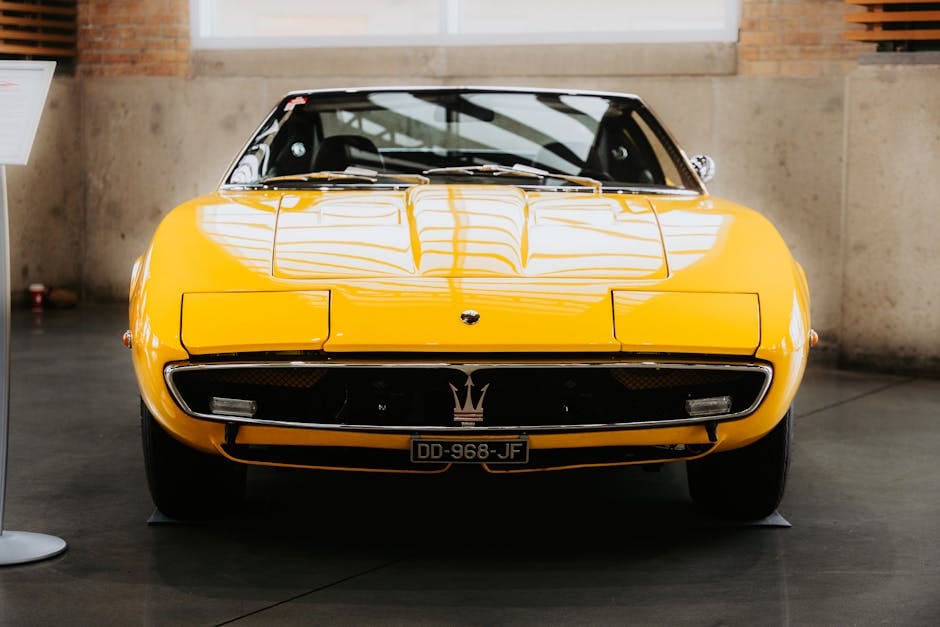
I bought a 1987 BMW 325is M-Technic for $4,800 in 2018. I sold the same car in 2024 for $22,400. That's a 366% return over six years, adjusted for minor running costs. The tax treatment on collectible vehicles is also generous because the gain on any car held for over a year is treated as capital gains, not ordinary income, if you can argue it wasn't your daily driver. This kind of return is not unusual in the classic car market right now, but it's also not guaranteed. Many cars people buy as investments lose money after you account for storage, maintenance, and insurance.
The 1980s are the current sweet spot in the appreciation cycle. The cars have aged into collector status but are still affordable compared to 1960s muscle or 1950s European exotica. Demographics also drive it: the people who wanted these cars as teenagers now have the disposable income to buy them. That's the single most reliable predictor of which cars appreciate.
How the appreciation cycle actually works
Collector cars follow a predictable cycle. A new car is released. It depreciates hard for 10 to 15 years. Around the 15 to 20 year mark, owners who can't afford to maintain them dump inventory and prices bottom. Then the kids who lusted after the car in showrooms grow up, earn real money, and start buying them. Demand exceeds supply, which by now has been reduced by crashes and neglect. Prices climb. At about 30 to 40 years old, the car crosses into full collector status and prices stabilize at elevated levels.
The 1980s cars are currently climbing through this cycle. The 1990s cars are just beginning to climb. The 2000s cars are still depreciating. This timing is why right now is an interesting window for 1980s purchases, and why people hoarding pristine 2004 Honda S2000s expect their moment is coming.
Which 1980s cars are actually climbing
Not every 1980s car appreciates. Some stay cheap forever because nobody lusted after them. A Dodge Aries from 1985 will always be $1,500. The cars that are climbing now have specific characteristics: they were aspirational when new, they're associated with a cultural moment, they were produced in limited numbers relative to demand, and the surviving fleet is small.
BMW E30 M3, Ferrari 308 and 328, Porsche 944 Turbo and 951, Lamborghini Jalpa, Lancia Delta Integrale, Audi Quattro Coupe, Acura NSX (1990 technically but 1980s design DNA), Mercedes 500E, BMW E24 M6, Ford Sierra RS Cosworth, Toyota Supra A70 Turbo, Mazda RX-7 FC Turbo. These are the cars that are already well into their climb.
Price trends right now
Here's where the market stands in mid-2026, based on Hagerty and Bring a Trailer auction data:
- E30 M3, driver quality: $58,000 to $82,000, up from $35,000 four years ago
- Ferrari 328 GTS, driver quality: $95,000 to $130,000, up from $55,000 in 2019
- 944 Turbo, driver quality: $35,000 to $52,000, up from $15,000 six years ago
- Acura NSX (original), driver quality: $85,000 to $110,000, up from $45,000 in 2020
- Mercedes 500E, driver quality: $50,000 to $72,000, up from $20,000 in 2017
- Audi Quattro Coupe US-spec, driver quality: $48,000 to $65,000, up from $18,000 in 2018
These are "driver quality" prices. Pristine examples go much higher. A concours-restored E30 M3 recently sold for $210,000 at Gooding & Company, but that's an outlier. The market data on driver-quality examples is the useful number because that's what most actual owners buy and sell.
What's still cheap and might move
Some 1980s cars are still below their appreciation curve. These are the current opportunities:
Chevy Corvette C4 Z51 and ZR-1. The C4 has been dismissed for years as the "ugly Corvette" but that's changing. A driver-quality ZR-1 is still $25,000 to $35,000 and beginning to climb. The LT5 engine was designed by Lotus and is genuinely interesting.
Mazda MX-5 Miata first generation 1989-1997. Still cheap because there are so many. Pristine examples in rare colors are starting to appreciate. A flawless 1990 in British Racing Green with low miles is a reasonable bet at $18,000 to $24,000.
BMW E28 M5. Lives in the shadow of the E30 M3 but is arguably a more important car historically. Driver-quality examples are still $45,000 to $60,000, which looks like a bargain next to the $80,000 M3.
Toyota MR2 second generation, turbo. These are genuinely rare in good shape. The surviving fleet has been thinned by enthusiasts crashing them on track. Driver quality $18,000 to $28,000.
The economics nobody mentions
Classic cars don't just appreciate in a vacuum. They cost money to own, and that erodes your return. Over the six years I owned my E30, I spent roughly $4,800 in maintenance, $1,800 in insurance, $1,600 in registration, $900 in storage, and $3,200 in cosmetic improvements that added maybe $2,500 to the sale price. Net cost of ownership was roughly $9,800 over six years.
So my $4,800 purchase, plus $9,800 in ownership costs, sold for $22,400. Net profit $7,800, or about $1,300 per year. That's a real return but it's much less than the 366% headline number suggests. Anyone computing classic car returns without accounting for ownership costs is doing dishonest math.
Storage and insurance
You can't just park a $50,000 classic on the street. Climate-controlled storage runs $200 to $450 per month in most cities. A garage at home is free but may not be climate-controlled, which matters for preservation. Specialty collector insurance like Hagerty runs $600 to $1,400 per year depending on value, usage, and state.
The cars that appreciate fastest also require the most care. A 1986 Ferrari 328 needs a $5,000 belt service every five years whether you drive it or not. A 1985 E30 M3 needs periodic attention to the S14 engine. Storage conditions matter because interior plastics crack and rubber seals dry out if the car sits unused in a non-climate-controlled space.
Buying strategies that work
The best classic car purchases are ones where the current owner is selling for the wrong reasons. Death, divorce, estate sale, forced relocation, financial distress. These produce the 10-20% below market prices that let you buy with room for appreciation plus ownership costs to net out.
Buying at auction is usually a bad strategy because auctions are efficient price-discovery mechanisms. You pay full market price, plus buyer's premium, plus transport, plus inspection. The exception is when an unusual car shows up at a mainstream auction and gets underbid because the usual collectors weren't paying attention. This happens occasionally but it's unpredictable.
Private-party buying from forums and enthusiast communities is where most good deals happen. The seller is a member of the community, wants the car to go to a good home, and is willing to discount somewhat below public auction prices. Building relationships in marque-specific forums like BMW E30 Zone, RennList for Porsches, or Ferrari Chat makes these opportunities findable.
What to look for in a classic investment
Originality matters more than condition. A 1988 E30 M3 with original paint, original interior, and original drivetrain is more valuable than a beautifully restored example with replaced parts. Restoration adds cost without adding matching value because collectors pay premiums for provenance and originality, not for paint quality.
Service history is almost as important. A car with complete records from new, ideally at authorized dealers, commands a 15-25% premium over a similar car without records. The records tell the story of the car's life and verify that major services were performed.
Mileage matters less than people think. Extremely low miles can actually hurt value because cars need to be driven to stay healthy. A 25,000-mile E30 M3 that's been garaged for a decade may have dry rubber, stuck valves, and collapsed hydraulic components. A 95,000-mile example that's been driven regularly is usually a more reliable car.
What not to buy as an investment
Modified cars. Modifications that seemed cool in 2008 destroy value in 2026. A stock 944 Turbo is worth more than a 944 Turbo with bigger turbos, coilovers, aggressive wheels, and a custom ECU. The market wants stock. Sellers of heavily modified cars take haircuts regardless of how good the build quality is.
Trendy cars that depend on a continuing narrative. The RADwood aesthetic that pushed 1980s Japanese cars into auction prominence has cooled. A 1991 Mitsubishi 3000GT VR4 that was $32,000 during peak hype is $26,000 today. Buying into trends late means holding through the correction.
Cars with expensive platforms. A 1990 Rolls-Royce Corniche appreciates but the maintenance costs are catastrophic. Unless you have a ten-year timeline and deep pockets, expensive platforms eat their own returns.
Cars in sweet spots right now
If I were shopping for a 1980s investment car right now, I'd look at pristine 944 Turbos, driver-quality E28 M5s, original E30 M3s under 120,000 miles, and C4 Corvette ZR-1s. These all have functional appreciation curves ahead of them, reasonable maintenance costs, and identifiable upside of 30-50% over a five-year hold.
Classic car investing is not a quick money scheme. It's a long-horizon hobby that can cover its costs and sometimes produce real returns, especially if you buy cars you genuinely enjoy driving. The worst scenario is buying a car you don't love because you think it will appreciate, then hating the ownership, then selling it back out when prices are slightly above what you paid. That's not investing. That's a bad time with your own money.