Cybertruck After 10,000 Miles: Honest Owner Report
Ten thousand miles in a Tesla Cybertruck reveals a vehicle that is better than the internet says and still worse than Tesla promised.
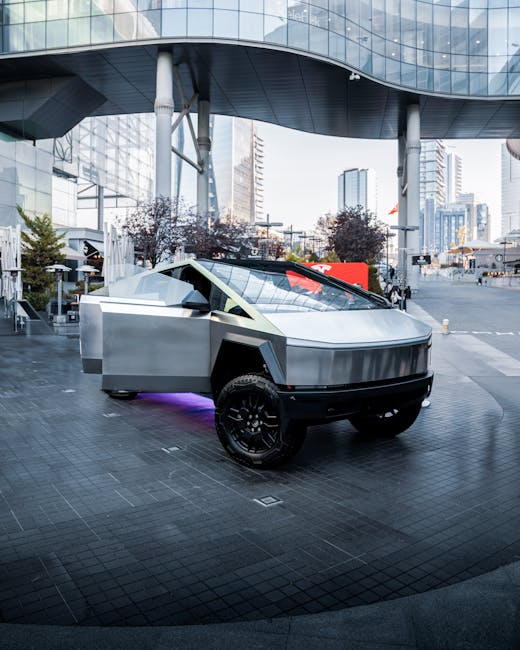
My neighbor bought a Cybertruck in March of 2025. Tri-motor Cyberbeast, $101,000 out the door after incentives, delivered from the Austin factory. I drove with him to pick it up. A year later he has 10,100 miles on the truck and has given me full access to his repair logs, his charging data, his range observations, and his evolving opinions. He is not a Tesla fanboy. He is an engineer at a mechanical company who bought the Cybertruck because his old F-150 was rusting out and he wanted to try something different. His honest report is both better and worse than the internet narratives, and it is probably more useful than either.
I want to be upfront that I have personally driven his truck maybe fifteen times on various occasions. So part of what follows is his direct experience, part is my observation as someone who has gotten to know the vehicle through him. I am not a Cybertruck owner. I am the friend of a Cybertruck owner, which is actually a useful vantage point because I do not have skin in the game.
What Works Better Than Expected
The drivetrain is genuinely astonishing. The Cyberbeast tri-motor version makes around 845 horsepower combined, and the zero-to-60 time of 2.6 seconds is not a press car specification, it is something you can do from any stoplight with a full load in the bed. My friend has accelerated faster than I have in anything short of a purpose-built track car. The way the torque is distributed between three motors means the truck launches without spinning tires, and the immediacy is something you cannot unfeel.
The four-wheel steering has turned out to be more useful than I thought it would be. At low speeds the rear wheels counter-steer, making the turning circle of a vehicle that is 224 inches long closer to that of a Civic. Parking this truck in a normal parking lot is easy in a way that no full-size truck I have driven has ever been. At highway speeds the rear wheels turn with the fronts, which makes lane changes feel planted and confident.
The ride quality, which I expected to be a disaster given the weight and the stainless body, is actually excellent. The air suspension does real work, and the damping is well-tuned even on broken pavement. On Vermont back roads the Cybertruck feels more composed than the F-150 Lightning does.
Charging speed at V4 Superchargers is up to 325 kw, which is real and observed. My friend has seen 295 kw consistently at a V4 cabinet. This means 10 to 80 percent charging is done in 27 to 32 minutes, which is fast enough for long-distance travel to feel viable if you are not towing.
What Still Feels Like a Beta Product
Panel gaps and trim alignment are genuinely inconsistent. My friend's truck came from the factory with a passenger-side front fender gap that was 5mm wider at the top than at the bottom. Tesla service corrected it under the delivery warranty, but the fact that it came out of the factory like this is embarrassing for a $100,000 vehicle. My friend also had a rear glass rattle that took three service visits to resolve.
The steer-by-wire system has a learning curve. There is no mechanical connection between the steering wheel and the front wheels. Everything happens through sensors and actuators. At low speed the steering ratio is quick, at high speed it is slower, and the transition between modes takes a few weeks to get used to. My friend says he now loves it. His wife refuses to drive the truck because she finds it disorienting.
The giant single-piece windshield wiper is a design decision that still does not fully work. In heavy rain the wiper cannot clear the windshield fast enough, and the blade tends to chatter on older or dirtier glass. My friend has replaced the blade twice in 10,000 miles. A conventional two-blade system would have been better. This is a solved problem that Tesla tried to solve differently and did not quite succeed.
The stainless steel exterior is a conversation starter everywhere but it is also genuinely harder to live with than a painted vehicle. Fingerprints show up as dark smudges that do not wipe away with a quick wipe. Water spotting after rain is pronounced. If you live somewhere with road salt in winter, the stainless develops surface staining that can only be removed with specific cleaners and some elbow grease. My friend spent $180 on a set of stainless-specific cleaners and says it is now a normal part of his ownership routine.
Range and Efficiency Observations
EPA range on the Cyberbeast is 320 miles. My friend has averaged 2.1 miles per kilowatt-hour over 10,000 miles of mixed driving, which works out to about 260 miles of real-world range in good weather. In Vermont winter with temperatures below 20 degrees Fahrenheit, he has seen as low as 185 miles of range.
Towing a 5,400 lb camper over 80 miles one way, he averaged 1.25 miles per kWh, or roughly 150 miles of towing range from full charge. That is consistent with my own testing of other electric trucks. The Cybertruck is not better or worse than the Ford Lightning or the Rivian R1T in towing efficiency, it is essentially the same.
Supercharger accessibility with a trailer is a real problem, same as with the other electric trucks. My friend has had to unhook his camper at two of the four stops on a recent 400-mile trip because the stalls were not pull-through. This is a Tesla Supercharger network issue, not a Cybertruck-specific issue, but it affects Cybertruck owners more acutely because they do not have many alternatives.
The Service Experience
Tesla service has been mixed. My friend's truck has been in service four times in 12 months. The first visit was the panel gap correction, which took two days. The second was the rear glass rattle, which took three visits total to resolve. The third was a 12-volt accessory battery that failed at 6,200 miles, stranding the truck in a parking lot with a dead electronics system until Tesla sent a mobile service technician out. The fourth was a software glitch that caused the infotainment to reboot randomly for two weeks until an over-the-air update fixed it.
Compared to a traditional truck dealership experience, Tesla service has been more awkward. There are fewer service centers. Appointments are harder to schedule. The ranger technicians are friendly and competent but the experience feels less predictable than a Ford or Chevy service visit.
The Financial Reality
At 10,000 miles the Cybertruck has depreciated from $101,000 delivered to roughly $78,000 retail. That is $23,000 in 12 months, or about $1,900 per month of pure depreciation. This is steeper than I expected. Tesla's pricing adjustments over the year hurt resale values directly, because as the company dropped new prices by $8,000 the used values dropped by the same amount.
By contrast, a 2024 Ford F-150 Lariat Hybrid at similar starting price has depreciated about $15,000 in the same time frame. The Lightning Lariat has depreciated about $20,000. The Cybertruck depreciation is within range but at the steeper end.
The fueling cost, by contrast, is excellent. Charging at home costs my friend about 4 cents per mile. Charging on Superchargers costs about 11 cents per mile. A gas F-150 Lariat Hybrid at similar performance would cost about 14 cents per mile in fuel. Over 10,000 miles he has saved roughly $1,000 in fuel versus a gas truck.
Would He Buy It Again
I asked him this last weekend. He thought about it for a long time before answering. His honest response. Yes, but not at the current price. He would wait for a used one, accept the faster depreciation curve, and buy at the $60,000 to $70,000 mark rather than $100,000. He thinks the truck is genuinely innovative and fun to own but the new-car premium has not yet reached the level where the ownership experience justifies it fully.
Which probably summarizes the Cybertruck correctly in 2026. It is a better truck than its critics say. It is still a worse value than it needs to be. And in two years at used prices, it will probably be one of the most interesting vehicles in the American market for the money.