Dodge Challenger Hellcat Redeye: The Last True Muscle Car
The 797 hp Hellcat Redeye is the final expression of a dying breed. Supercharged V8, rear-wheel drive, and absolutely no apologies for being what it is.
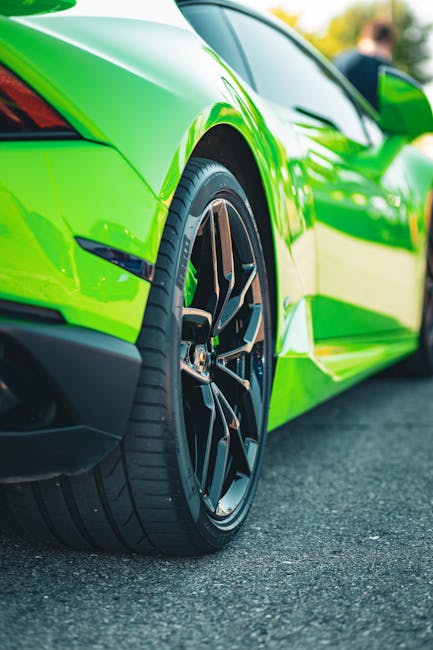
The Dodge Challenger Hellcat Redeye with the 6.2-liter supercharged Hemi V8 produces 797 hp and 707 lb-ft of torque. Zero to 60 in 3.4 seconds, quarter mile in 10.8 seconds, top speed 203 mph. Dodge stopped Challenger production at the end of 2023 and the Hellcat platform is gone, replaced by the electric Charger Daytona and a conceptual hybrid muscle car that is still years from production. In 2026 a clean used Hellcat Redeye sits in the $62,000 to $85,000 range depending on mileage, options, and production year. This is arguably the last chance to buy a truly honest American muscle car, and the market is starting to recognize that.
I have driven three different Hellcat variants over the years, including a 2021 Redeye that a friend loaned me for a weekend. The experience is unlike anything else I have ever driven, including actual supercars. The Hellcat is not fast in the precise, technically competent way a Porsche or a Ferrari is fast. It is fast in the unruly, dramatic, occasionally terrifying way that reminded me why Americans fell in love with muscle cars in the first place.
The Supercharged Hemi Is a Cultural Artifact
The 6.2-liter Hellcat V8 is the last mass-produced supercharged pushrod V8. Full stop. When this engine ends production, nothing like it will exist in new-vehicle showrooms again. The design uses two valves per cylinder and pushrod valve actuation, which is fundamentally 1960s architecture that Detroit kept refining for six decades. The supercharger is a 2.7-liter Twin Screw IHI design that sits between the cylinder banks and feeds 11.6 psi of boost at peak.
The sound at idle is intimidating. At part throttle it is purposeful. At wide-open throttle it is unhinged. The supercharger whine sits on top of a deep V8 rumble in a way that no other production engine has ever replicated. Ford tried with the Predator V8 in the GT500, which is excellent, but the Predator is a cross-plane flat-plane hybrid that sounds more European than American. The Hemi sounds like the Hemi.
Peak power comes at 6,300 rpm which is relatively low for a high-output engine. Peak torque at 4,800 rpm arrives almost immediately under throttle, which is part of what makes the Hellcat feel so violent. There is no turbo lag, there is no gradual wind-up. You push the pedal and the car leaves.
Fuel economy is irrelevant to this conversation. The EPA rating is 13 city and 21 highway. Real-world driving averages 14 to 16 mpg depending on how much of the 797 hp you actually use. On premium gas, a Hellcat driven 10,000 miles a year costs roughly $2,600 in fuel. If that number bothers you, this is not your car.
The Driving Experience Is Genuinely American
The eight-speed ZF automatic transmission in the Hellcat is the same unit found in BMW M cars and other luxury applications. Dodge's calibration is aggressive in Track mode and civilized in Comfort mode. Shift timing in Track mode is within a few hundred milliseconds of modern dual-clutch transmissions, and the engine can produce so much torque that single-clutch torque converter slip becomes an asset rather than a liability at launch.
Launch control is the famous party trick. Press the button, build brake torque to the selected rpm, release the brake, and the car leaves hard enough to make your neighbors come out of their houses. Zero to 60 in 3.4 seconds is genuinely possible on street tires in good conditions. On drag radials the Hellcat Redeye will run mid-10-second quarter miles without any modification.
Handling is the weakness and the strength simultaneously. The Hellcat is a 4,500-lb rear-wheel-drive car with 797 hp, which means it will absolutely oversteer at will if you ask it to. In Track mode with stability control partially off, the rear end is a full-time event. This is either a feature or a bug depending on your taste. Professional racers tend to find the Hellcat handling vague and imprecise. Enthusiasts tend to find it wonderful because the car is always doing something.
The factory Bilstein adaptive dampers are adequate for the task. Comfort mode is daily-drivable, Track mode is firm but not punishing. Factory alignment is conservative and most enthusiast owners eventually dial in more aggressive settings.
The Three Hellcat Variants and What They Mean
The standard Hellcat, produced from 2015 onward, makes 707 hp. This is the base of the Hellcat family and remains an enormously capable car. The Hellcat Redeye, added for 2019, bumped output to 797 hp with a higher-boost supercharger pulley, revised fuel injectors, and stronger internals. The Hellcat Demon, produced only in 2018, was rated at 808 hp on pump gas and 840 hp on race fuel, with street-legal drag-strip-oriented equipment including skinny front tires and a passenger-seat-delete from the factory.
The Demon is a collector car at this point, trading at $130,000 to $200,000 depending on mileage and condition. Production was 3,300 units and supply is stable. The Demon is the single most significant modern muscle car and prices will probably continue climbing.
The Hellcat Redeye is the sweet spot for enthusiast use. 90 percent of the Demon's performance at 50 percent of the price. Redeye production ran for multiple years and thousands of units are available, so values are more reasonable than the Demon.
The standard Hellcat is the value play. $62,000 to $72,000 for a clean car with low miles, and still producing 707 hp that feels unmanageable in almost any real-world situation. Most buyers do not need the Redeye's extra 90 hp and could save significant money with the standard.
The Super Stock and Jailbreak Editions
Dodge produced several limited-run variants of the Hellcat platform that are worth understanding for enthusiasts considering used purchases. The Hellcat Super Stock, produced for 2020 and 2021, was essentially a Demon-inspired drag strip car with 807 hp and factory drag-focused tuning. These cars carry significant premiums, typically $15,000 to $25,000 over equivalent Redeyes.
The Jailbreak editions, available in Redeye and Super Stock trims, allowed customers to customize color combinations and options that were normally locked in standard packages. Jailbreak cars are more common on the used market than genuine limited editions but still command small premiums for unique configurations.
The 2023 Last Call Special Edition Hellcats include commemorative badging, exclusive paint schemes, and specific wheel designs. These are the final-year cars and collectors are already positioning them as future classic models. Values are already $5,000 to $15,000 above equivalent non-Last Call examples.
Ownership Realities That Surprise New Buyers
Insurance on a Hellcat is expensive. Typical premium for a 35-year-old driver with a clean record is $2,800 to $4,500 per year. Younger drivers can face premiums above $6,000. This is a significant ongoing cost that some buyers do not factor in.
Tire wear is genuinely impressive. On aggressive-driving Hellcats, the rear tires last 6,000 to 10,000 miles before needing replacement. The fronts last 12,000 to 18,000 miles. A set of OEM Pirelli P Zero tires runs $1,400 to $1,800 installed. Annual tire costs for an enthusiast driver typically exceed $2,000.
Brake pad wear is heavy due to the car's weight and power. Factory Brembo pads typically last 25,000 to 35,000 miles in mixed driving. Replacement cost is $600 to $900 per axle at a shop.
The rear differential uses synthetic 75W-90 gear oil that should be changed every 30,000 miles on a car driven hard. Service is $150 to $250 at an independent shop. Skipping this service leads to premature differential wear and eventual failure.
The supercharger itself requires occasional service, primarily the isolator plate replacement at around 40,000 to 60,000 miles depending on driving conditions. The service is $500 to $900 at a Hellcat specialist.
What to Watch for When Buying
Modified Hellcats are common in the used market and should be approached with caution. A car with aftermarket supercharger pulleys, tuned ECU, and modified cooling is not necessarily a bad buy, but it requires specialist knowledge to evaluate. Stock cars are easier to inspect and verify.
Accident history is especially important on Hellcats because the cars are relatively easy to crash. Verify Carfax reports, inspect panel gaps and paint for signs of repair, and always do a pre-purchase inspection at a shop that knows Mopar performance cars.
Transmission fluid should be clear red, not brown or burnt-smelling. A discolored transmission fluid on a Hellcat indicates aggressive use or missed maintenance, both of which shorten transmission life.
Rear differential whine is a warning sign. A well-maintained Hellcat diff should be quiet. Whine under acceleration indicates wear that will accelerate without service.
Service records from Dodge dealers or reputable performance shops are valuable. Cars without documented service history require more thorough inspection and should be priced accordingly.
The Bigger Picture
The Hellcat is the last of its kind for practical reasons. Emissions regulations, fuel economy standards, and the industry shift to electrification all make it impossible to continue producing a 797 hp supercharged Hemi V8 in new vehicles. The end of Challenger production in 2023 marked the end of this era, and the follow-on electric Dodge Charger Daytona, while interesting, is a fundamentally different kind of car.
The cultural significance of the Hellcat should not be underestimated. This is the platform that produced the Demon, the Super Stock, and numerous limited-edition specials that pushed American muscle car thinking to its logical extreme. No other production muscle car has reached the power levels the Hellcat achieved with mass-production economics.
For enthusiasts considering a Hellcat purchase, the window is open now but will close. Used values for the standard Hellcat are relatively flat, values for Redeyes are climbing modestly, and values for limited editions are climbing sharply. By 2030 the Hellcat will be a clear collector car and prices will reflect that.
If you want to own a piece of genuine American performance history while also having a car that makes every drive an event, the Hellcat is the right answer. If you want balanced, refined, grown-up performance, look elsewhere. The Hellcat is not subtle and was never supposed to be. It is the last true muscle car, and it should be appreciated for exactly what it is while it is still available.