Driving Schools Worth the Money: Skip Barber vs Porsche vs Local
High-performance driving schools teach different things. Here is how to pick the right one for your goals and budget.
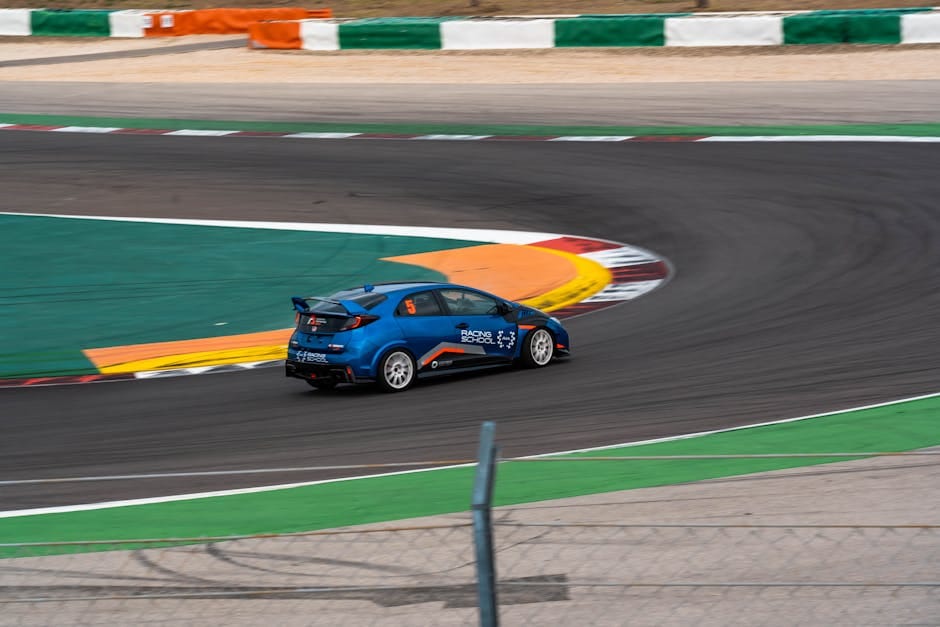
A friend asked me last year whether he should spend $4,500 on a Porsche Sport Driving School course or drive the same money into his existing track schedule. It's a question I get often enough that it's worth answering thoroughly. High-performance driving schools promise to make you a better driver. Some actually do. Some teach you theater that feels like skill. The price tag is usually a bad indicator of which is which.
I've done the Skip Barber Advanced Racing School, a Porsche Sport Driving School weekend, and more local HPDE events than I can count. They teach different things. They're not interchangeable. Here's how to figure out which one your time and money belong in.
What these schools actually are
Skip Barber runs racing schools in purpose-built open-wheel cars at tracks across the country. The vehicle is the constant. You learn racing technique on a car with no power steering, no ABS, and no driver aids. The curriculum progresses from basic lines and braking to race starts, wet driving, and wheel-to-wheel racing simulation in their advanced programs.
Porsche Sport Driving School runs programs at Barber Motorsports Park, Atlanta Motorsports Park, and Road Atlanta in various Porsche models. The curriculum is structured around the car. You drive 911s, GT3s, or Taycans depending on the program. The instruction focuses on how to extract performance from that specific platform, not on general racing craft.
Local HPDE (High Performance Driver Education) events are run by car clubs like PCA, BMW CCA, and regional chapters of SCCA. You drive your own car with one instructor in the passenger seat. Cost ranges from $250 to $500 per day. Progression is slow but cumulative, and you're applying it to the car you actually own.
What each is really teaching
Skip Barber is teaching you to be faster in any car you drive. Their methodology is car-agnostic. By the end of the three-day program you have a framework for how to think about any new car you step into. Apex, exit, braking zone, reference points. Universal vocabulary.
Porsche Sport Driving School is teaching you how to make a specific Porsche go faster. The techniques work best on rear-engine sports cars, and parts of the curriculum are less applicable to a Tacoma or a Camry.
HPDE is teaching you how to drive the car you own at an increasing percentage of its limit. The learning curve is much slower than a focused school but cheaper and you apply it to daily-driving reality.
Skip Barber: the case for it
I took the three-day Advanced Racing School at Road Atlanta in 2022. The cost was $4,995. Fifteen students, three instructors, twenty hours of seat time split across classroom and track days. At the end I walked out a meaningfully better driver than I walked in.
What made it worth the money: the cars have no power steering or ABS, which forces you to learn weight transfer and threshold braking without crutches. The instructors have decades of professional racing experience. The sessions build on each other, so you can't skip steps. And the total seat time exceeds what you'd accumulate in a full year of weekend HPDE events.
The downside: you're learning in a car you'll never own or drive again, and the transfer of skills to a street car requires deliberate application. The school also selects for people who already drive well. I was not the fastest student and not the slowest. Several people in my group had raced semi-professionally. You can feel underprepared if you're just coming from a weekend of autocross.
What you get from Skip Barber that you don't elsewhere
The braking zone work alone is worth the weekend. Racing cars have so much grip that threshold braking requires you to modulate pressure in ways street cars never demand. Learning this on an open-wheel racer makes the transition back to a street car trivial, because street cars have much less braking capacity. You're never again in doubt about whether you can stop in time. You know exactly what the limits are and how to reach them.
The second valuable skill is learning the feel of rotation. With no power steering, you can read what the front tires are doing through the wheel with unmatched clarity. Oversteer is unmistakable. Understeer is unmistakable. The muscle memory of both becomes permanent, and you carry it into every street car you drive.
Porsche Sport Driving School: the case for it
Porsche's programs are more polished than Skip Barber. The facility is immaculate. The cars are new. The food is good. The instructors are professional Porsche drivers. At a cost of $4,200 for a two-day Precision program, you're getting a premium experience.
The learning is concentrated on car control in modern sports cars with stability control, launch control, traction management, and active suspension. If you own a 911 or similar platform and want to drive it faster, the program teaches you directly applicable skills. You'll return home driving your own car noticeably better.
The downside: unless you own a Porsche, the specific lessons are less transferable. The techniques for threshold braking in a PDK-equipped 911 are different than in a manual M4 or a Corvette. You're paying for instruction tuned to a platform, which limits the audience.
When Porsche school actually pays off
If you own a 911 Carrera or GT-series car and want to become competent at track-driving it, Porsche's school is the fastest route. The instructors teach you things that aren't in any book, like how to use the car's dynamic systems in conjunction with traditional technique. The curriculum includes wet skid pads, trail braking exercises, and stability control interactions specific to the platform.
If you own a Cayenne or Macan and want to drive it hard, the school is probably overkill. Those platforms are SUVs. You'll learn things, but the application is limited.
Local HPDE: the case for it
A typical local HPDE event costs $300 for a full day of track time with an instructor in your own car. Compare this to $1,500 per day at a national school. You can do 15 HPDE days for the cost of one Skip Barber weekend.
What HPDE gives you that focused schools don't: experience in your own car. You learn your car's specific behaviors, which is the only thing that matters if you plan to continue track driving. You also accumulate hours slowly, which allows you to internalize lessons before moving to the next level. Concentrated learning has diminishing returns past a certain point, and HPDE stretches the curve.
The instructors at HPDE events vary in quality. Some are excellent. Some are barely qualified. The instruction is less structured than a focused school, and you have to self-direct your progress. If you're disciplined about this, it works. If you want spoon-feeding, it doesn't.
HPDE's hidden cost
HPDE wears out your car. Brake pads, tires, fluids, and occasionally more expensive components. Over a season of five HPDE days, expect to spend $1,500 to $2,500 in consumables on a typical sports car. This is not a reason to avoid HPDE but it's a cost people underestimate when comparing to a self-contained school.
Which one should you choose
If you have never done a structured driving program, start with three local HPDE days. Spend $900 total. Figure out if track driving is something you actually want to keep doing. About 40% of new HPDE drivers never return for a second season. Cheaper to discover this in an HPDE than in a national school.
If you've done a season of HPDE and feel stuck at a plateau, a Skip Barber three-day program will break through. The structured curriculum and professional instruction will teach you things your HPDE instructor can't because the HPDE instructor is also driving the course in their own car all day and can't watch yours from a chase vehicle.
If you own a Porsche specifically and want to track it seriously, the Porsche Sport Driving School is worth the premium. The platform-specific knowledge they transfer is not available elsewhere.
- Never driven on track: start with local HPDE
- Plateaued at HPDE pace: Skip Barber
- Porsche owner wanting platform mastery: Porsche Sport Driving School
- Interested in racing specifically: Skip Barber Racing School, then SCCA regional racing
- Want to be better at daily driving: a single day at an advanced driving school like Bondurant or Mid-Ohio
The schools I'd skip
Corvette Performance School is a brand event more than a real driving school. It's well-executed but teaches less than Porsche for similar money. Most one-day "exotic supercar" experiences are expensive joyrides with minimal instruction. Track days marketed as "racing schools" that take your own car are often regular HPDE with a higher price tag and a certificate.
Read the curriculum carefully before booking anything. A real school publishes hour-by-hour schedules, names of instructors, and specific skill outcomes. Marketing copy about "experience the thrill of racing" is usually not a real school.
The last honest point
No amount of school instruction substitutes for practice in your own car. The drivers I know who are fastest on their local tracks have usually done one focused program at some point and then driven 30 to 50 days per year on their own. The program establishes technique. The volume of repetitions cements it. Spending $5,000 on a school and then never driving hard again is wasted money. Spending $1,500 on a school and then running HPDE every month is a reasonable long-term investment in being a better driver.