Jeep Wrangler 392 Hemi: V8 Off-Road Fantasy Made Real
The 470 hp Wrangler 392 Hemi is absurd in the best way. It is also the thirstiest, loudest, and most smile-inducing Jeep ever built.
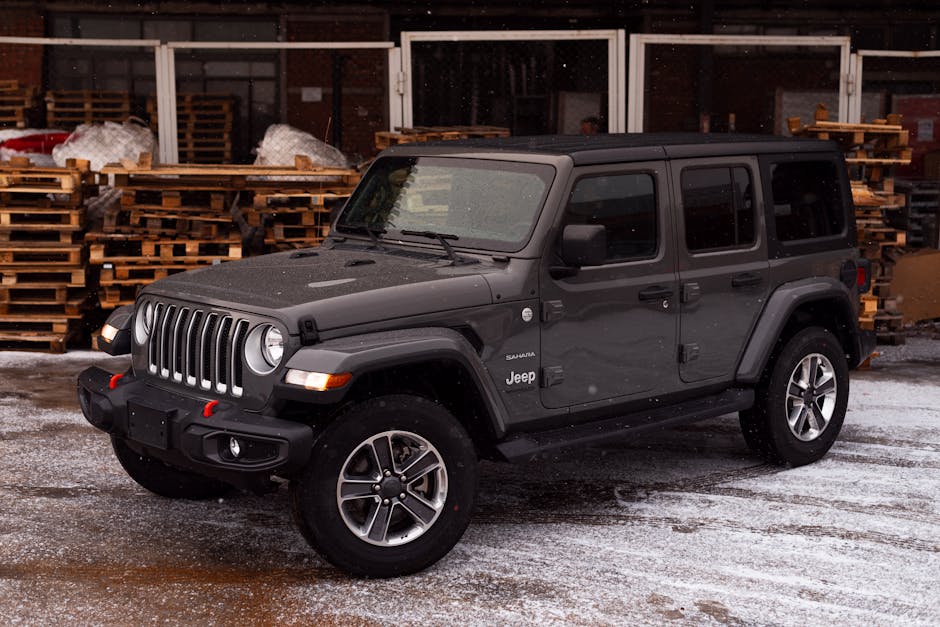
The Jeep Wrangler 392 Hemi shouldn't exist. Putting a 6.4-liter V8 from a Dodge Charger muscle car into a vehicle originally designed in 1941 to serve as Allied military transport is the automotive equivalent of attaching a rocket motor to a golf cart. And yet it does exist, it has been on sale since 2021, and in 2026 a used Wrangler 392 sits in the $65,000 to $85,000 range depending on year and configuration. The Jeep 392 is one of the most purely ridiculous vehicles Stellantis has ever built, and after driving one I understand exactly why people are buying them.
A friend picked up a 2023 Wrangler Rubicon 392 last year and let me put about 600 miles on it over the following months. The experience was both what I expected and completely different. What I expected was a loud, thirsty Wrangler with a muscle car engine. What I got was a vehicle that genuinely changed how I thought about the intersection of off-road capability and street performance. Neither category is quite big enough to hold this truck, and that is what makes it interesting.
The 392 Cubic-Inch Hemi Is the Whole Point
The 6.4L Hemi V8 in the Wrangler 392 produces 470 hp and 470 lb-ft of torque. Zero to 60 in 4.5 seconds for a 5,100-lb square box is genuinely shocking the first time you experience it. The engine is naturally aspirated, pushrod, two valves per cylinder, with variable valve timing. No supercharger, no turbocharger, no hybrid system. Just displacement and engineering.
The sound is spectacular. At idle the V8 burble reminds you that this is not a regular Wrangler. At wide-open throttle the sound is pure American muscle with a slightly different exhaust resonance because the exhaust has to route through the Wrangler's more constrained chassis layout. The stock exhaust is tuned for pedestrian noise regulations and is still louder than almost any other factory SUV.
Fuel economy is exactly as bad as you would expect. The EPA says 13 city and 17 highway. Real-world driving averages 13.5 mpg regardless of how you drive, because an aerodynamic brick shape and an enthusiastic right foot produce roughly the same fuel consumption as normal driving. On premium gas, a Wrangler 392 driven 12,000 miles per year costs about $3,400 in fuel. This is genuinely significant and should factor into purchase decisions.
The transmission is an eight-speed automatic, the same ZF-sourced unit found across multiple Stellantis performance applications. The shifts are crisp, the downshifts are rev-matched, and the transmission responds well to manual control when you want it. Launch from a stop is violent in the sense that the truck's narrow, tall body squats dramatically as torque hits the rear axle.
It Still Actually Works Off-Road
The surprising thing about the Wrangler 392 is that it retains the genuine off-road capability of the Rubicon trim it's based on. Front and rear locking differentials, disconnecting front sway bar for improved articulation, Dana 44 axles front and rear, and true low-range transfer case with 77.2:1 crawl ratio. All of this works the same way it does in any other Wrangler Rubicon.
The additional weight of the V8 is about 200 lb compared to the 3.6L Pentastar V6, which is significant for a Wrangler but not catastrophic for off-road use. The truck still articulates well, still has the approach and departure angles that define Wrangler capability, and still handles technical terrain.
Where the V8 actually helps off-road is on sand and in sustained-grade climbs where the extra torque keeps momentum up without needing to downshift into low range. On soft sand, the 392 can maintain highway-ish speeds where other trucks get bogged down. On a long mountain grade fire road, the 392 pulls comfortably in fourth or fifth gear where a V6 Wrangler would need third and would run hotter.
Wading depth is reduced slightly versus a standard Wrangler because the V8 air intake is positioned differently. The 392 has 30 inches of water fording capability from the factory, versus 34 inches on the 3.6L V6 models. For most casual off-road use this difference is not meaningful, but for regular river crossings or deep mud the V6 actually performs better in water.
Daily Driving Challenges
A Wrangler 392 is not a comfortable daily driver. The solid front and rear axles that give it off-road capability also make the on-road handling vague and wander-prone. The truck requires active steering input at highway speeds to stay in its lane, and long drives are genuinely tiring compared to a regular SUV.
Wind noise at highway speeds is deafening. The combination of removable doors, soft or hardtop designs, and the square aerodynamic profile generates cabin noise levels that make normal conversation difficult above 60 mph. Bluetooth calls are nearly impossible at interstate speeds.
Parking is a moderate challenge due to the tall height and the specific dimensions of the Wrangler body. Parking garages with low ceilings can be problematic if the optional roof rack or roof-top tent is installed.
The ride quality over bad pavement is rough. Solid axles transmit impacts directly to the cabin in ways that independent suspension vehicles do not. Pennsylvania or Michigan-style broken roads are genuinely punishing in a Wrangler 392.
Visibility is a mixed bag. The greenhouse is large so forward and side visibility is excellent. Rear visibility is poor due to the spare tire on the tailgate, and the backup camera becomes essential. Blind spot monitoring helps in lane changes.
Ownership Costs Over Time
Tires on a Wrangler 392 run $900 to $1,400 per set for OEM-spec all-terrains. The factory tires typically last 35,000 to 45,000 miles depending on driving style. More aggressive off-road tires wear faster, with 25,000-mile replacement being typical for serious off-road use.
Oil changes are every 8,000 miles or 12 months with 0W-40 synthetic. The engine takes 7 quarts and dealer oil changes run $140 to $180. DIY oil changes are around $90.
Brake wear is typical for a heavy SUV, with replacement typically needed at 60,000 to 80,000 miles for pads. The cost for pads and rotors is $800 to $1,200 per axle at an independent shop.
The 8-speed ZF transmission needs fluid service at 60,000 miles. Proper service includes filter replacement and costs $350 to $500 at a specialist. Skipping this service can cause premature transmission wear.
Insurance on a Wrangler 392 runs $1,800 to $3,200 per year for most drivers, which is higher than a standard Wrangler due to the performance classification. Garage parking and a good driving record help manage costs.
Resale value on the Wrangler 392 has been strong through the first years of production. The 2022 model is retaining approximately 75 percent of original MSRP in 2026, which is excellent for a performance variant. This helps offset the high purchase price over the ownership period.
The Xtreme Recon Package
The Xtreme Recon Package, available on Rubicon 392 models, adds 35-inch tires, a 1-inch lift kit, and higher-ratio axles to improve off-road capability further. The package costs approximately $3,500 to $4,500 when new and adds meaningful capability for serious off-roaders.
With 35-inch tires the Wrangler 392 achieves approach angles of 44.7 degrees and departure angles of 37.3 degrees, which are class-leading numbers that allow the truck to handle terrain impossible for standard Wrangler 392 models. For enthusiasts who plan to rock-crawl seriously, this package is essential.
The drawback is that the Xtreme Recon tires are noisier, have worse fuel economy, and wear faster on pavement than the stock tires. Daily-driver use with Xtreme Recon tires is less comfortable than with standard configurations.
The Final-Year Limited Editions
Stellantis announced production of the 392 V8 will continue for the foreseeable future, but emissions regulations in various markets have limited availability in certain regions. The Final Edition and 20th Anniversary Edition models include specific badging, paint colors, and interior treatments that distinguish them from regular-production 392s.
These limited editions are already commanding premiums in the used market. A 2023 20th Anniversary Edition 392 is trading at $5,000 to $12,000 over equivalent standard Rubicon 392 examples. Whether this premium holds or grows depends on future collectibility of the platform.
Should You Actually Buy One
The Wrangler 392 is the right vehicle for a buyer who wants to combine genuine off-road capability with dramatic straight-line performance and is willing to accept the daily-driver compromises. This is a niche buyer profile but they do exist in reasonable numbers.
It is the wrong vehicle for a buyer who wants a comfortable daily driver, efficient fuel consumption, or a refined highway experience. Those buyers should look at the Grand Cherokee or the Durango, both of which offer Hemi V8 options in more livable packages.
It is also the wrong vehicle for a buyer who plans to primarily use it for off-roading. The additional weight and fuel consumption penalty compared to the V6 Wrangler Rubicon makes the V6 the smarter choice for serious off-road use where refueling opportunities are limited and weight matters.
For the specific buyer who wants a Wrangler that also makes supercar noises, the 392 is the only option. Nothing else combines Wrangler off-road DNA with V8 performance, and the supply of these vehicles will be limited as emissions regulations tighten further in coming years. For that specific buyer, at this specific moment, the Wrangler 392 is worth every dollar of its premium price. Whether you are that buyer is the question only you can answer.