Mercedes-AMG E63 S: Luxury and 600 HP in One Package
The E63 S delivers 603 hp in a car that also feels like a proper Mercedes. The combination is genuinely unique in the market, and the used prices are finally reasonable.
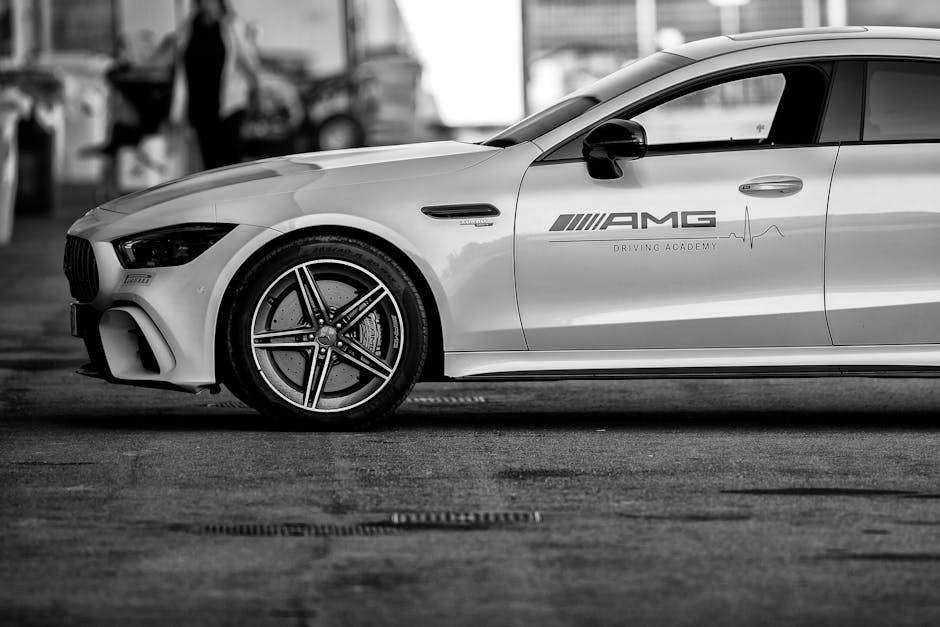
The Mercedes-AMG E63 S is the luxury sport sedan that splits the enthusiast community. For traditional Mercedes fans it is the pinnacle of the AMG treatment applied to the E-Class. For BMW M5 fans it is the less-precise, softer alternative to what a real performance sedan should be. Both perspectives have merit. The E63 S runs a 4.0-liter biturbo V8 making 603 hp and 627 lb-ft of torque, all-wheel drive with an electronically-disconnectable front axle (the "Drift Mode" feature), and a nine-speed automatic transmission. Zero to 60 in 3.3 seconds with a top speed of 186 mph when properly equipped. In 2026 a clean used E63 S wagon or sedan sits in the $58,000 to $75,000 range.
I have spent significant time in E63 S wagons and sedans over the past few years. The car is genuinely different from its German competitors in ways that matter more than the specification sheets suggest. Understanding why some buyers vastly prefer the AMG over a BMW M5 or an Audi RS7 is key to making the right choice for a specific buyer profile.
The Engine Character That AMG Owns
The M177 biturbo V8 in the E63 S is hand-assembled at the AMG plant in Affalterbach, Germany. Each engine is built by a single technician from start to finish and signed with a plaque bearing the builder's name. This is not just marketing tradition. The build quality and engine character that comes from this process is part of what makes AMG engines feel different from competitors' mass-production engines.
The engine produces 603 hp at 5,750 rpm and 627 lb-ft of torque peaking at 2,500 rpm and holding flat until 4,500 rpm. Maximum boost pressure is 19.6 psi. The two turbochargers are mounted between the cylinder banks rather than outside them, which Mercedes calls "hot inside V" configuration. This results in shorter intake and exhaust paths, faster turbo response, and more compact packaging.
The character of this engine is different from BMW's S63 or Audi's EA825. The AMG V8 delivers torque with a specific creamy, almost lazy-sounding character at low rpm that suddenly becomes ferocious above 3,500 rpm. The sound is deep and thunderous rather than precise and mechanical. At wide-open throttle the E63 S produces a sound that is unmistakably Mercedes, not imitation of any competitor.
The nine-speed AMG Speedshift MCT transmission is a modified torque converter automatic with a wet-clutch pack replacing the traditional torque converter. This gives dual-clutch-like response in sport modes while retaining torque converter smoothness in daily driving. Shift speed in Sport Plus mode is under 100 milliseconds, which matches or exceeds dedicated dual-clutch transmissions.
The Drift Mode Feature That Actually Matters
The E63 S is the first all-wheel-drive sedan from a mainstream manufacturer that can be electronically switched to rear-wheel-drive-only mode. Drift Mode, accessed through the AMG Dynamic Select system, disengages the front axle entirely and sends all 603 hp to the rear wheels.
The practical value of Drift Mode is limited. It works as advertised and allows the car to power-slide through corners on a track or in safe conditions, but it also requires you to actively disable various stability controls and to drive a 4,500-lb sedan as if it were a rear-drive sports car. Not many E63 owners actually use the feature regularly.
The symbolic value of Drift Mode is enormous, however. It signals that the E63 S is a performance-first vehicle that happens to have luxury amenities, rather than a luxury vehicle that happens to have performance. For enthusiasts who appreciate this philosophy, Drift Mode is a feature that matters even if it is rarely used.
For normal performance driving with all-wheel-drive engaged, the E63 S has a 31 percent / 69 percent front-to-rear torque split. This is more rear-biased than typical all-wheel-drive sedans and produces handling characteristics closer to rear-drive than to traditional front-biased AWD systems. The car tends to rotate on throttle in a way that traditional Mercedes vehicles do not.
The Wagon Is the Enthusiast Choice
The E63 S wagon offers identical performance to the sedan with substantially more practical capability. Cargo space is 32.2 cubic feet behind the rear seats and 64.0 cubic feet with rear seats folded. The power tailgate and hands-free opening are useful for family duties.
Rear seat space in the wagon is slightly better than the sedan because the wagon body has a longer roofline that provides more rear headroom. Rear seat legroom is identical at 36.2 inches.
The wagon typically costs $3,000 to $5,000 more than the equivalent sedan new and commands similar premium on the used market. For buyers who want maximum practicality with performance, the wagon is the obvious choice. For buyers who prioritize handling, the sedan is slightly lighter and very slightly more nimble.
Wagon availability in US market has been limited, with only a few hundred units imported per year. This means wagons are harder to find on the used market and command slight premiums over equivalent sedans.
Interior Quality That Actually Differs
The E63 S interior is the most luxurious among German performance sedans. The combination of Nappa leather, wood or carbon fiber accents, premium audio (Burmester 3D Surround Sound), and thoughtful design details creates a cabin that feels genuinely special in ways that competitors struggle to match.
The MBUX infotainment system is Mercedes' latest generation (from 2020 onward) and is the best mainstream infotainment system in the luxury market. The voice recognition is genuinely usable, the navigation is fast, and the connectivity features work reliably.
The AMG Performance seats are optional and worth the premium for enthusiast drivers. These seats have deeper bolstering, more adjustment range, and better support for hard driving than the standard leather seats. They cost approximately $3,500 new and add similar value to resale.
The steering wheel is AMG-specific with flat-bottom design, perforated leather, and dedicated sport mode selector buttons. The wheel feels substantial in your hands and the buttons are well-placed for hand positioning while driving.
The second row is less dramatic than the front but still excellent. Heated rear seats, separate rear climate zones, and rear window sunshades are standard equipment. Ventilated rear seats and rear entertainment screens are available options.
Daily Driving and Comfort
The Comfort mode ride quality on the E63 S is softer than competitors' base settings. Mercedes tuned the air suspension for genuine luxury-level isolation when not in Sport modes. Long road trips are comfortable and the cabin remains quiet.
In Sport Plus mode, the suspension firms up substantially but still provides more compliance than the BMW M5 Competition in its equivalent mode. Some enthusiasts prefer the M5's more aggressive tuning, others prefer the AMG's more livable compromise.
Driver assistance systems are excellent. The MBUX-based driver aids handle moderate traffic situations well and the adaptive cruise control with steering assistance can manage most interstate driving with minimal intervention.
Fuel economy is 16 city, 24 highway per EPA, with real-world averaging 18 mpg in mixed use. Premium fuel is required. Annual fuel costs for 12,000 miles run approximately $2,700.
Cabin noise is exceptionally low at highway speeds. The combination of thick laminated glass, extensive sound insulation, and refined drivetrain calibration produces a quiet environment that rivals luxury sedans without AMG treatment.
What Costs Money
Tires on the E63 S are specialized and expensive. Factory Michelin Pilot Sport 4S summer tires run $2,100 to $2,700 for a set of four installed. Wear rate is typical for performance tires at 12,000 to 18,000 miles.
Oil changes are every 10,000 miles with 8.5 quarts of Mobil 1 ESP 5W-30. Cost at a Mercedes dealer is $280 to $340 while independent Mercedes specialists charge $220 to $260.
Brake pads wear at typical performance sedan rates. Replacement is typically needed at 25,000 to 40,000 miles depending on driving style. AMG-spec brake service is $2,000 to $2,800 per axle at the dealer.
Service costs follow Mercedes B Service intervals every 20,000 miles. A typical B Service runs $650 to $950 at a dealer. More comprehensive services at 40,000 and 80,000 miles run $1,400 to $2,200.
Insurance costs are higher than non-AMG Mercedes models but comparable to other performance sedans in the class. Typical premiums for a 35-year-old driver with a clean record run $2,400 to $3,800 per year.
Reliability Notes
The M177 V8 has been reliable across the E63 S application, with limited documented systematic issues. Earlier M157 engine in previous-generation E63 had some problems with oil pressure sensors and minor cooling system issues, but the current M177 has not had these failures.
Transmission reliability is excellent. The 9G-Tronic MCT has a proven record across multiple Mercedes applications and rarely fails within typical ownership periods.
Electrical systems have been the most frequent source of warranty claims, primarily related to the MBUX infotainment and some body control modules. Most issues are resolved with software updates.
Air suspension is the component most likely to require replacement in long-term ownership. Individual struts run $1,800 to $2,500 at a dealer. Full suspension refresh at 100,000+ miles is $6,000 to $9,000.
Overall reliability rating for E63 S is "good" but not exceptional. Budget $2,000 to $3,000 per year for out-of-warranty maintenance and repairs. Plan for the occasional electrical gremlin.
Versus the Competition
The BMW M5 Competition is faster (0-60 in 3.1 seconds) but less refined than the E63 S. BMW's S68 biturbo V8 has more aggressive power delivery but less luxurious sound. For buyers who prioritize raw performance, the M5 is the choice.
The Audi RS7 has similar power to the E63 S with more conservative styling and a more traditional Quattro all-wheel-drive system. Audi interior is beautiful but less luxury-focused than Mercedes. For buyers who want subtlety, the RS7 is appealing.
The Cadillac CT5-V Blackwing offers similar performance at lower price with American-specific character. The Blackwing is faster around a racetrack but lacks the luxury refinement of the AMG. For buyers looking for value performance, the Blackwing is a legitimate alternative.
The Lucid Air Grand Touring offers comparable or faster performance in an all-electric package with genuinely futuristic technology. For buyers open to electric vehicles, the Lucid is compelling but lacks the character of a biturbo V8.
Should You Buy One
The E63 S is the right choice for a buyer who wants maximum luxury combined with maximum performance and who values Mercedes brand character. The combination of the hand-built AMG V8 engine with Mercedes-quality interior is unique and rewarding.
It is the wrong choice for a buyer focused purely on track performance. BMW M5 and Porsche Panamera Turbo S both outperform the E63 S in pure driving metrics.
For family use combined with enthusiast driving, the E63 S wagon is the sweet spot. The sedan is appropriate for childless buyers or buyers who prefer traditional sedan aesthetics.
The used market in 2026 offers good value. A 2020-2022 E63 S in clean condition at $58,000 to $72,000 represents substantial savings from the $128,000+ original MSRP while providing substantially the same ownership experience. For a buyer who can afford ownership costs of approximately $8,000 per year, the E63 S used is one of the most compelling performance purchases in the market.