Porsche 911 997.2 Carrera S: The Used 911 Value Play
The 997.2 generation fixed everything wrong with the earlier cars and brought in direct injection. Ten-plus years later, it is the most underpriced 911 in the used market.
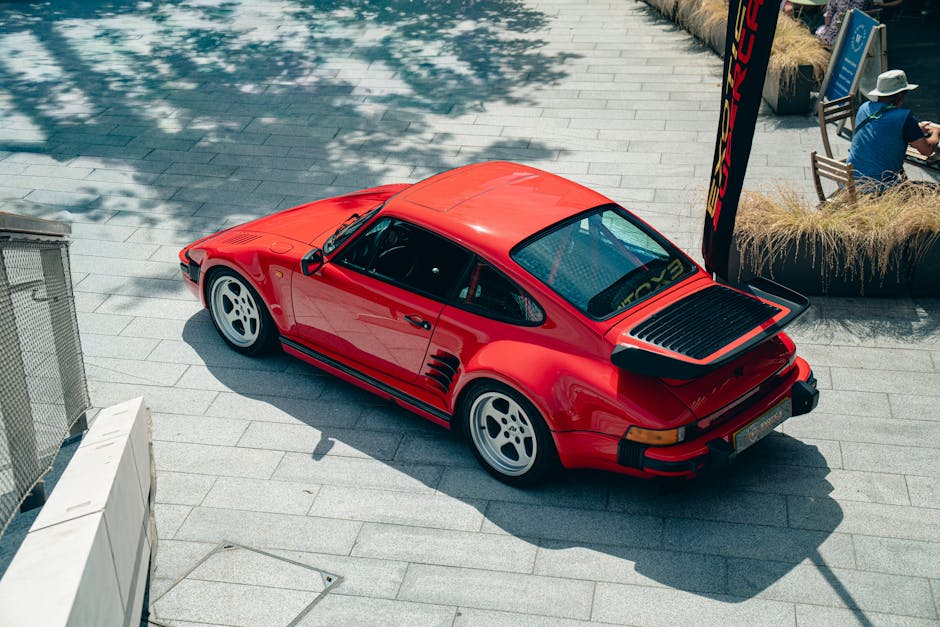
The 2009 to 2012 Porsche 911, internally known as the 997.2, is the used 911 you should actually buy. It is not the cheapest, it is not the rarest, it is not the one Instagram wants you to want. It is the one that fixed the problems of every previous 911 generation, introduced the first direct-injected flat-six Porsche engine, and has quietly held its value while earlier and later 911s have either appreciated into Ferrari territory or depreciated into Cayman territory. In 2026 a clean 997.2 Carrera S with reasonable mileage is sitting in the $45,000 to $58,000 range, and this is probably the last year that price range is going to exist.
Let me walk through why this specific car deserves more attention than it gets, what to look for on the ones available now, and what will probably cost you money over the next three to five years of ownership.
Why the 997.2 Is the 911 Sweet Spot
The earlier 996 and 997.1 generations of 911 are known for one thing among enthusiasts, and that is the IMS bearing. The intermediate shaft bearing on the pre-direct-injection engines was prone to failure, and when it failed the result was a totaled engine requiring a $20,000 rebuild. Porsche eventually addressed this with updated bearings, but the IMS remains the asterisk on any pre-2009 911 purchase. Every PPI on a 996 or 997.1 has to account for it, every conversation with a specialist includes it, and every listing for these cars uses IMS-related keywords to signal seller awareness or to hide from them.
The 997.2 solved this completely. The new 9A1 engine, introduced for 2009, eliminated the intermediate shaft entirely because direct injection allowed Porsche to redesign the valvetrain and timing system. No IMS, no bearing failure, no asterisk. Just a more powerful, more fuel-efficient, more reliable engine that also made more torque at lower rpm.
The 997.2 Carrera S makes 385 hp from a 3.8-liter flat-six, up from 355 hp in the 997.1. Zero to 60 drops to 4.4 seconds with the PDK dual-clutch or 4.5 seconds with the six-speed manual. Top speed is 188 mph. These numbers are right in the middle of modern sports car performance, meaning a 17-year-old 911 is still quick by any normal standard.
The PDK dual-clutch transmission also debuted on the 997.2, replacing the old Tiptronic torque-converter automatic that nobody actually liked. The Tiptronic was slower than the manual, less engaging, and held its value worse. The PDK was faster than the manual in every objective measure, arguably more engaging in sport mode, and has become the preferred transmission on modern 911s.
The Real-World Ownership Picture
I have a friend who has owned a 2010 Carrera S PDK for four years. Bought it at 38,000 miles for $54,000 in 2022. Now at 61,000 miles in 2026. Here is what he has actually spent.
Routine maintenance at the 40,000 and 60,000 mile intervals, including oil changes, spark plugs, brake fluid flush, and transmission service, ran about $2,800 at a Porsche specialist in his city. These are intervals you need to hit, and ignoring them is how you end up with a $12,000 PDK replacement.
The water pump failed at 52,000 miles. This is a known wear item on the 997.2, usually going somewhere between 60,000 and 100,000 miles. Replacement at the specialist was $1,100 including the serpentine belt and the coolant flush he chose to do at the same time.
Rear shock absorbers needed replacement at 58,000 miles because of light weepage, which is a warranty-on-newer-cars item that on a 17-year-old car is just normal wear. Bilstein B6 replacements installed were $1,400 total.
Tires run about $1,300 for a full set of Pirelli P Zeros. He gets 12,000 to 15,000 miles out of them depending on how aggressively he drives. Total tire cost over four years has been one full set replacement.
Total maintenance and repair spending over four years and 23,000 miles has been roughly $6,600. That is $1,650 per year of driving, which for a Porsche 911 is genuinely low. And the car is worth about $51,000 now, meaning he has depreciated $3,000 in four years. That is a remarkable ownership cost for a sports car of this performance level.
What to Look For on a Used 997.2
The first check is the bore scoring. This is the headline issue on direct-injected 9A1 engines, where the cylinder walls can develop scoring from insufficient lubrication if the engine has been run hard from cold. It is more common on higher-displacement variants like the 3.8 used in the Carrera S than on the 3.6 Carrera. A borescope inspection during the PPI is essential. Any shop that specializes in 997s has the equipment and knows exactly where to look.
If the borescope comes back clean, the engine is almost certainly going to go 200,000 miles without issues. If the borescope shows significant scoring, walk away. A scored cylinder is an engine that needs rebuilding, and that is a $15,000 to $20,000 job.
The second check is the PDK unit if the car has one. PDK transmissions need fluid service every 40,000 miles. If the car has 80,000 miles and the seller cannot produce receipts for at least one PDK service, you are looking at a probable $1,400 service coming up or the risk of shift quality problems from stale fluid.
The third check is the suspension. 997 suspensions get tired at the 60,000 to 80,000 mile mark, and the ride quality degrades noticeably when the shocks and bushings are spent. A full suspension refresh at a Porsche specialist is $4,500 to $6,000 depending on what needs doing. Factor this into the purchase price if the car has high miles and original suspension.
Paint matching is the fourth check, because 911s get rock chips from enthusiastic driving and the repairs are sometimes not done perfectly. A paint meter shows you where work has been done. Minor chips and door edge repaints are normal. Full panels repainted means the car has been in something bigger.
What Configuration to Look For
The Carrera S with the 3.8-liter engine is the better buy than the base Carrera with the 3.6. The S has the limited-slip differential standard, better brakes, and the PASM adaptive suspension. The 30 hp difference is less important than the overall package.
Manual versus PDK is a personal call. Manuals hold slightly more value in 2026 because enthusiasts have started preferring them, but PDK cars are cheaper to buy and faster to drive. If you track the car, PDK. If you want the traditional 911 feel, manual. Both are great.
Coupe versus cabriolet is also personal. Coupes drive slightly better because of torsional rigidity, and they are cheaper to maintain because they have fewer moving parts. Cabriolets depreciate slightly more but are appealing in warm-weather markets.
The colors that hold value best are Arctic Silver, Meteor Grey, Black, and GT Silver. Red is surprisingly tough to sell on a 911 and discounts 5 to 10 percent for that reason. White and yellow have strong followings among enthusiasts and actually add value if the color is right for the car.
Options that matter are PASM adaptive suspension, Sport Chrono Plus, limited-slip differential, and navigation. PCCB ceramic brakes are not usually worth the premium on a street-driven car, because the replacement cost at $10,000 per axle is intimidating.
Why This Window Is Closing
The 997.2 generation is probably the last 911 that will have a real "used car" pricing period. The 991 and 992 generations have held value exceptionally well, and the GT cars have appreciated. The 997.1 and 996 are starting to appreciate as collectors realize the flat-six naturally-aspirated 911 is a finite resource. The 997.2 sits between these two trends.
I expect 2026 and 2027 to be the last years where you can buy a clean 997.2 Carrera S with 50,000 to 70,000 miles for under $60,000. By 2029 or 2030 the prices will probably be in the $70,000 to $80,000 range for the same cars. If you want one, now is the time.
And the best part about owning a 997.2 versus an older 996 or 997.1 is that the engine is not going to give you the existential dread of the IMS issue, and the car is new enough to drive every day without worry. This is a genuinely usable, reliable, fast 911 that will probably be worth more when you sell it than when you bought it, if you take care of it. That is a rare thing in a car that also happens to be one of the great driving experiences of the modern era.