Subaru WRX 2026: Still Relevant in the Electric Age?
The WRX used to be the obvious enthusiast choice for $35K. Now it competes against faster EVs and refined hatchbacks. Whether it is still the right answer depends on what you want.
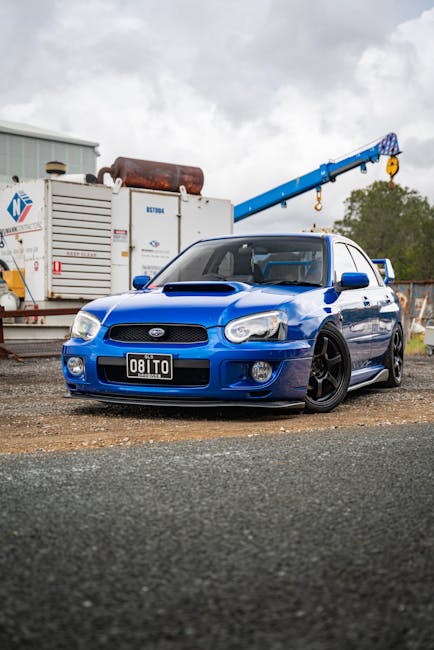
The Subaru WRX has been the default enthusiast performance sedan at the $35,000 price point for two decades. Turbocharged boxer engine, symmetrical all-wheel drive, rally heritage, manual transmission available, and practical four-door configuration. In 2020 the WRX was obviously the right answer for a buyer who wanted year-round performance on a moderate budget. In 2026 the WRX faces competition that did not exist when it defined its market, and the question of whether it still deserves its role as the default answer has become genuinely complicated.
I own a 2019 WRX Premium with the six-speed manual, bought new at $31,000 and now sitting at 58,000 miles. I have driven the current-generation 2022-onward WRX briefly and I have followed the platform's evolution carefully as someone who cares about this segment. The current WRX is better than the one I own in some ways and worse in others, and the competitive landscape it operates in has changed in ways that make the purchase decision more nuanced than it used to be.
What the Current WRX Actually Is
The 2022-onward WRX runs a 2.4-liter turbocharged boxer four-cylinder making 271 hp and 258 lb-ft of torque. This is up from 268 hp on the previous-generation 2.0L, a marginal increase that does not meaningfully change the driving experience. The engine is a development of the FA24 first used in the Ascent three-row SUV, and it produces its peak torque at a lower rpm than the previous WRX engine.
The transmission options are a six-speed manual or a CVT that Subaru calls "Subaru Performance Transmission." The manual is what enthusiasts want. The CVT is faster in every objective measurement (acceleration, lap times) because of its ability to hold the engine at optimum rpm continuously. But the CVT drone at sustained highway cruising is genuinely annoying and the "shifts" that the SPT simulates are not convincing imitations of real gear changes. For enthusiasts, the manual is the clear choice despite the performance disadvantage.
Zero to 60 mph on the manual comes in at 5.5 seconds. On the CVT it drops to 5.1 seconds. These are respectable numbers for a $35,000 sedan but not class-leading. A Golf R at $45,000 will run 4.3 seconds. A Civic Type R at $47,000 will run 5.0 seconds. The WRX is no longer the fastest car in its traditional competitive set.
Handling is where the WRX traditionally wins, and the current generation retains this advantage somewhat. The symmetrical AWD system provides confident grip in all weather conditions. The steering is accurate without being exceptional. Body roll in corners is controlled but not class-leading. The car feels planted and predictable at the limit, which is exactly what you want in a car meant to be driven in all conditions.
The Competition Has Gotten Serious
The Volkswagen Golf R at $45,000 provides 315 hp, DCT transmission, AWD, better interior quality, and faster acceleration than the WRX. The price premium is significant but the Golf R is simply a better car in most measurable ways. For buyers who can afford the extra $10,000, the R is a difficult car to overlook.
The Honda Civic Type R at $47,000 offers 315 hp front-wheel drive, six-speed manual only, and arguably the best driving dynamics in the segment. The Type R is a more engaging driver's car but lacks the AWD security of the WRX. For pure dry-road performance, the Type R is better. For year-round all-weather performance, the WRX still wins.
The Toyota GR Corolla at $38,000 is the newest entry in this market and offers 300 hp from a three-cylinder turbo, AWD, six-speed manual only, and a rally-bred character that echoes early WRX models. The GR Corolla is more focused and more engaging than the WRX but has a tighter back seat and less refined interior.
On the electric side, the Hyundai Ioniq 5 N at $66,000 offers 641 hp, 3.0-second zero to 60, and genuine track capability with simulated manual transmission feedback. This is obviously a more expensive category but it represents a glimpse of what high-performance cars will look like in 10 years, and it makes the WRX feel dated by comparison.
What the WRX Still Does Well
The WRX remains the only car in this segment with a turbocharged boxer engine. This gives it a unique character that the inline-four competitors cannot match. The engine sound at wide-open throttle is distinctive and the power delivery has a character that buyers of Subaru products specifically look for.
The practicality of a proper sedan body with genuine adult rear seats and a reasonably-sized trunk gives the WRX an advantage over the Civic Type R and GR Corolla, which are both hatchbacks with more compromised rear seat space. For buyers who need a family car that is also a performance car, the WRX works in ways the hatchback competitors do not.
The AWD system is genuinely useful in winter, mud, and gravel conditions. Subaru's symmetrical AWD layout handles low-traction conditions better than the Haldex-based systems in the Golf R and other front-drive-based AWD competitors. For buyers in the Midwest, Northeast, or Pacific Northwest where all-weather capability matters year-round, the WRX has a real functional advantage.
The aftermarket support for the WRX is enormous. Two decades of platform continuity means that turbocharger upgrades, intercooler kits, ECU tunes, exhaust systems, and suspension components are all available from dozens of reputable manufacturers at competitive prices. A WRX owner has more modification options than any owner of a competing car.
The community of WRX enthusiasts is large and active. Meetups, clubs, track events, and informal gatherings happen regularly in most major cities. For a buyer who values the social aspect of car enthusiasm, this is a real benefit that competing platforms do not match.
The Costs of WRX Ownership
The WRX has historically been less reliable than its Japanese competitors. Head gasket issues on the older EJ25 engine (pre-2014) are well-documented. The current FA24 engine has limited long-term data but no major known issues as of 2026. Expected reliability is moderate rather than excellent.
Oil consumption on the boxer engine is a known characteristic. Most WRXs consume some oil between oil changes, typically 0.5 to 1.5 quarts between 5,000-mile intervals. This is normal for the engine and not a sign of problems, but owners need to check oil level regularly and top off as needed.
Transmission durability on the manual is good with proper use but clutch wear can be fast on aggressive drivers. Factory clutches on manuals typically need replacement at 50,000 to 80,000 miles depending on driving style. Clutch replacement is $1,200 to $1,800 at an independent Subaru specialist.
Turbocharger life on the current engine is expected to be 100,000+ miles with proper oil change intervals and cool-down after hard driving. Earlier WRX turbos were less reliable, especially on tuned cars.
Fuel economy is moderate. The EPA rating is 19 city and 26 highway on the manual, and real-world driving averages 22 to 24 mpg. Premium fuel is required. Fuel costs for typical ownership are about $2,100 per year on 12,000 miles.
Insurance on a WRX runs $1,400 to $2,200 per year for most drivers, which is moderate for a performance car.
What to Know About Trim Levels
The base WRX is well-equipped and costs approximately $34,000. This is the value trim and provides all the core driving experience without expensive interior upgrades. For buyers on a budget who just want the WRX experience, this is the right configuration.
The WRX Premium at $38,000 adds leather seats, heated seats, blind spot monitoring, and a better audio system. For buyers who want more daily comfort features, the Premium is worth the $4,000 premium.
The WRX Limited at $41,000 adds LED headlights, navigation, sunroof, and additional driver assistance features. The Limited is the highest regular trim and appeals to buyers who want the full feature set.
The WRX GT at $43,000 adds bronze wheels, Recaro seats, electronically adjustable Bilstein dampers (on CVT models), and various cosmetic enhancements. The GT is CVT-only, which makes it irrelevant for most enthusiasts who want the manual.
The WRX TR (Track Recreation), introduced for 2024, adds Brembo brakes, six-piston front calipers, Recaro seats, and revised suspension tuning. The TR is manual-only and is the enthusiast's choice for the current WRX lineup. Price is approximately $42,000.
The Used WRX Consideration
A used WRX from the 2015 to 2020 generation can be purchased for $18,000 to $28,000 depending on condition, mileage, and trim. For buyers who cannot afford a new WRX or the competing hot hatches, a clean used WRX offers most of the current-generation experience at a significant discount.
The 2015 to 2020 WRX uses the FA20DIT engine, a 2.0L turbocharged boxer that has known issues with ringland failures on heavily modified cars but is reliable on stock applications. Avoid any used WRX with obvious tuning or modifications unless the seller can document that the tune is conservative and the engine has been well-maintained.
Pre-2014 WRX models use the older EJ257 engine with head gasket issues that typically require replacement at 100,000+ miles. These cars are cheaper to buy but carry a known future repair cost that should factor into the purchase decision.
The Honest Verdict
The WRX in 2026 is a good car that is no longer the clearly-best choice in its segment. The combination of AWD, manual transmission, sedan practicality, and enthusiast character remains unique, but the raw performance has been surpassed by multiple competitors at similar or higher price points.
For a buyer who specifically wants AWD and a sedan body, the WRX remains the clear choice. For a buyer in a region with serious winters who drives year-round, the WRX's traction advantage is real and meaningful. For a buyer who loves the Subaru brand character and the turbocharged boxer engine, the WRX delivers exactly what they want.
For a buyer who does not have a strong brand preference and is focused on pure performance, the Civic Type R, Golf R, or GR Corolla all offer more engaging driving experiences at similar or slightly higher prices. For buyers willing to go up in budget, the Hyundai Ioniq 5 N shows what the future of this segment looks like.
The WRX is not obsolete. It is no longer obviously the best answer, which is a meaningful change from 10 years ago. For the right buyer it is still the right car. For many buyers in 2026, it is worth comparing against competition that did not exist when the WRX established its market position.